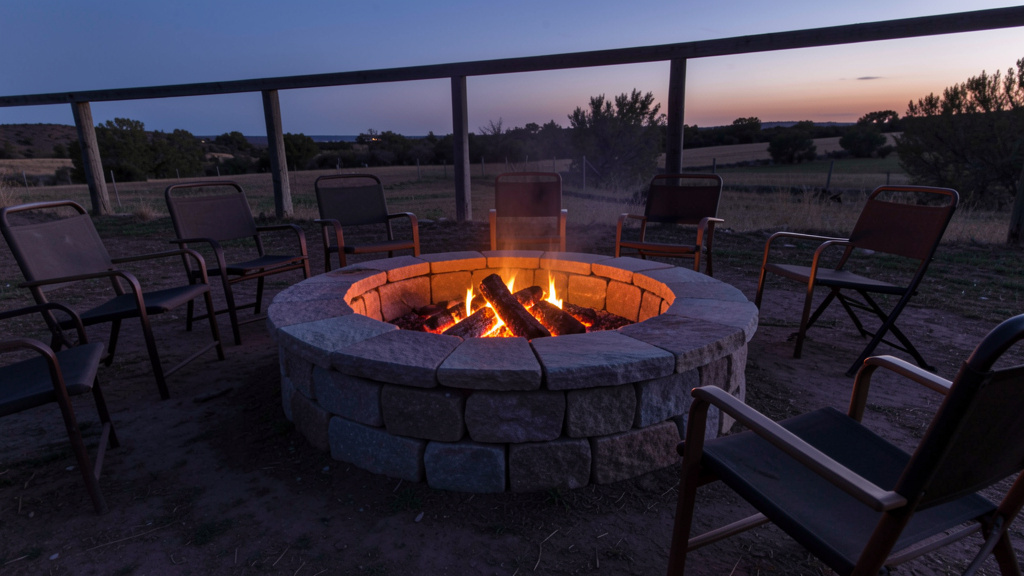
From rustic stone firepits to modern gas fireplaces, unlock the principles for selecting, designing, and safely enjoying the fire feature that transforms your outdoor living space into a functional, seasonally adaptable sanctuary.
Imagine crisp autumn evenings wrapped in conversation around dancing flames. Picture summer gatherings where the fire’s gentle crackle replaces background noise. Envision winter nights made magical by the warm glow reflecting off snow-dusted branches. A thoughtfully designed fire feature does more than provide heat—it becomes the emotional and functional heart of your outdoor living space. This guide walks through every critical consideration, from foundational safety protocols and material science to aesthetic integration and seasonal maintenance. Grounded in established building codes (NFPA 211, IRC Chapter 21), landscape architecture principles, and material engineering standards, this resource consolidates fragmented information into a single, actionable reference designed to prevent common pitfalls and support lasting enjoyment.
Introduction: Why Your Fire Feature Decision Matters
Fire has captivated humanity for millennia—not merely as a source of warmth, but as a catalyst for connection, reflection, and ritual. In contemporary outdoor living design, a fire feature functions as architectural punctuation. It defines zones within sprawling yards, extends usable hours deep into cool seasons, and elevates ordinary moments into memorable experiences. Yet beneath this appeal lies a domain where uninformed choices carry significant consequences: structural instability, fire hazards, regulatory violations, or features that gather dust due to impracticality.
Consider two common scenarios. One installation places a portable firepit directly on a wooden deck after minimal research. Heat discoloration soon mars the surface; wind gusts repeatedly extinguish flames; smoke drift creates neighbor concerns. Another installation begins with careful assessment of local clearance requirements, microclimate patterns, and user needs. The resulting feature—positioned thoughtfully with appropriate materials and seating—hosts gatherings reliably for years. The divergence stems not from budget, but from intentional design grounded in context.
This guide supports informed decision-making. We move beyond superficial inspiration to deliver a systematic framework rooted in physics, material behavior, and human-centered design. You’ll learn why certain stone types fracture under thermal stress, how wind direction dictates optimal placement more than aesthetics, and why “easy installation” claims often mask hidden complexities. Every recommendation prioritizes long-term safety, functionality, and alignment with your specific environment. Whether your vision involves a hand-troweled adobe fireplace echoing regional heritage or a minimalist linear gas burner complementing a modern courtyard, this resource provides the granular knowledge to execute it wisely. The journey begins not with shopping, but with clarity.
The Fire Feature Selection Framework: Purpose, Environment, Fuel
Before evaluating products or sketching designs, anchor your decision in three foundational pillars. This framework—refined through analysis of common installation challenges and user feedback patterns—prevents emotionally driven choices that lead to regret. Each pillar contains diagnostic questions. Answer them honestly before proceeding.
Step 1: Define Your Primary Purpose with Precision
“Entertaining” is too vague. Drill deeper. Ask:
– Frequency & Duration: Will this be used nightly for brief relaxation or weekly for extended gatherings? High-frequency use demands durable materials and low-maintenance fuel.
– User Profile: Who gathers here? Toddlers require spark screens and wide perimeters; guests with mobility considerations need stable seating close to radiant heat; pet owners must consider curious noses near hot surfaces.
– Emotional Goal: Are you seeking ambiance (soft glow, subtle warmth), functional heat (warming a group on cool nights), or culinary utility (roasting marshmallows, cooking)? A firepit optimized for marshmallow roasting has different airflow and height requirements than one designed purely for ambiance.
– Spatial Role: Does the fire feature anchor a dedicated seating area, divide a large yard into zones, or frame a view (e.g., positioned to highlight a garden sculpture)?
Application Insight: A homeowner in a region with frequent breezes realized their true need was wind resistance combined with accessibility for mobility-challenged family members. This eliminated portable propane models and deep in-ground pits. The solution: a 24-inch tall, wide-mouth gas firepit with a wind guard, placed within a sheltered courtyard corner, surrounded by armchairs with sturdy frames. Specificity transformed the outcome.
Step 2: Assess Your Environment and Space Objectively
Measure twice, dream once. Grab a tape measure, compass app, and notebook.
– Dimensions & Layout: Sketch your space. Note exact width/length. Mark fixed elements: house walls, fences, trees, utility lines, slopes. Measure distances between these points. A fire feature needs breathing room—not just for safety, but for comfortable movement. Minimum recommended clearance: 10 feet from structures, 15 feet from overhanging branches. On slopes exceeding 10%, stability becomes critical; level platforms or specialized bases are essential.
– Microclimate Analysis: Stand in your intended location at different times of day across seasons. Note:
– Prevailing Wind Direction: Use a ribbon tied to a stake. Does wind consistently blow smoke toward seating areas or neighboring properties? (Critical for wood-burning features).
– Sun Exposure: Full sun accelerates material fading; deep shade promotes moisture retention in masonry.
– Drainage: Pour a bucket of water where the base will sit. Does it pool? Poor drainage undermines foundations and rusts metal components.
– Soil & Surface Type: Sandy soil shifts; clay retains water. Pavers over gravel drain well; solid concrete may crack under thermal expansion. Decking requires non-combustible bases and strict adherence to manufacturer clearances (often 18+ inches below and around).
– Local Context: Are you near a wildfire-prone zone? (Consult Firewise USA guidelines). Is your property visible from neighbors’ windows? Consider sightlines and smoke drift etiquette.
Common Pitfall: Installing a fire feature centered in a yard “for symmetry,” ignoring wind patterns. Result: frequent smoke interference during use. Always prioritize function over forced symmetry.
Step 3: Choose Your Fuel Type Strategically
Fuel choice impacts safety, maintenance, ambiance, cost, and regulatory compliance more than any other factor. Evaluate these options against your Purpose (Step 1) and Environment (Step 2).
| Fuel Type | Best For | Key Limitations | Typical Cost Range (Feature Only) | Maintenance Level |
|---|---|---|---|---|
| Natural Gas | Permanent installations near gas lines; frequent users; clean ambiance seekers | Requires professional gas line installation; not portable; needs ignition system | $800 – $5,000+ | ★☆☆ (Low: wipe surfaces, annual valve check) |
| Propane | Renters; no gas line access; flexibility; moderate budgets | Tank management; refills; wind sensitivity; BTU limits | $300 – $2,500 | ★★☆ (Medium: tank swaps, hose checks) |
| Wood-Burning | Authentic ambiance lovers; off-grid properties; cooking enthusiasts | Smoke output; ash cleanup; firewood storage; strict clearance needs | $200 (portable) – $10,000+ (custom) | ★★★ (High: ash removal, wood seasoning, spark screen cleaning) |
| Ethanol (Biofuel) | Apartments/balconies (where permitted); ultra-modern aesthetics; zero venting | Low heat output; fuel cost per hour; flame visibility in daylight; safety considerations | $400 – $3,000 | ★☆☆ (Low: refill canisters, wipe spills) |
| Electric | Strict HOA/no-flame zones; indoor/outdoor rooms; safety-first households | Minimal radiant heat; “flame” is LED effect; requires GFCI outlet | $200 – $2,000 | ★☆☆ (Very Low: dusting, bulb replacement) |
Critical Nuance: “Clean-burning” claims require scrutiny. Propane produces minimal smoke when burning correctly, but a poorly adjusted burner creates soot. Ethanol emits carbon monoxide—never use in enclosed or poorly ventilated spaces. Wood smoke contains particulate matter (PM2.5); seasoned hardwood (oak, maple) generally burns cleaner than softwoods (pine) or unseasoned logs. Always verify local ordinances: many municipalities restrict wood-burning during air quality alerts or ban it entirely in dense neighborhoods.
The Fundamental Principle: The most successful fire features achieve harmonious alignment between purpose, environment, and fuel type. Never let aesthetics override safety, practicality, or regulatory compliance. A stunning wood-burning fireplace becomes problematic on a windy deck with close-set neighbors; a minimalist ethanol burner may not deliver sufficient warmth on chilly evenings. Match the solution to the true need.
Firepit Deep Dive: Styles, Materials, and Configurations
Firepits represent the most accessible entry point into outdoor fire features. Their versatility spans portable tabletop models to permanent in-ground installations. Understanding structural and material nuances prevents premature failure and maximizes enjoyment.
Wood-Burning Firepits: Embracing Tradition with Modern Safeguards
Design Variations:
– Above-Ground Bowl: Most common. Elevated 12-24 inches for ergonomic viewing. Ideal for patios, decks (with non-combustible base), and level ground. Look for models with integrated spark screens and ash pans.
– In-Ground Pit: Dug 12-18 inches deep, lined with firebrick or stone. Creates intimate, campfire-style seating. Critical: Must include proper drainage (gravel base) and be situated far from roots or underground utilities. Requires significant excavation effort.
– Tabletop Firepits: Small, portable units (often propane or ethanol) for dining tables. Safety Note: Only use models explicitly rated for tabletop use with automatic tip-over shutoffs. Never place near hanging linens or low-hanging branches.
Material Science Matters:
– Cast Iron: Heavy, retains heat well, develops rustic patina. Prone to rust if not maintained. Requires full coverage during wet seasons. Best for permanent placements.
– Steel (Carbon/Mild): Affordable, welds easily for custom builds. Thinner gauges (<1/4 inch) may warp under intense heat. Look for high-heat paint coatings (rated for high temperatures). Corten steel develops a stable rust layer but may stain surrounding surfaces initially.
– Stainless Steel (304/316 Grade): Superior corrosion resistance, especially 316 (marine-grade). Withstands thermal cycling without warping. Higher cost justified for coastal areas or frequent use. Avoid “stainless-looking” painted steel.
– Copper: Beautiful patina evolution (shiny → brown → green). Excellent heat conductor but soft; dents easily. Expensive. Primarily aesthetic; requires careful handling.
– Stone/Concrete: For permanent installations. Never use river rocks, sandstone, or limestone—trapped moisture can cause spalling when heated. Only use firebrick, refractory concrete, or specifically rated landscape stone (granite, basalt). Mortar must be heat-resistant (refractory mortar).
Installation Insight for Permanent Pits: Build a “thermal break.” Excavate 18 inches deep. Layer: 4″ gravel (drainage), 2″ sand (leveling), firebrick base (heat reflection), then your visible stone/brick wall. This prevents ground moisture from migrating upward and cracking your structure during freeze-thaw cycles.
Gas & Propane Firepits: Convenience Meets Contemporary Design
Key Components Decoded:
– Burner Pan: Holds media (lava rock, glass) and distributes gas. Stainless steel (304 minimum) is essential. Size must match firepit diameter (e.g., 18″ pan for 30″ pit).
– Ignition System:
– Match-Lit: Simplest, cheapest. Requires manual lighting with long lighter. Risk of gas buildup if not lit immediately.
– Push-Button Spark: Integrated piezoelectric igniter. Reliable, no batteries. Preferred for most users.
– Electronic (Battery/Transformer): Remote or wall-switch control. Requires weatherproof housing. Ideal for integrated systems but adds complexity.
– Media: Never use standard river rocks or sand—they trap moisture and pose hazards. Approved options:
– Lava Rock: Porous, lightweight, affordable. Hides burner well. Needs occasional replacement as it degrades.
– Fire Glass: Tempered glass pieces. Reflects light beautifully, modern look. Use only fire-rated glass. Requires precise layering (1.5-2″ depth) to avoid flame disruption.
– Ceramic Logs/Rocks: Realistic aesthetic. Must be specifically designed for gas fire features to withstand heat.
Propane-Specific Considerations:
– Tank Placement: Hide tanks in purpose-built enclosures (ventilated!), behind landscaping, or use camouflage covers. Never store tanks indoors or in enclosed sheds.
– Regulator & Hose: Use only hoses rated for outdoor propane service (typically yellow). Check connections monthly with soapy water solution—bubbles indicate leaks. Replace hoses periodically per manufacturer guidance.
– Wind Performance: Propane flames are more wind-sensitive than natural gas. Opt for firepits with wind guards (metal skirts around burner) or position within a sheltered area. Consider higher-BTU models for breezy locations.
Natural Gas Advantages:
– Unlimited runtime (no tank swaps)
– Cleaner burn (typically higher BTU output)
– Seamless integration (lines buried underground)
– Non-Negotiable: Installation must be performed by a licensed plumber or gas fitter. DIY gas line work risks leaks, explosions, and voided insurance. Permits are almost always required. Budget for professional installation from meter to feature location.
Portable vs. Permanent: Making the Right Commitment
| Factor | Portable Firepit | Permanent Firepit |
|---|---|---|
| Flexibility | Move seasonally; store indoors; reposition for events | Fixed location; becomes landscape architecture |
| Installation | Minutes (place on non-combustible surface) | Days/weeks (excavation, foundation, curing time) |
| Heat Output | Generally lower (safety for mobility) | Can be significantly higher (custom sizing) |
| Safety | Risk of tipping; requires vigilant placement | Stable; integrated safety features (spark screens, bases) |
| Resale Value | Minimal (considered personal property) | Adds tangible value to property |
| Best For | Renters; small spaces; testing fire feature lifestyle | Homeowners; dedicated entertainment zones; high-use scenarios |
Decision Guidance:
Renting or planning to move within a few years? → Portable
Space under 150 sq ft? → Portable
Desiring maximum heat output and seamless integration? → Permanent
Local codes restrictive on permanent structures? → Verify requirements first
Young children/pets requiring consistent safety barriers? → Permanent (with built-in seating walls)
Outdoor Fireplace Deep Dive: From Traditional Masonry to Modern Prefab
While firepits radiate heat 360 degrees, fireplaces project warmth directionally—ideal for defining a “room” against a wall or fence. They offer greater wind protection and architectural presence but demand more space and investment.
Masonry Fireplaces: The Heirloom Investment
Built entirely on-site with brick, stone, or stucco over a firebrick-lined firebox. This represents skilled craftsmanship.
Structural Anatomy:
1. Foundation: Must extend below frost line (varies regionally). Typically reinforced concrete footing 12-18″ deep.
2. Firebox: Heart of the system. Lined with firebrick (rated for high temperatures) set in refractory mortar. Dimensions follow established ratios: firebox depth relates to width to support proper draft. Too shallow = smoke rollout; too deep = poor draft.
3. Throat & Smoke Chamber: The narrowing passage above the firebox that compresses smoke before entering the flue. Smooth, tapered surfaces (parged with refractory cement) prevent turbulence and creosote buildup.
4. Flue: Chimney interior. Must be lined with clay tile, stainless steel, or cast-in-place liner. Size is critical: Flue area should relate proportionally to firebox opening area. Undersized flue = smoking fireplace.
5. Chimney Cap: Prevents rain, debris, and animals from entering. Must have spark arrestor mesh (1/2″ holes max per NFPA 211). Extends above roofline per code requirements.
Material Selection Guide:
– Firebrick: Essential for firebox. Standard (buff) or rustic (clinker) styles. Never substitute with regular brick.
– Facing Stone: Granite, limestone, fieldstone, or manufactured stone veneer. Ensure structural backing can support weight (real stone is heavy!). For veneer, use appropriate mortar.
– Mortar: Type S mortar for structural integrity below smoke chamber; refractory mortar inside firebox and smoke chamber.
– Lintel: Steel angle iron above firebox opening to support masonry weight. Must be sized correctly for large openings.
Professional Guidance: Masonry fireplaces involve complex physics (draft dynamics, thermal expansion) and structural engineering. A poorly built chimney can cause carbon monoxide infiltration, chimney fires, or collapse. Seek professionals certified by recognized masonry institutes or with documented experience in outdoor fireplace construction (different from indoor due to weather exposure). Budget reflects craftsmanship, materials, and complexity. This is not a beginner DIY project.
Prefabricated (Prefab) Fireplaces: Engineered Efficiency
Factory-built units made of stainless steel, refractory panels, and insulated jackets. Designed for faster, more predictable installation.
Types & Applications:
– Zero-Clearance Models: Insulated to allow installation directly against combustible materials (like a house wall). Crucial: Must be installed exactly per manufacturer specs. Clearance to combustibles is often minimal, but surrounding framing still requires non-combustible shielding per code. Ideal for attaching to existing structures.
– Freestanding Models: Self-contained units. Placed on non-combustible pads. Often include faux stone or stucco finishes. Great for creating a focal point away from structures.
– See-Through/Tunnel Models: Allow viewing from two sides. Perfect for dividing spaces (e.g., patio and pool area) while maintaining visual flow.
Installation Realities:
– Requires a solid, level foundation (concrete pad minimum 4″ thick).
– Chimney system is modular—sections stack together. Must extend above roofline per code.
– Permits are typically mandatory. Most jurisdictions require inspection of foundation, framing clearances, and chimney height.
– While faster than masonry, professional installation is strongly recommended. Gas line connections (if applicable) and chimney assembly require expertise. DIY errors commonly cause smoke rollout or fire hazards.
– Cost Range: Varies by unit, features, and professional installation.
Prefab vs. Masonry Guidance:
– Choose Prefab if: Budget is constrained; timeline is tight; attaching to a house wall; seeking consistent performance guarantees; modern aesthetic preferred.
– Choose Masonry if: Budget allows; seeking timeless, custom craftsmanship; property value enhancement is a priority; desire maximum heat retention (thermal mass); traditional or rustic aesthetic is essential.
The Pizza Oven Hybrid: Culinary Fire Feature
Wood-fired pizza ovens represent a specialized fireplace variant. They operate at high temperatures (700°F+).
Key Design Elements:
– Dome Shape: Essential for even heat distribution and convection currents. Built with firebrick or refractory concrete.
– Insulation: Critical! Multiple layers: ceramic fiber blanket, perlite-vermiculite mix, then outer shell. Prevents heat loss and protects surrounding structure.
– Door: Retains heat during cooking. Often arched to match dome.
– Vent/Flue: Positioned at dome apex to draw smoke away from cooking surface.
Placement Imperatives:
– Significant clearance from any combustible material (walls, fences, cabinets).
– Non-combustible base extending beyond oven footprint.
– Overhead clearance: ample space from any overhead structure (pergola beams, eaves).
– Check local codes meticulously. Many areas require specific permits for outdoor cooking structures due to fire risk. Never place under low-hanging trees.
Beginner Guidance: Start with a modular kit before attempting a custom build. Kits include engineered components and detailed instructions, reducing failure risk.
Design Integration: Creating a Cohesive Outdoor Room
A fire feature shouldn’t feel “plopped down.” It must converse with your landscape, architecture, and lifestyle. This section transforms your fire feature from an object into an integrated experience.
Spatial Planning: The Geometry of Gathering
Human behavior around fire follows observable patterns. Leverage this knowledge:
– Optimal Seating Distance: For radiant heat comfort without overheating: 3-5 feet from fire edge for wood-burning; 4-6 feet for gas. Too close = discomfort; too far = no warmth.
– Conversation Circle: Arrange seating so all faces are visible. Avoid straight lines facing the fire (creates “audience” dynamic). Curved benches or angled chairs foster interaction. The fire should be within the circle, not at the end of a row.
– Traffic Flow: Maintain 36-inch minimum pathways around the feature for safe movement, especially when carrying items. Never block primary egress routes.
– Sightlines: Position the fire so it frames desirable views (garden, water feature) rather than staring at a blank fence. Conversely, use it to block undesirable views (utility area, neighbor’s shed).
Practical Technique: The “String Test”
Before finalizing placement, drive stakes at proposed firepit corners. Run string between them. Sit in your intended seating spots. Does the string obstruct views? Does the scale feel right? Adjust stakes until the geometry feels intuitive. This low-tech method prevents costly repositioning later.
Material Harmony: Weaving the Feature into Your Landscape
Your fire feature’s materials should echo elements elsewhere on your property for visual cohesion.
– Architectural Echo: If your house has limestone accents, use limestone caps on your firepit wall. If trim is black metal, choose a firepit with black steel details.
– Landscape Continuity: Extend patio pavers under the fire feature base (if permanent) for seamless integration. Use the same gravel in the firepit media bed as in surrounding pathways.
– Color Psychology: Warm tones (rust, terracotta, copper) enhance fire’s cozy feeling. Cool tones (gray, black, stainless) create modern contrast. Avoid clashing colors.
– Texture Layering: Combine smooth (polished concrete cap) with rough (natural stone veneer) for tactile interest. Avoid monotonous surfaces.
Integration Example: A property with white-clapboard architecture, black window trim, and a bluestone patio selected a prefab fireplace with a black steel firebox surround, faced with locally quarried limestone matching the patio. The chimney was clad in vertical black metal panels echoing window trim. Seating used charcoal-gray outdoor fabric on teak frames. The result felt inherently connected to the site.
Lighting & Ambiance Layering
Firelight is dynamic but insufficient for safety or task lighting. Layer complementary light sources:
1. Path Lighting: Low-voltage LED path lights along approach routes. Prevents tripping.
2. Accent Lighting: Uplights grazing nearby trees or architectural features. Draws the eye upward, expanding perceived space.
3. Task Lighting: Small, shielded LED puck lights under bench edges or table undersides for finding items. Use warm white (2700K-3000K) to complement firelight.
4. Dimming Control: Install a dimmer switch for all electrical lighting. Lower levels as firelight takes over at dusk.
Critical Safety Note: Never place electrical outlets or low-voltage transformers within 10 feet of a wood-burning feature. Heat and sparks degrade wiring insulation. For gas features, ensure all electrical components are rated for outdoor/wet locations and installed per NEC guidelines.
Seasonal Adaptability: Designing for Year-Round Use
Maximize usability across climates:
– Wind Management: Install a low (18-24 inch) privacy screen or plant a dense hedge upwind of the fire feature. Avoid solid walls directly beside the fire—they disrupt airflow and cause smoking. Perforated screens or lattice allow some air movement while blocking gusts.
– Rain Readiness: For permanent features, design a simple cover system stored nearby. For seating, choose quick-dry cushions or store pillows in a weatherproof bench.
– Cold Climate Boost: Add heated outdoor seating pads (low-voltage, GFCI-protected) under cushions for deep-winter use. Position seating to maximize sun exposure during daytime hours before lighting the fire.
– Hot Climate Strategy: In regions with mild winters but hot summers, prioritize shade structures (pergola with retractable canopy) over the seating area. Use the fire feature primarily during shoulder seasons (spring/fall evenings).
Safety First: Foundational Protocols for Fire Feature Installation
Safety is not a section—it’s the foundation woven into every decision. Ignoring these protocols risks property damage, injury, or legal liability. This consolidates key safety considerations into actionable guidance.
Clearance Requirements: Essential Guidelines
Distances are minimums. When in doubt, add margin. Always verify with your local building department—codes vary significantly.
| Feature Type | Distance to Combustibles (Wood, Vinyl, Fabric) | Distance to Property Line | Distance to Overhead Branches |
|---|---|---|---|
| Wood-Burning Firepit | 10+ feet (NFPA 1 recommendation) | 15+ feet (check local ordinance) | 21+ feet (vertical clearance) |
| Gas Firepit (Propane/Nat Gas) | 3-6 feet (follow manufacturer specs EXACTLY) | 10+ feet | 10+ feet |
| Masonry Fireplace | As per engineered design (often minimal with proper shielding) | 5-10 feet (varies) | Chimney must extend per code requirements |
| Prefab Fireplace | Per manufacturer specs (ZERO clearance models require exact installation) | Per local code | Per manufacturer & local code |
Critical Clarifications:
– “Combustibles” include deck railings, patio furniture cushions, outdoor rugs, stored firewood, and vinyl siding.
– “Overhead branches” include pergola beams, string lights, and patio umbrellas. Never operate a fire feature under a covered patio unless the structure is explicitly rated for it (non-combustible materials, high ceiling clearance, ventilation).
– Property line distances prevent neighbor disputes and comply with fire department access requirements. Some HOAs have stricter rules—review covenants.
Material Safety: What NOT to Use (and Why)
- 🚫 NEVER use:
- River rocks, sandstone, limestone, or concrete pavers inside the fire chamber. Trapped moisture can cause spalling.
- Galvanized steel. Zinc coating vaporizes at high heat, releasing toxic fumes.
- Railroad ties or pressure-treated wood for seating walls. Chemicals can leach or off-gas when heated.
- Standard glass (marbles, bottles) as fire media. Shatters under thermal stress.
-
Indoor fireplaces or firepits used outdoors. Not weatherproofed; rust and failure imminent.
-
✅ ALWAYS use:
- Firebrick, refractory concrete, or specifically rated landscape stone (granite, basalt) for fire chambers.
- Stainless steel (304/316 grade) for burners, pans, and structural components.
- Untreated, dense hardwood (oak, maple) for seating benches near fire (less prone to splintering).
- Fire-rated glass media or lava rock specifically sold for fire features.
- Non-combustible bases: concrete pavers, stone slabs, or metal stands rated for the feature’s weight and heat output.
Essential Safety Practices
- Spark Screen: Mandatory for all wood-burning features. Must fully cover the opening. Mesh size ≤ ½ inch. Keep closed whenever fire is burning.
- Fire Extinguisher: Class A and Class B rated. Minimum 5-lb ABC type. Mounted within reach of feature, visible, and checked regularly.
- Water Source: Garden hose with spray nozzle or large bucket of sand always kept nearby during use. Sand smothers flames without steam explosion risk.
- Child & Pet Safety: Install temporary removable barriers when not supervised. Teach children the “hot zone” boundary (use stones or pavers to mark it visibly).
- Extinguishing Protocol:
- Wood: Spread embers thin. Douse thoroughly with water until hissing stops. Stir ashes, douse again. Confirm no heat remains.
- Gas/Propane: Turn off gas supply at source FIRST, then shut burner valve. Never leave unattended while hot.
- Never bury hot ashes—they can smolder and ignite roots or structures.
Navigating Permits and Local Regulations
Assume a permit is required until proven otherwise. Skipping this step risks fines, forced removal, and denied insurance claims after incidents.
- Contact Your Local Building Department: Ask specifically: “What permits are required for an outdoor [firepit/fireplace] of [size/type] on my property?” Get requirements in writing.
- Key Questions to Ask:
- Are there restrictions based on lot size or proximity to neighbors?
- Is a site plan required showing exact location and clearances?
- For gas features: Is a licensed plumber required for line installation?
- For masonry: Is a structural engineer stamp needed for foundations?
- Are spark arrestors mandatory on chimneys?
- HOA/Community Rules: Review covenants before purchasing. Some ban wood-burning entirely; others restrict size, location, or fuel type. Get approval in writing.
- Wildfire Zones (WUI): If in a Wildfire Urban Interface area, adhere to Firewise USA principles:
- Create defensible space (clearance of flammable vegetation around feature)
- Use non-combustible materials near feature
- Have a connected water source readily available
- Check daily fire danger ratings; abstain from use on high-risk days
Illustrative Consequence: Non-compliant installations in regulated zones have led to denied insurance claims following incidents. Permits aren’t bureaucracy—they’re protection.
Installation Pathways: Navigating DIY, Kit Assembly, and Professional Builds
Your skill level, budget, time, and risk tolerance dictate the optimal path. Honesty here prevents dangerous shortcuts.
DIY Installation: When It’s Appropriate (and When It’s Not)
✅ Suitable for DIY:
– Placing a portable, UL-listed propane or natural gas firepit on an existing non-combustible surface (concrete, stone patio) following manufacturer clearances.
– Assembling a prefab firepit kit (e.g., steel bowl on stand) on level ground.
– Building a simple in-ground wood pit using firebrick and gravel on stable, level ground with ample clearances (if local codes permit).
❌ NEVER Attempt DIY For:
– Running any gas line (natural gas or propane) from a source to the feature.
– Building a masonry fireplace or chimney.
– Installing a zero-clearance prefab fireplace against a house wall.
– Electrical work for ignition systems or lighting (unless you are a licensed electrician).
– Any installation requiring excavation near underground utilities (call 811 before digging!).
DIY Success Checklist for Simple Firepits:
☑️ Verified local codes allow the feature type/location
☑️ Confirmed underground utilities marked (811 call completed)
☑️ Measured and marked exact location with string/stakes
☑️ Prepared level, non-combustible base (gravel bed, paver pad)
☑️ Assembled per manufacturer instructions exactly (no modifications)
☑️ Tested gas connections with soapy water before first lighting
☑️ Conducted first burn during daylight with fire extinguisher/water nearby
☑️ Documented installation with photos for records
Kit Assembly: The Middle Path
Many “DIY” kits require moderate skill. Success hinges on preparation.
Critical Pre-Assembly Steps:
1. Read Entire Manual First: Don’t skip to pictures. Note required tools, curing times, and special components.
2. Dry-Fit All Pieces: Lay out blocks/parts before applying mortar or adhesive. Check for shipping damage and ensure alignment.
3. Level Relentlessly: Use a long level on every course of blocks. A small error per layer compounds into a visibly crooked structure. Shim if needed.
4. Weather Watch: Don’t assemble in rain, high wind, or temperatures below 40°F (5°C). Mortar/adhesive won’t cure properly.
5. Curing Time is Non-Negotiable: Refractory mortar or concrete requires days to cure before first fire. Rushing causes cracks. Cover with plastic sheeting in dry climates to retain moisture during cure.
Tip for Block Kits: Rent a plate compactor to firmly set the gravel base and each course of blocks. Hand-tamping is often insufficient for stability. This step prevents future shifting.
Hiring Professionals: Maximizing Value and Safety
When expertise is required, choosing the right professional is critical.
Who to Hire (and Why):
– Licensed Gas Fitter/Plumber: Only for running gas lines, connecting appliances, and pressure testing. Verify license and insurance.
– Certified Mason: For custom masonry fireplaces. Request portfolio of outdoor projects. Ask about chimney drafting and firebox engineering process.
– Landscape Contractor (with fire feature specialty): For integrated projects (patio + firepit + lighting). Ensure they carry appropriate insurance. Get detailed scope of work.
– Avoid: Individuals without specific fire feature experience, unlicensed contractors, or pressure sales from installers with minimal training.
Vetting Questions to Ask:
1. “Can you provide references for similar fire feature projects completed recently?” (Contact them!)
2. “Will you obtain all necessary permits and schedule inspections?”
3. “What is your process if we encounter unexpected issues (rock ledge, utility line)?”
4. “What warranty do you provide on materials and labor?” (Get in writing)
5. “Can I see your certificate of insurance?”
Contract Essentials:
– Fixed price with payment schedule tied to milestones
– Detailed scope: materials brands/sizes, dimensions, cleanup responsibilities
– Start and completion dates
– Permit responsibility clearly stated
– Cleanup and debris removal included
Red Flags: Cash-only deals, refusal to provide references, pressure to sign immediately, vague descriptions of work. Proceed with caution.
Maintenance Mastery: Keeping Your Fire Feature Beautiful and Functional
A well-maintained fire feature lasts decades and operates safely. Neglect leads to corrosion, poor performance, and hazards. Create a seasonal maintenance ritual.
Wood-Burning Feature Care
After Every Use:
– Allow ashes to cool completely (24+ hours).
– Scoop ashes into a metal container with lid. Store away from structures.
– Wipe soot from stone/metal surfaces with damp cloth (while warm, not hot).
Monthly (During Use Season):
– Inspect spark screen for damage or warping. Replace if mesh is loose or bent.
– Check firebrick lining for cracks or spalling. Minor cracks can be patched with refractory cement; major damage requires professional assessment.
– Clear debris (leaves, twigs) from around base and under structure.
Seasonal (End of Season):
– Deep clean firebox: Remove all ash buildup. Scrub interior with wire brush and mixture of water/vinegar (1:1) to dissolve residue. Rinse thoroughly.
– Inspect chimney/flue (if applicable): Look for blockages. Hire a certified chimney sweep annually if used frequently.
– Seal stone/masonry surfaces with penetrating sealer (silane/siloxane based) to repel water and prevent freeze-thaw damage.
– Store firewood under cover, elevated off ground, with airflow to prevent rot and pests.
Off-Season Storage (Portable Models):
– Clean thoroughly. Remove all ash/debris.
– Apply light coat of food-grade mineral oil to cast iron surfaces to prevent rust.
– Store upside down in dry location. Cover with breathable fabric (not plastic, which traps moisture).
Gas & Propane Feature Care
Before First Use Each Season:
– Remove media (lava rock, glass). Vacuum burner pan thoroughly.
– Inspect burner ports for blockages (spider webs, debris). Use soft brush or compressed air.
– Check gas connections with soapy water solution. Bubbles = leak. Tighten slightly or call professional.
– Test ignition system. Replace batteries if electronic.
– Verify flame pattern: Should be steady blue with yellow tips. Yellow/orange flames indicate improper air/gas mix—consult technician.
Monthly (During Use):
– Wipe exterior surfaces with mild soap/water. Avoid abrasive cleaners on stainless steel.
– Check propane tank gauge; refill before empty. Inspect hose for cracks, brittleness, or rodent damage.
– Ensure media is evenly distributed (1.5-2″ depth) to protect burner and optimize flame.
End of Season:
– Shut off gas supply at source.
– Remove media, clean burner pan, cover burner with plastic bag secured by rubber band to prevent moisture/debris ingress.
– Store propane tank upright in well-ventilated area (never indoors or in garage).
– Cover entire unit with breathable, waterproof cover designed for fire features. Secure tightly.
Material-Specific Longevity Tips
- Stainless Steel: Wipe with vinegar solution to remove water spots. Avoid steel wool—it scratches and invites rust.
- Corten Steel: Embrace the rust patina. Do not seal. Ensure base allows drainage to prevent pooling at weld points.
- Natural Stone: Reapply penetrating sealer every 2-3 years. Avoid acid-based cleaners on limestone/marble—they etch the surface.
- Concrete: Small hairline cracks are normal. Seal annually. Avoid de-icing salts near base in winter.
- Copper: Patina is desirable. Clean only with mild soap if needed. Avoid polishing—it removes protective layer.
Insight: Keep a “Fire Feature Journal.” Note dates of maintenance, fuel used, issues observed, and repairs. This history aids troubleshooting and adds value if selling your home.
Troubleshooting Common Fire Feature Challenges
Even well-designed features encounter issues. Diagnose systematically before calling for help.
Problem: Smoke Blows Into Seating Area (Wood-Burning)
Diagnosis Flow:
1. Is wind the culprit? Check wind direction. If consistent, the location may be fundamentally challenged.
– Fix: Install wind screen upwind (not beside) the fire. Reposition seating temporarily. Long-term: Consider relocating feature or planting windbreak hedge.
2. Is the fire smoldering? Wet wood or insufficient airflow creates thick smoke.
– Fix: Use only seasoned hardwood (split, stacked 6+ months under cover). Build fire with ample airflow (crisscross log stack).
3. Is the firebox too deep or chimney too short? (For fireplaces) Poor draft pulls smoke inward.
– Fix: Consult a chimney specialist. May require chimney height extension or smoke chamber modification.
Problem: Yellow/Orange Flames or Soot Buildup (Gas)
Diagnosis Flow:
1. Check air shutter: Most burners have adjustable air intake. Too little air = yellow flame.
– Fix: With fire OFF and COOL, locate air shutter (small lever near gas inlet). Open slightly. Relight. Adjust until flame is primarily blue with faint yellow tips.
2. Clogged burner ports: Debris blocks gas flow.
– Fix: Turn off gas. Remove media. Clean ports gently with soft brush or needle. Vacuum pan.
3. Low gas pressure: Especially with propane tanks nearing empty or long gas lines.
– Fix: Refill propane tank. For natural gas, contact utility or plumber to check pressure.
Problem: Rust or Corrosion on Metal Components
Diagnosis Flow:
1. Surface rust on cast iron/steel: Normal oxidation.
– Fix: Scrub with wire brush. Apply high-heat stove paint. Season cast iron with thin oil layer after cleaning.
2. Pitting or flaking on stainless steel: Indicates low-grade steel or chemical damage (chlorine from pool, harsh cleaners).
– Fix: Light pitting can be polished with stainless steel cleaner. Severe damage requires part replacement. Prevent future damage: rinse after pool chemical exposure; use only pH-neutral cleaners.
3. White powder on aluminum parts: Aluminum oxide corrosion.
– Fix: Clean with vinegar solution. Apply clear acrylic coating for protection.
Problem: Cracks in Masonry or Concrete
Diagnosis Flow:
1. Hairline cracks (<1/16″): Usually thermal expansion. Cosmetic.
– Fix: Monitor. Fill with flexible masonry caulk if widening.
2. Cracks radiating from firebox: Thermal stress or foundation shift.
– Fix: Stop using immediately. Contact mason. Likely requires refractory cement repair or structural assessment.
3. Cracks after freeze-thaw cycle: Moisture penetrated unsealed masonry.
– Fix: Clean crack. Fill with hydraulic cement. Seal entire structure with penetrating sealer after repair cures.
Problem: Difficulty Lighting or Staying Lit (Propane)
Diagnosis Flow:
1. Tank is low: Propane vapor pressure drops when tank is low.
– Fix: Refill tank. Keep spare tank on hand.
2. Regulator freeze-up: Moisture in line freezes in cold weather, blocking flow.
– Fix: Turn off tank valve. Disconnect regulator. Let thaw indoors. Wipe dry. Reconnect. Prevent by storing tank upright and using quality regulators.
3. Hose kinked or damaged:
– Fix: Inspect entire hose length. Replace if cracked, brittle, or kinked. Use only outdoor-rated propane hose.
Guiding Principle: If troubleshooting steps don’t resolve the issue within a short time, stop. Consult the manual or contact a qualified professional. Forcing solutions risks safety.
Your Questions, Answered
Q: How far should a firepit be from my house?
A: Minimum 10 feet from any structure (walls, deck railings, overhangs) for wood-burning features per NFPA guidelines. Gas firepits may allow closer placement (3-6 feet) only if explicitly stated in the manufacturer’s instructions and approved by local code. Always prioritize the most restrictive requirement—your local building department’s ruling supersedes general guidelines. Measure from the edge of the fire chamber, not the outer decorative edge.
Q: Can I put a firepit on my wooden deck?
A: Only with extreme caution and specific products. Never place a wood-burning firepit directly on wood decking. For gas firepits: 1) Use only models explicitly rated for deck use with documented clearance specs (often requiring a non-combustible base extending beyond the unit), 2) Place on a UL-listed deck protection mat rated for high heat, 3) Maintain strict clearance from railings and overhead structures, 4) Never leave unattended. Many fire safety authorities advise against any fire feature on wooden decks due to inherent risk. Concrete, stone, or brick patios are significantly safer locations.
Q: What’s the difference between fire glass and lava rock for gas firepits?
A: Fire glass is tempered glass specifically manufactured to withstand high heat without shattering. It reflects light beautifully, creating a modern, sparkling effect, and retains heat well. Lava rock is porous volcanic stone that provides a more organic, rustic appearance and hides the burner pan effectively. Functionally, fire glass requires precise layering depth (1.5-2 inches) to avoid flame disruption; lava rock is more forgiving. Cost-wise, quality fire glass is typically more expensive. Critical: Never substitute craft store glass, marbles, or standard gravel—they can pose hazards when heated.
Q: Do I need a permit for a portable propane firepit?
A: Often no for simple placement on an existing non-combustible surface following manufacturer clearances. However, regulations vary significantly by municipality and HOA. Some cities require permits for any outdoor fire feature, regardless of portability. Others restrict use during drought or high-fire-danger periods. Always contact your local fire department or building office before purchasing or using. When in doubt, assume a permit is needed. Non-compliance can result in fines or liability if an incident occurs.
Q: How do I keep mosquitoes away from the firepit area?
A: Fire smoke offers minimal mosquito deterrence and is unreliable. Effective strategies: 1) Install oscillating outdoor fans (mosquitoes are weak fliers), 2) Use citronella or lemon eucalyptus candles upwind of seating (not near flames), 3) Apply EPA-registered repellent (picaridin, oil of lemon eucalyptus) to skin, 4) Eliminate standing water sources in your yard weekly. Avoid spraying aerosol repellents near open flames.
Q: Can I convert my wood-burning firepit to gas?
A: Only if it was specifically designed and manufactured for conversion (some modular kits offer this option). Retrofitting a standard wood-burning firepit with a gas burner kit is strongly discouraged and often violates fire codes. Reasons: 1) Wood pits lack proper gas line routing and ventilation, 2) Materials may not withstand constant gas flame heat profile, 3) Clearance requirements differ significantly, 4) Creates severe fire and carbon monoxide hazards. If you desire gas convenience, purchase a firepit engineered for gas from the outset.
Q: What type of wood burns best and cleanest?
A: Seasoned hardwoods are ideal: Oak, Maple, Hickory, Ash, Birch. “Seasoned” means split, stacked under cover with airflow, and dried for at least 6-12 months (moisture content below 20%). Hardwoods burn longer, hotter, and produce less smoke and creosote than softwoods. Avoid: Pine, Fir, Spruce (softwoods)—they contain resins that cause excessive sparking, creosote buildup, and unpleasant smoke. Never burn treated lumber, plywood, particleboard, or trash—they release toxic chemicals.
Q: How do I clean soot off natural stone around my fireplace?
A: Start gently. Mix warm water with a few drops of mild dish soap. Scrub with a soft-bristled nylon brush. Rinse thoroughly. For stubborn soot: Create a poultice with baking soda and water, apply to stain, cover with plastic wrap, wait 24 hours, then rinse. Avoid: Acidic cleaners (vinegar, lemon juice) on limestone, marble, or travertine—they etch the surface. Pressure washers can force water into stone pores, causing damage. For severe staining, consult a stone restoration professional.
Q: Is ethanol (biofuel) safe for outdoor fire features?
A: Ethanol fire features carry specific risks requiring strict adherence to safety protocols. Use only fuel explicitly sold for fire features (denatured ethanol). Never add fuel to a hot or burning unit—wait 15+ minutes after extinguishing. Use in well-ventilated areas only; ethanol produces carbon monoxide. Keep a fire extinguisher nearby. Ensure the burner is stable and cannot tip. Many fire safety organizations express concern about consumer-grade ethanol fireplaces due to flare-up risks and lack of flame control. Research local regulations—some municipalities restrict or ban them. If chosen, select units with automatic shut-off sensors and sturdy construction.
Q: How close can seating be to the fire?
A: For radiant heat comfort and safety: 3-5 feet from the fire’s edge for wood-burning features; 4-6 feet for gas features. This allows warmth without overheating or clothing ignition risk. Use non-combustible seating materials (metal, stone, dense hardwood) within 6 feet of the fire. Upholstered cushions should be kept beyond 8 feet or removed when fire is lit. Always maintain a clear pathway (36+ inches) around the entire feature for safe movement. Adjust distances based on fire size, wind, and personal comfort—err on the side of more space.
Q: What should I do if my fire gets out of control?
A: Prioritize safety: 1) Alert everyone to evacuate immediately. 2) Call emergency services. 3) If safe to do so and the fire is very small (e.g., contained within pit), use your fire extinguisher (PASS technique: Pull pin, Aim low, Squeeze handle, Sweep side-to-side) or dump large amounts of sand/dirt on flames. Never use water on grease fires or electrical components. 4) If fire spreads beyond the feature, leave immediately. Close nearby doors/windows to limit oxygen. Do not attempt heroic measures. Your safety is paramount. Prevention (proper clearances, supervision, having extinguishing tools ready) is infinitely preferable to reaction.
Q: How do I winterize my gas fire feature?
A: 1) Shut off gas supply at the source valve. 2) Remove fire media (glass, lava rock). 3) Clean burner pan thoroughly; inspect ports. 4) Cover burner assembly with a plastic bag secured by rubber band to block moisture/debris. 5) Reinstall media loosely. 6) Cover entire unit with a breathable, waterproof cover designed for fire features. Secure tightly. 7) For propane: Disconnect tank, store upright in well-ventilated area (never indoors). 8) For natural gas lines: Ensure shut-off valve is accessible. Do not cap lines yourself—consult your plumber. Inspect cover monthly for damage or snow load.
Conclusion: Igniting Your Vision with Confidence
You now hold a comprehensive roadmap—one that transforms fire feature selection from a source of uncertainty into an empowering design journey. We’ve moved far beyond superficial aesthetics to anchor every recommendation in safety protocols, material science, environmental awareness, and human-centered design. The path forward is clear because it’s built on three pillars you’ve mastered: defining your true purpose with precision, respecting your unique environment with objectivity, and selecting fuel and form with strategic alignment.
Recap: Your Three Foundational Principles
- Safety is the Foundation: Clearance distances, material suitability, and local code compliance are non-negotiable. Verify requirements before purchasing. When uncertain, consult professionals.
- Context Dictates Design: The most beautiful fire feature fails if placed against prevailing winds, on unstable ground, or without regard for how your space is actually used. Let your environment’s realities and your lifestyle’s rhythms guide placement and scale.
- Maintenance is Part of the Ritual: Embrace cleaning ash, checking connections, and seasonal prep as mindful acts that extend your feature’s life and deepen your connection to it. A well-cared-for fire feature becomes a legacy of thoughtful design.
The 24-Hour Rule: Your First Action Step
Within the next 24 hours, complete this single, specific task:
Grab a tape measure, notebook, and compass app. Walk to your intended location. Measure the exact space. Note the distance to your house, fence, trees, and neighbor’s property. Stand there for five minutes. Observe the wind direction (tie a ribbon to a stake if needed). Sketch a simple diagram. Write down answers to: “Who will use this? How often? What feeling should it create?”
This tangible action breaks inertia. It replaces vague dreaming with actionable data. It is the seed from which your perfect fire feature will grow. Do not skip this. Do it today.
The Big Picture: Fire as Connection
In an age of digital saturation and fragmented attention, a fire feature offers something profoundly human: a focal point for presence. It slows time. It draws people into conversation without screens. It connects us to elemental forces—light, heat, transformation—that ground us in the physical world. The crackle of wood, the dance of flames, the shared warmth on a cool evening—these are not mere amenities. They are catalysts for memory-making, for deepening relationships, for finding quiet joy in simple moments. By approaching this project with the care and knowledge you’ve gained here, you are not just installing a feature. You are intentionally designing a sanctuary for connection—for yourself, your loved ones, and the moments that matter most. That is the enduring power of fire. Honor it. Tend it. Enjoy it.
Explore Our Complete Outdoor Living System:
Designing Your Dream Patio: Materials, Layouts & Pro Tips | The Ultimate Guide to Outdoor Kitchen Planning & Appliances | Low-Maintenance Landscaping: Beautiful Yards That Save Time & Water | Creating Cozy Outdoor Lighting: Layered Strategies for Ambiance & Safety | Sustainable Backyard Practices: Water Wisdom, Native Plants & Wildlife Habitat | Year-Round Deck & Patio Care: Seasonal Maintenance Calendar | Choosing Outdoor Furniture: Durability, Comfort & Style Decoded