Create Meaningful Textile Installations That Honor Your Space, Materials, and Constraints—With Guidance for Renters, Owners, Historic Homes, and Variable Climates
Run your fingers across a wall softened by the gentle slub of linen, the whisper of handwoven cotton, or the subtle depth of naturally dyed fibers. Fabric wall decor offers more than visual appeal—it invites tactile connection, absorbs ambient sound, and carries personal or cultural resonance. Yet many attempts encounter preventable challenges: adhesives failing under humidity, fabrics distorting over time, or installations incompatible with wall surfaces. This guide offers adaptable pathways—not rigid prescriptions—to help you align technique with your specific conditions. Drawing on documented patterns from textile applications across cultures and climates—from Japanese noren partitions to European tapestry traditions—and informed by material behavior principles, you’ll find clear decision frameworks for fabric selection, wall preparation, installation methods, and long-term care. Every choice presented includes context-aware considerations so you can proceed with informed confidence.
Introduction: Why Textiles Belong on Walls—With Intention
For centuries, textiles have shaped human environments. In Kyoto ryokans, silk-covered fusuma panels defined rooms with quiet elegance. Moroccan riads used heavy woven hangings to temper desert temperatures and soften acoustics. Medieval European tapestries insulated stone halls while telling cultural stories. This enduring presence reflects practical wisdom: fabric modulates light, dampens sound, and introduces organic texture into built spaces. Contemporary research in environmental design suggests textured surfaces may support visual comfort and perceived spaciousness compared to uniformly flat walls. More personally, fabric carries narrative—a fragment of a cherished garment, cloth sourced from a meaningful place, or patterns echoing heritage. These elements transform walls into quiet anchors of identity.
Modern DIY approaches sometimes overlook critical variables: how fiber content interacts with local humidity, how wall substrate affects mounting security, or how light exposure influences longevity. Inspiration without context leads to frustration. This guide bridges that gap. It synthesizes observable patterns from successful installations across diverse settings—coastal rentals, historic plaster homes, arid climates, high-traffic family spaces—into adaptable frameworks. You’ll find no universal “best method,” only thoughtful matches between your constraints (rental rules, budget, skill level, wall type) and technique. Whether you have twenty minutes or twenty hours, $15 or $150, this resource meets you where you are. The goal isn’t perfection—it’s progress toward a space that feels authentically yours.
The Five-Pillar Framework: Aligning Technique With Your Reality
Success begins not with tools or fabric, but with assessment. Installing heavy upholstery velvet using a method designed for sheer voile invites disappointment. Mounting directly to fragile historic plaster with aggressive adhesives risks damage. The Five-Pillar Framework helps you match installation strategy to your specific conditions: wall substrate, fabric weight, environmental factors, and personal constraints. Each pillar represents a distinct physical principle—tension distribution, adhesive science, spatial depth, modularity, or layered composition. Understanding these principles empowers adaptation when real-world variables arise.
This framework reflects recurring patterns observed across documented installations worldwide. Techniques succeeding in humid Miami differ logically from those thriving in dry Denver—not by chance, but by alignment with material physics and environmental context. When you grasp why a method works, you can adjust it confidently for your unique situation.
The Guiding Insight: Lasting fabric installations work with material properties—weight, drape, breathability, and environmental response—rather than forcing materials into incompatible systems.
Pillar 1: The Tension Mount (Frame-Based Support)
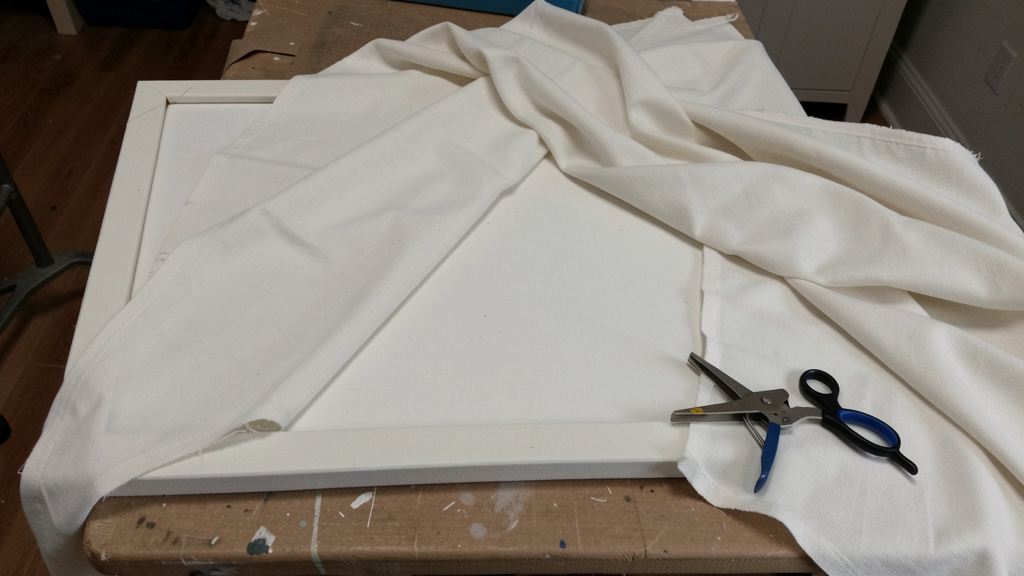
Ideal for permanent installations where wall integrity allows secure mounting. Fabric is stretched over a rigid wooden frame (like a canvas), then hung. The frame bears all structural load; fabric experiences only lateral tension. This protects delicate textiles (silk, heirloom pieces), accommodates heavier weights (velvet, tapestry weaves), and creates a clean, finished edge. The slight air gap behind the fabric also permits minimal airflow, reducing moisture-trapping risks in variable climates.
When to choose this pillar:
– Fabric weight exceeds 6 oz/yd² (e.g., upholstery linen, wool blends)
– Preserving textile integrity is a priority (heirlooms, delicate weaves)
– Walls have accessible studs for secure hanging
– You seek a gallery-like, permanent focal point
Key considerations:
– Frame selection: Kiln-dried pine or poplar stretcher bars (1.5″–2″ depth). Avoid unseasoned wood, which may warp. For frames wider than 48″, add a center brace.
– Fabric prep: Pre-wash and dry fabric using your intended future care method to prevent post-installation shrinkage. Allow 3–4″ excess on all sides.
– Stretching sequence: Lay fabric face-down on a padded surface. Center frame. Staple the midpoint of one long edge, then the opposite midpoint. Repeat for the remaining sides. Work outward from centers toward corners, maintaining even tension—like tightening a drumhead gradually. Fold corners into neat “hospital corners” before final stapling.
– Hanging: A French cleat system (two interlocking wooden strips) distributes weight evenly across the top edge and allows easy removal. Attach one cleat to wall studs; the mating cleat to the frame back. For frames over 36″ wide, avoid single-point hangers (like D-rings), which concentrate stress.
Adaptations for common scenarios:
– Lightweight fabrics (chiffon, voile): Interface with lightweight fusible woven stabilizer (e.g., Pellon SF101) before stretching to prevent tearing at staple points.
– Stretchy knits (jersey): Stretch only 10–15% beyond relaxed state during mounting to avoid permanent deformation. Consider hand-stitching to a stabilized backing instead of stapling.
– Humid climates: Assemble the wooden frame 24 hours before stretching to allow ambient moisture stabilization. Seal frame edges with clear shellac to reduce moisture absorption.
– Historic plaster walls: Mount cleats only into verified studs. Avoid multiple anchor points that could stress fragile plaster.
Illustrative example: A documented installation in the Pacific Northwest used a pre-washed cotton jacquard bedspread stretched over a poplar frame. Because only one wall stud was accessible, the installer anchored a full-width French cleat into that stud with toggle bolts supporting the opposite end. Paired with UV-filtering window film on adjacent windows, the piece remained taut and colorfast for several years. Note: Longevity depends on multiple factors including light exposure, humidity control, and material quality.
Pillar 2: The Adhesive Anchor (Renter-Friendly, Removable)
Designed for temporary installations where drilling is restricted. This method isolates functions: a rigid backing board (foam core, Gatorfoam) supports the fabric; engineered removable adhesives bond the board to the wall; fabric attaches reversibly to the board. This separation prevents adhesive contact with fabric fibers and minimizes wall damage upon removal—addressing the core failure points of direct “peel-and-stick fabric” approaches.
When to choose this pillar:
– Rental agreements prohibit nails, screws, or wall damage
– Short-term installations (seasonal decor, temporary spaces)
– Walls have sound paint adhesion (verified by test)
– Fabric is medium-weight or lighter (<6 oz/yd²)
Critical protocol steps:
1. Board selection: ¼” acid-free foam core (for dry areas) or moisture-resistant Gatorfoam (for humid zones like bathrooms). Cut 1–2″ smaller than fabric to create a subtle floating effect.
2. Fabric attachment to board:
– Lightweight fabrics: Use low-tack, repositionable spray adhesive (e.g., 3M Spray Mount™ Artist’s) applied only to the board. Smooth fabric from center outward using a brayer or wrapped credit card.
– Delicate fabrics (silk, chiffon): Hem the top edge over a thin wooden dowel. Attach small painted binder clips to the board’s top edge; slide dowel into clips.
– Heavy fabrics: Mount to ⅛” plywood backing; secure top edge with minimal upholstery tacks (hidden by clips).
3. Wall preparation: Clean surface with 70% isopropyl alcohol wipe. Let dry completely. Always perform an adhesion test: Apply adhesive strip to an inconspicuous area (inside closet), wait full cure time (per product instructions), then remove slowly. If paint lifts, choose another pillar.
4. Adhesive selection: Match strip size precisely to total weight (board + fabric + hardware). For humidity >60%, Scotch® Removable Mounting Squares often maintain bond integrity better than standard Command™ strips. Apply strips in a perimeter-plus-center pattern for boards over 24″x24″.
5. Removal: Warm strip with hairdryer on low for 30 seconds. Hold board firmly. Stretch strip straight down toward floor (not outward). Use dental floss to gently saw away residual adhesive. Wipe area with alcohol.
Climate-aware adjustments:
– High humidity (coastal, bathrooms): Seal board edges with clear acrylic spray. Choose solution-dyed polyester fabric (inherently mildew-resistant). Install away from direct water spray. Include silica gel packets discreetly behind the board if feasible.
– Older paint (pre-2010): Matte or flat paints bond less securely. The adhesion test is non-negotiable. If test fails, pivot to tension rod methods (Pillar 4 variation) or seek landlord permission for minimal fasteners.
– Temperature extremes: Adhesives perform best between 60°F–80°F (15°C–27°C). Avoid installation during heatwaves or deep cold.
Documented application: In a documented Miami apartment bathroom installation, solution-dyed polyester fabric was mounted to sealed Gatorfoam using humidity-rated adhesive squares. Positioned opposite the shower (avoiding direct spray) and paired with bathroom ventilation, the piece remained securely mounted for over a year with no mold development and removed cleanly during move-out. Success relied on material selection matching environment, adhesive specification, and strategic placement.
Pillar 3: The Floating Illusion (Shadow Gap Depth)
Creates the visual effect of fabric hovering slightly from the wall, casting subtle shadows that enhance texture and dimension. The intentional air gap (typically ¼”–½”) serves functional purposes: it allows minimal airflow to reduce moisture accumulation against the wall, conceals minor surface imperfections, and transforms flat fabric into dynamic sculpture responsive to changing light.
When to choose this pillar:
– Walls prone to minor condensation (exterior walls, basements with moisture control)
– Highlighting textured fabrics (slub linen, bouclé, handwoven pieces)
– Creating visual depth on large, flat wall sections
– Hiding hairline cracks or uneven patches in older walls
Construction essentials:
– Backing panel: ½” MDF (sealed on all edges with shellac or primer to prevent swelling) or PVC board (Sintra) for moisture-prone areas. Cut 1–3″ smaller than fabric on all sides.
– Spacers: Uniform ¼” wooden strips (sanded smooth) or plastic standoff mounts. Attach vertically along the panel back perimeter (corners plus every 12″). Verify identical thickness with calipers if possible; variance causes misalignment.
– Fabric mounting: Attach fabric to panel before installing spacers. Stretch to “comfortable tautness”—resistant but not drum-tight—to accommodate natural fiber relaxation. Trim excess precisely flush with panel edges.
– Wall mounting: French cleat system preferred for weight distribution. If studs are inaccessible, use heavy-duty drywall anchors rated for double the panel’s total weight. Always verify anchor capacity exceeds load.
Refinements for impact:
– Light integration: Embed low-voltage LED strip lighting (warm white, dimmable) along the top spacer. Light washes upward across the fabric back, creating a soft glow through semi-sheer materials like linen or organza. Ensure wiring complies with local electrical safety guidelines.
– Graduated depth: Use spacers of incrementally increasing thickness along one edge (¼” → ½” → ¾”) to create a sweeping light shadow effect, ideal for ombré or gradient fabrics.
– Alignment precision: Project horizontal and vertical laser lines onto the wall. Hang the center-top module first. Use consistent spacer blocks (cut wood scraps) between modules during installation to maintain uniform gaps.
Troubleshooting notes:
– Panel wobble: Shim behind spacers with thin cardboard at contact points.
– Uneven shadow line: Caused by wall irregularities. Use a straightedge to identify low spots; add micro-shims during mounting.
– Fabric relaxation over time: Natural fibers may ease slightly. Initial tension should allow 1–2% elasticity. If sagging occurs, reinforce attachment points or add mid-edge spacers.
Pillar 4: The Modular Grid (Interlocking Units)
Divides large wall areas into harmonious, repeatable modules. Inspired by Japanese shoji screens or Moroccan tilework, this approach offers flexibility: damaged units can be replaced individually, layouts can evolve, and installations become portable. Psychologically, grids provide visual rhythm that reduces perceived chaos in expansive spaces. They also accommodate imperfect walls—each module aligns to its own frame, ignoring underlying surface flaws.
When to choose this pillar:
– Large blank walls (staircase landings, above sofas, bedroom headboards)
– Collaborative projects (family members decorating individual panels)
– Renters planning future moves
– Walls with significant irregularities or obstacles (outlets, windows)
Design and execution workflow:
1. Layout planning: Photograph the wall. Sketch grid options on graph paper or using a room-planning app. Standardize module size (e.g., 12″x12″, 16″x24″). Maintain consistent spacing (1″–2″) between modules. Create a full-scale paper template; tape to wall to verify proportion before cutting materials.
2. Batch processing: Cut all backing boards simultaneously using a stop block for uniformity. Label each (A1, B2). Arrange fabric pieces like a puzzle to minimize waste. Complete assembly steps across all modules sequentially (mount fabric → attach hardware → finish edges).
3. Hanging sequence: Install a horizontal laser level line at the grid’s top edge. Hang the center-top module first. Work outward horizontally, using spacer blocks to maintain gaps. Drop vertical laser lines for subsequent rows. Step back frequently to assess alignment from primary viewing positions.
4. Hardware standardization: Use identical hanging systems (French cleats, D-rings) on every module to ensure consistent depth and alignment.
Creative variations:
– Asymmetrical balance: Cluster modules densely in one area, sparse in another. Balance visual weight (e.g., a dark fabric cluster counterweighted by a larger light-fabric section).
– Organic flow: Arrange modules along a gentle arc or wave. Trace the curve precisely on your paper template first.
– Functional integration: Replace one module with a shallow floating shelf (matching panel depth) to display complementary objects. Or incorporate a small framed mirror module to reflect light.
– Reconfigurable system: Attach hook-and-loop tape (Velcro) strips to module backs and a fabric-covered backing board on the wall. Allows seasonal rearrangement.
Real-world adaptation: A documented installation on a 12-foot staircase wall with uneven plaster used twenty-four 14″x14″ modules of vintage block-print cotton. During hanging, installers discovered the wall leaned 1.5 degrees. They compensated by adjusting spacer thickness behind specific modules, achieving a visually straight grid despite the wall’s flaw. The modular approach allowed correction without redoing the entire project. When the household relocated two years later, modules were unhooked and transported intact.
Pillar 5: The Textural Layer (Intentional Composition)
Moves beyond single-fabric application into deliberate layering of textures, weights, and transparencies. This pillar engages visual and tactile perception—raw linen as a base, sheer organza overlay printed with botanical motifs, a narrow strip of embroidered silk tracing a vertical line. Layering invites closer looking, creates shifting interest with light changes, and can convey personal narrative without words.
When to choose this pillar:
– Creating focal points with emotional resonance (memorial pieces, heritage textiles)
– Adding depth to acoustically “live” rooms (layers absorb varied sound frequencies)
– Spaces intended for quiet contemplation (bedrooms, reading nooks)
– When working with meaningful fabric fragments too small for full panels
Layering principles for cohesion:
– Rule of three: Limit visible distinct textures per composition (e.g., base: medium linen; mid-layer: sheer cotton voile; accent: narrow brocade strip).
– Value contrast: Ensure layers differ noticeably in lightness/darkness. Test combinations under your room’s actual lighting.
– Scale harmony: Pair large-scale textures (bouclé) with fine details (lace). Avoid competing similarly scaled textures.
– Breathing space: Leave intentional negative space between layered elements to prevent visual crowding.
Attachment methods by fabric type:
– Fusible web (HeatnBond Lite): For stable fabrics (cotton, linen). Iron to wrong side of overlay piece. Peel paper. Position. Cover with pressing cloth; iron briefly. Always test on scrap first. Avoid on silk, velvet, or heat-sensitive synthetics.
– Hand stitching: Blind stitch with matching thread for heirlooms or delicates. Stitch only at edges, ¼” apart. Nearly invisible; allows future removal.
– Fabric glue dots (Beacon Fabri-Tac): Tiny dots on overlay back for temporary placement or prototyping. Allows repositioning before full cure (~15 mins). Not recommended for permanent heavy overlays.
– Dimensional elements: Fabric-covered buttons sewn at intervals; rolled fabric cording glued in patterns; small tucked pleats secured only at the top edge.
Contextual considerations:
– Light interaction: Layer sheer fabrics over opaque bases. Backlighting (window or hidden LED) creates luminous effects. Dark sheer over light base deepens color; light sheer over dark base softens dramatically.
– Preservation awareness: UV exposure degrades dyes fastest at layer edges. Rotate removable overlay elements annually if possible. Use UV-filtering window film. In humidity >60%, include discreet silica gel packets behind the installation; replace quarterly.
– Dusting: Layered textures trap dust. Use a soft hake brush weekly, sweeping gently downward. Avoid vacuuming directly on delicate overlays.
– Cultural sensitivity: When incorporating textiles with cultural significance (e.g., ceremonial fabrics), research respectfully. Prioritize pieces with personal connection or created by artisans who welcome broader appreciation. When in doubt, focus on universal textile techniques rather than specific sacred motifs.
Fabric Selection: Beyond Aesthetics to Longevity
Choosing fabric solely for color or pattern risks premature fading, sagging, or damage. This section guides material selection based on observable properties and environmental context—transforming guesswork into informed choice.
Fiber Properties and Environmental Response
| Fiber Type | Best Applications | Key Considerations | Light Sensitivity | Humidity Notes |
|---|---|---|---|---|
| Linen | Floating panels, textured layers, breathable climates | Slub texture hides minor imperfections. Pre-wash to minimize future shrinkage. | Moderate resistance | Absorbs and releases moisture readily. Ideal for humid climates when mounted with an air gap. Avoid direct adhesion in damp areas. |
| Cotton | Most techniques (quilting cotton for grids; duck canvas for frames) | Prone to fading. Pre-wash essential. Mercerized cotton has smoother drape. | Lower resistance | Swells slightly in humidity. Pre-shrinking critical. Use caution in bathrooms without moisture barriers. |
| Silk | Floating illusions, layered accents, low-light interior walls | Extremely delicate. Avoid adhesives; prefer hand-stitching. Professional cleaning only. | Very sensitive | Weakens when damp. Requires stable, climate-controlled environments. Not recommended for high-humidity zones or direct sun. |
| Wool | Textural layers, acoustic enhancement, cooler climates | Moth vulnerability. Include cedar blocks or lavender sachets behind panel. Heavy—requires robust mounting. | Good resistance | Naturally moisture-wicking and mildew-resistant. Suitable for basements with air gap mounting and moisture control. |
| Polyester (Solution-Dyed) | High-traffic areas, rentals, humid zones, sun-exposed walls | Seek textured weaves (slub, bouclé) to avoid “synthetic” appearance. Static-prone in dry air. | Excellent resistance | Hydrophobic—repels moisture. Ideal for bathrooms when mounted on moisture-resistant board. |
| Rayon/Viscose | Draping effects, sheer overlays (with caution) | Weakens significantly when wet. Wrinkles easily. High maintenance. | Poor resistance | Absorbs moisture like cotton but with less strength. Not recommended for variable humidity or beginner projects. |
| Blends (e.g., Cotton/Poly) | Balanced performance across conditions | Higher polyester content improves fade resistance; higher cotton content increases breathability. | Moderate to good | More dimensionally stable than pure natural fibers. A versatile choice for regions with seasonal shifts. |
Light sensitivity guidance: Based on general textile conservation knowledge. Darker, solution-dyed colors typically resist fading better than brights or pastels. Direct sun accelerates degradation for all fibers.
Humidity guidance: Always pair material choice with appropriate mounting technique (e.g., air gap for moisture-prone areas).
Weight, Weave, and Structural Behavior
Fabric weight (ounces per square yard) and weave density directly impact installation success:
– Lightweight (<4 oz/yd²): Chiffon, voile, organza, fine silk. Requires rigid backing support (Pillars 2, 3, 5). Cannot be tension-mounted alone—it may tear at fastening points. Ideal for layering over opaque bases. Tip: Interface with lightweight fusible stabilizer to add body while retaining translucency.
– Medium Weight (4–8 oz/yd²): Quilting cotton, linen, lightweight wool. The most versatile range. Works well with tension mounting, board mounting, and layering. Ensure tight weave: hold to light; minimal light passing through indicates better dimensional stability.
– Heavyweight (>8 oz/yd²): Upholstery fabric, canvas, tapestry weaves, heavy velvet. Requires robust framing (Pillar 1) or thick backing (Pillar 3). Never use adhesive-only methods. Weight demands secure anchoring into wall studs. Tip: For pile fabrics (velvet, corduroy), maintain consistent nap direction (all fibers flowing downward) to avoid visible color shifts under light.
Weave types influence visual effect:
– Plain weave (linen, broadcloth): Showcases fiber texture. Forgiving of minor mounting imperfections.
– Twill weave (denim, gabardine): Diagonal rib adds subtle movement. Hides soil well.
– Satin weave (sateen, charmeuse): Lustrous surface. Shows every wrinkle—requires flawless mounting and low-traffic placement.
– Jacquard/complex weaves (brocade, damask): Intricate patterns woven in. Best viewed under diffuse, even lighting to appreciate detail without harsh highlights.
Sourcing Thoughtfully: Ethics, Economy, and Uniqueness
- Thrifted/Upcycled Textiles: Vintage bedspreads, saris, curtains, or wool blankets offer character and sustainability. Preparation: Inspect thoroughly for stains, weakness, or pests. Wash gently before cutting if fabric allows. Test colorfastness: dampen hidden area, press with white cloth; if color transfers, seek professional cleaning advice. Ethical note: Approach culturally significant textiles with respect. Avoid items with known ceremonial or sacred purpose unless you have direct cultural connection and understanding.
- Remnant Bins & Sample Sales: Upholstery workrooms, theater costume departments, or designer sample sales often sell remnants at significant discounts. Ideal for modular grids or layered accents. Build relationships with local fabric store staff for notifications on large remnants.
- Artisan Sources: Platforms like Etsy (filter for “handwoven,” “natural dyes”) or Fair Trade Federation members connect you with makers. Request swatches to verify color and texture. Supporting traditional techniques preserves cultural heritage.
- Digital Printing: Services like Spoonflower allow custom designs. Critical: Select durable bases (“heavyweight cotton sateen,” “linen-cotton blend”). Confirm ink type—pigment-based inks generally offer better lightfastness than dye-sublimation. Always order a test swatch to verify color accuracy and hand feel.
Climate-Responsive Selection Guide
- High Humidity (Coastal, Tropical): Prioritize solution-dyed polyester, acrylic, or tightly woven linen with air gap mounting. Avoid rayon, untreated cotton, silk. Seal board edges. Ensure room ventilation.
- Intense Sunlight (Southwest, High Altitude): Choose solution-dyed synthetics, darker colors, or fabrics with UPF ratings. Install on north-facing walls when possible. Apply UV-filtering window film before installation. Rotate layered elements annually.
- Dry Climates (Desert, Heated Interiors): Natural fibers (cotton, linen, wool) benefit from ambient moisture release. Combat static with room humidification (target 40–50% humidity). Avoid over-processed synthetics.
- Seasonal Swings (Midwest, Northeast): Blends (cotton/poly) or medium-weight wools offer stability. Use floating mount (Pillar 3) to accommodate minor fabric expansion/contraction. Avoid installation during extreme humidity or dryness; ideal conditions are 40–50% relative humidity.
Wall Preparation: The Foundation of Longevity
Skipping preparation risks adhesive failure, paint damage, or misaligned installations. This section provides substrate-specific protocols. Invest 1–2 hours here to prevent future frustration.
Identify Your Wall Substrate
- Drywall (Post-1950 homes): Smooth painted surface; hollow sound when tapped. Vulnerability: Paper facing can tear if adhesives are removed improperly. Paint adhesion varies by age and quality.
- Plaster (Pre-1950 homes): Hard, dense surface; solid “thunk” when tapped. May show hairline cracks. Vulnerability: Brittle; drilling can cause spiderweb cracks. Pre-1978 plaster may contain lead-based paint.
- Concrete/Block (Basements, exterior walls): Cold to touch; visible aggregate. Vulnerability: Moisture wicking; alkaline surface may degrade some adhesives.
- Wood Paneling (1970s homes, cabins): Visible grain or grooves. Vulnerability: Uneven surface; wood expands/contracts with humidity.
Universal Preparation Sequence (All Substrates)
- Clear and Protect: Remove hangings, outlet covers. Cover floor with drop cloth extending 3+ feet from wall. Mask adjacent trim with painter’s tape.
- Clean Thoroughly:
- Solution: 1 cup warm water + 1 tbsp mild dish soap + 1 tbsp white vinegar.
- Wipe wall in 2’x2′ sections with barely damp microfiber cloth. Rinse cloth frequently.
- For nicotine stains: Add ½ cup baking soda to solution. For kitchen grease: Use TSP substitute per label.
- Dry immediately with clean microfiber cloth to prevent moisture retention.
- Repair Imperfections:
- Hairline cracks: Fill with lightweight spackling paste. Feather edges. Sand smooth when dry.
- Nail holes/dents: Patch with spackle. Sand lightly.
- Peeling paint: Scrape loose edges. Sand smooth. Prime bare spot before repainting.
- Prime Repaired Areas: Apply stain-blocking primer (e.g., Zinsser Bulls Eye 1-2-3) only to patched areas. Feather edges into surrounding wall. Let dry completely.
- Adhesion Test (Critical for adhesive methods): Apply your chosen adhesive strip to an inconspicuous spot. Wait full cure time. Remove slowly per instructions. Pass: Clean removal, no paint damage. Fail: Switch to mechanical mounting (into studs) or tension-based methods.
Substrate-Specific Protocols
Problem Drywall (Poor Paint Adhesion):
If paint scrapes off easily: Lightly sand installation area with 120-grit sandpaper to de-gloss. Wipe dust with tack cloth. Apply bonding primer (e.g., INSL-X STIX) to the entire area. Let dry 24 hours before mounting.
Historic Plaster (Pre-1940 Homes):
– Lead safety: If home built before 1978, assume lead paint. Wear N95 mask. Use HEPA vacuum for dust. Contain area with plastic sheeting. Consider a lead test kit.
– Cleaning: Use dry microfiber cloth only; avoid moisture.
– Repairs: Use lime-based plaster compound, not modern spackle.
– Mounting: Prioritize tension rods (Pillar 4 variation) or French cleats anchored only into verified studs. Avoid adhesives directly on fragile surfaces.
Moisture-Prone Concrete (Basements):
1. Moisture test: Tape 12″x12″ plastic sheet tightly to wall. Wait 24 hours. Condensation under sheet = active moisture. Do not proceed until resolved (dehumidifier, sealant, drainage).
2. Seal: Apply masonry waterproofer (e.g., Drylok). Cure 72 hours.
3. Prime: Use masonry primer (e.g., Zinsser Watertite).
4. Mount: Use mechanical fasteners (concrete screws) or adhesives rated for damp surfaces. Choose PVC or marine plywood backing—never foam core.
Textured Walls (Orange Peel, Knockdown):
– Light texture: Lightly sand with 220-grit sponge to reduce peaks. Prime.
– Heavy texture: Do not sand extensively. For floating panels (Pillar 3), spacers bridge gaps naturally. For adhesive mounts, use extra-thick adhesive strips (Command™ Large) that conform to texture. For tension mounts, frame hangs away from texture; focus prep only on mounting points.
Tool Guidance: Purposeful Selection and Safe Use
Owning tools matters less than understanding their purpose. This section clarifies why specific tools excel for tasks, with accessible alternatives.
Cutting and Measuring
- Rotary Cutter + Mat + Ruler: Cuts fabric cleanly without distortion. Alternative: Sharp fabric scissors (8″ knife-edge) + tailor’s chalk + straightedge. Cut single layers only to prevent shifting. Safety: Always cut away from your body; retract blade immediately after use.
- Laser Level: Projects perfectly straight lines for alignment. Critical for grids or multi-panel installations. Alternative: 48″ bubble level + chalk line. Snap horizontal reference lines; verify level at multiple points.
- Stud Finder: Locates wall studs for secure mounting of heavy items. Critical: Always mount frames over 10 lbs or large floating panels into studs. Drywall anchors are supplementary only. Verify stud location with a magnet (finds nails).
Fastening and Mounting
- Staple Gun (Heavy-Duty): For tension mounting fabric to frames. Use ¼”–⅜” galvanized staples. Space 1.5″–2″ apart. Test staple depth on scrap frame first. Safety: Keep fingers clear of nose; unload when not in use.
- Drill/Driver: For pilot holes and mounting hardware. Use brad-point bits for clean holes. Set clutch to low to prevent over-driving. Safety: Wear safety glasses. Verify no wires/pipes behind wall using stud finder with AC detection.
Specialized Helpers
- Brayer (Inking Roller): Eliminates air bubbles when adhering fabric to boards. Roll firmly from center outward. Alternative: Credit card wrapped in thin cloth.
- Seam Ripper: Safely corrects stitching errors on layered pieces. Insert point under stitch; lift gently; slide blade upward to cut thread.
- Hake Brush: Soft natural-bristle brush for gentle dusting of installed fabric art. Never use feather dusters—they scratch fibers.
Maintenance Reminder
Clean tools after use. Store blades covered. Replace dull blades promptly—dull tools cause accidents and poor results. For cordless tools, store batteries at 40–60% charge during extended non-use.
Troubleshooting Common Challenges
Even careful installations encounter hiccups. This guide offers context-aware corrections.
Persistent Wrinkles After Mounting
- Likely causes: Fabric not pre-shrunk; uneven tension during stretching; deep-set storage creases.
- Correction: For framed pieces, carefully remove staples near wrinkles. Lightly mist back of fabric with water. Wait 2 minutes. Re-stretch evenly. Re-staple. Dry slowly with cool hairdryer while maintaining tension. For adhesive-mounted boards: Place damp white cloth over wrinkle. Iron on lowest setting with pressing cloth between. Lift frequently. Test on scrap first.
- Prevention: Always pre-wash fabric. Use “cross-tension” stapling sequence (center of each side first). Store fabric rolled, not folded. Install during moderate humidity (40–50%).
Air Bubbles Under Fabric on Boards
- Likely causes: Uneven adhesive application; smoothing too quickly; humidity during application.
- Correction: Small bubbles (<1″): Pierce edge gently with needle; press air out; smooth with brayer. Large bubbles: Carefully lift fabric edge near bubble. Insert thin card; apply minimal adhesive; smooth down. For spray adhesive bubbles: Lightly mist back of fabric with water; wait 30 seconds; re-smooth.
- Prevention: Apply adhesive in thin, even coats. Smooth fabric from center outward in multiple directions. Work in low-humidity environment (<50%). Use repositionable spray adhesive for initial placement.
Fabric Sagging or Edge Lifting
- Likely causes: Insufficient fasteners; initial over-tensioning (natural fibers relax); adhesive mismatched to weight.
- Correction: Add staples midway between existing ones on frames. For adhesive mounts, remove board carefully; clean residue; apply fresh strips rated for double the weight. For floating panels, check spacer attachment; re-glue loose spacers; add mid-edge spacers.
- Prevention: Staple spacing ≤2″ on frames. Stretch to “comfortable tautness,” not drum-tight. Verify adhesive weight rating includes all components (board + fabric + hardware). In variable climates, floating mount (Pillar 3) accommodates material movement.
Uneven Grid Alignment
- Likely causes: Hung “by eye”; inconsistent hardware; non-flat wall surface.
- Correction: Remove modules. Reinstall using full-scale paper template taped to wall. Use laser level lines as guides. Hang center-top module first. Use spacer blocks between modules during hanging. For non-flat walls, shim behind specific modules with thin cardboard.
- Prevention: Always create paper template first. Use identical hanging hardware on every module. Install horizontal laser line at grid top. Step back frequently during hanging to assess from seating positions.
Adhesive Residue or Paint Damage During Removal
- Likely causes: Adhesive not rated for surface; removed too quickly/cold; paint not fully cured.
- Correction: Warm area with hairdryer (low, 30 sec). Stretch adhesive straight down. Use dental floss to saw gently between residue and wall. Wipe with isopropyl alcohol. For lifted paint: Clean area; apply tiny amount of matching paint with fine brush; feather edges.
- Prevention: Always perform adhesion test first. Use adhesives rated for your specific wall surface and paint type. Remove slowly after warming. Wait ≥7 days after painting before applying adhesives.
Color Fading in Sunlit Areas
- Likely causes: UV exposure; low lightfastness fabric; lack of window protection.
- Correction: Relocate piece if possible. Install UV-filtering window film immediately. Add sheer curtains to diffuse light.
- Prevention: Select fabrics with higher lightfastness (solution-dyed polyester, linen). Install on north-facing walls or away from direct sun. Apply UV film before installation. Rotate layered elements annually.
Preservation and Ongoing Care
Fabric wall art evolves with its environment. Thoughtful care sustains its presence.
Routine Maintenance
- Dusting (Weekly): Use soft hake brush. Start at top; sweep gently downward with the fabric weave. For textured fabrics, use vacuum on lowest suction with brush attachment held 1″ away. Never press nozzle against fabric. Avoid feather dusters or canned air.
- Environmental Awareness (Daily): Note sun patterns; close blinds during peak hours (10 am–4 pm) on light-sensitive pieces. Monitor humidity with a hygrometer; ideal range is 40–50%. Below 30% risks fiber brittleness; above 60% increases mildew risk. In high-traffic areas, gently remind others to avoid leaning objects against fabric walls.
Seasonal Checkpoints
- Spring: After heating season, assess humidity. If <30%, use a humidifier briefly. Inspect for static cling (indicates dryness).
- Summer: Verify UV protection is active. Check shadow gaps on floating panels for condensation in humid climates. Replace silica gel packets if used.
- Fall: Deep dust entire installation before heating season. Inspect for pest vulnerabilities as insects seek warmth.
- Winter: Monitor humidity closely; heating systems dry air significantly. Maintain ≥40% humidity with a humidifier. Avoid directing space heaters toward fabric walls.
Fabric-Specific Care Notes
- Natural Fibers (Cotton, Linen, Wool): Spot clean only if essential: Dampen white cloth with distilled water; blot gently from stain edge inward. Air dry immediately. For serious soiling, consult a textile conservator. Include cedar blocks or lavender sachets behind panels for moth prevention; refresh cedar every 6 months.
- Synthetics (Polyester, Acrylic): More resilient to cleaning. Spot clean with mild soap solution (1 tsp dish soap in 1 cup water). Blot. Rinse with damp cloth. Blot dry. Combat static in dry climates with room humidification.
- Delicate/Heirloom Pieces: Handle minimally. Wear clean cotton gloves during inspection. Consider UV-filtering acrylic glazing for high-light areas (though this alters visual texture). Budget for professional conservation cleaning every 5–10 years via the American Institute for Conservation directory.
Emergency Response
- Liquid Spills: Blot immediately with clean, absorbent white cloth. Press straight down—do not rub. Continue with dry cloth sections until moisture no longer transfers. Do not apply water or cleaners. For sugary or oily spills, consult a textile conservator after initial blotting.
- Pest Activity (Moths, Silverfish): Isolate affected panel in sealed plastic bag. Freeze for 72 hours to eliminate all life stages. Thaw slowly. Gently brush debris. Inspect entire installation. Place pheromone traps nearby. Maintain humidity <50%; use cedar/lavender deterrents.
- Water Exposure (Leak): Remove panel immediately. Lay fabric face up on clean, dry towels in ventilated area. Air dry slowly away from direct sun or heat. Once dry, inspect for mold. If present, consult a conservator. Address water source before reinstalling.
- Smoke/Soot: Do not touch. Cover gently with acid-free tissue paper. Contact a professional textile conservator immediately. Soot is abrasive and oily; improper handling embeds particles.
Your Questions, Answered
Q: Can I install fabric wall decor in a bathroom?
A: Yes, with careful material and method selection. Choose solution-dyed polyester or tightly woven linen. Mount to moisture-resistant backing (Gatorfoam, sealed PVC board) using humidity-rated adhesives (Scotch® Removable Mounting Squares). Install away from direct shower spray. Ensure bathroom has active ventilation (exhaust fan). Avoid natural fibers like cotton or silk in consistently damp environments.
Q: How do I remove wrinkles from fabric already installed?
A: For framed pieces: Carefully remove staples near wrinkles. Lightly mist the back of the fabric with water. Wait 2 minutes for fibers to relax. Re-stretch evenly and re-staple. Dry slowly with a cool hairdryer while maintaining tension. For adhesive-mounted boards: Place a damp white cloth over the wrinkle. Iron on the lowest possible setting with a pressing cloth between iron and fabric. Lift frequently. Always test any method on an inconspicuous area or scrap first.
Q: What’s the most reliable method for renters?
A: The Adhesive Anchor pillar (Pillar 2) offers the strongest balance of security and removability when executed correctly. Key steps: 1) Perform the adhesion test on your specific wall paint first. 2) Match adhesive strip size precisely to total weight. 3) Use rigid backing (foam core/Gatorfoam) to distribute weight. 4) Follow the manufacturer’s cure time and removal protocol exactly. If the adhesion test fails, pivot to tension rod methods (hanging fabric between ceiling and floor rods) or seek landlord permission for minimal, stud-anchored fasteners.
Q: How long will fabric wall art last?
A: Longevity depends on multiple interacting factors: fabric fiber and dye quality, light exposure, humidity levels, mounting method, and care. Solution-dyed polyester in a low-light, climate-controlled room with proper mounting may retain vibrancy for many years. Silk in direct sun will fade noticeably faster. Focus on controllable factors: use UV protection, select climate-appropriate materials, and follow maintenance guidance. View fabric walls as evolving elements—they may be refreshed or replaced as your space and story change.
Q: Can I install fabric on a heavily textured wall (like knockdown)?
A: Yes. For floating panels (Pillar 3), spacers naturally bridge texture gaps—no wall smoothing needed. For adhesive mounts, use extra-thick adhesive strips (Command™ Large) designed to conform to texture. For tension mounts (Pillar 1), the frame hangs away from the wall surface; focus preparation only on the precise mounting points. Avoid methods requiring large areas of direct fabric-to-wall contact on heavy textures.
Q: How do I clean dusty fabric wall art?
A: Weekly dry dusting is sufficient for most installations. Use a soft hake brush, starting at the top and sweeping gently downward with the fabric weave. For textured weaves (bouclé, slub linen), a vacuum on the lowest suction setting with a brush attachment held 1″ away can help—never press the nozzle against the fabric. Never use liquids, sprays, or feather dusters. For embedded soil, consult a textile conservator.
Q: What if I make a mistake during installation?
A: Most errors are correctable. Wrinkles? Re-stretch (Pillar 1) or re-smooth (Pillar 2). Misaligned grid? Remove modules and reinstall using a paper template and laser lines. Adhesive failure? Clean residue thoroughly and reapply strips rated for double the weight. View mistakes as learning steps. Keep scraps of your fabric and backing materials for practice and repairs. The modular grid approach (Pillar 4) intentionally limits the impact of errors to single units.
Q: Is fabric wall decor safe around children or pets?
A: Safety depends on installation security and material choice. Ensure all mounting hardware is firmly anchored (into studs for heavy pieces). Avoid dangling elements small children could pull. Choose durable, washable fabrics for high-contact areas. Keep installation height above typical reach for curious hands or paws. For homes with pets prone to scratching, consider placing fabric art in lower-traffic rooms or using protective barriers during initial adjustment periods.
Q: Can I reuse fabric if I move?
A: Absolutely—this is a key advantage of several pillars. Tension-mounted frames (Pillar 1) unhook easily from French cleats. Adhesive Anchor boards (Pillar 2) remove cleanly when protocols are followed. Modular grids (Pillar 4) are designed for disassembly and transport. Floating panels (Pillar 3) detach from cleats. Store pieces flat or rolled (never folded) in acid-free tissue paper inside sturdy boxes. Label hardware and modules for easier reinstallation.
Q: How much does this typically cost?
A: Costs vary widely based on scale and materials. A small renter-friendly panel (Pillar 2): $15–$40 (remnant fabric, foam core, adhesive strips). A medium tension-mounted frame (Pillar 1): $30–$80 (fabric, stretcher bars, staples, cleat). A large modular grid (Pillar 4): $60–$150+ (multiple boards, fabric, hardware). Prioritize spending on mounting hardware and adhesives appropriate for your wall and weight—this prevents costly damage or redoing. Thrifted fabrics and remnant bins significantly reduce material costs.
Conclusion: Your Next Step Toward a Thoughtful Space
Creating fabric wall art is less about technical perfection and more about intentional connection—to materials, to place, to personal story. You’ve explored five adaptable pillars, learned to match technique to your unique constraints, and gained context-aware strategies for selection, installation, and care. Remember these three anchors:
1. Assess before acting: Wall type, fabric properties, and environmental factors guide the right method.
2. Prepare thoroughly: Wall readiness and material prep prevent most common issues.
3. Embrace evolution: Fabric walls can grow with you—refreshed, relocated, or reimagined.
The 24-Hour Rule
Within the next day, take one small, pressure-free step: Select a single fabric swatch you love. Hold it against your intended wall at two different times of day (morning and late afternoon). Observe how natural light changes its color, texture, and shadow. Notice how it feels beside existing elements in the room. This simple act builds intuitive understanding without commitment. No tools, no purchases—just mindful observation.
The Bigger Picture
Walls are more than boundaries; they frame how we experience home. Introducing textile elements invites softness, memory, and sensory richness into daily life. Whether you create a single framed fragment or a collaborative grid of family stories, your installation becomes part of your space’s living narrative. Honor the process. Celebrate incremental progress. And trust that a wall touched by hand and intention holds meaning far beyond decoration.
Continue Your Creative Journey:
The Art of Textile Preservation at Home | Sustainable Sourcing: Finding Ethical Fabrics | Beyond Paint: Unexpected Wall Transformations | Lighting for Texture: Illuminating Handmade Art | From Scrap to Statement: Upcycling Vintage Textiles | The Quiet Language of Color in Interiors | Seasonal Shifts: Adaptable Decor for Changing Light