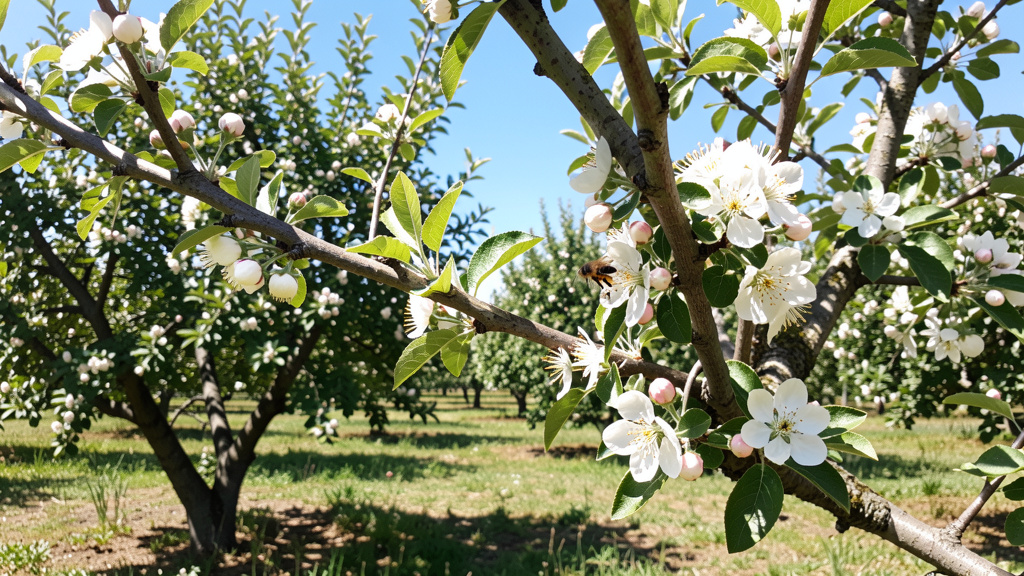
Make Informed Choices: A Practical Guide to Selecting Fruit Trees Aligned With Your Local Conditions and Biological Realities
Choosing fruit trees requires understanding two foundational elements: how your local climate interacts with a tree’s biological needs, and how pollination dynamics influence fruit production. This guide synthesizes horticultural principles, regional growing patterns, and practical orchard considerations into a clear, actionable framework. Whether your space is expansive or compact, you’ll gain the knowledge to select trees suited to your environment—supporting healthier growth and more consistent seasonal outcomes.
Introduction
Each spring, garden centers welcome hopeful growers envisioning home-harvested fruit. Yet by season’s end, many trees underperform due to overlooked factors decided long before planting: climate alignment and pollination compatibility. These elements consistently emerge in horticultural resources as pivotal to home orchard outcomes. This guide bridges fragmented advice with integrated understanding. Drawing on aggregated insights from land-grant university publications, horticultural societies, and documented regional growing patterns across North America and Europe, we offer a structured approach. You’ll learn to assess your site’s specific conditions—not rely on generalized recommendations. This process cultivates informed intuition for matching trees to place. By applying these principles, you lay groundwork for trees that integrate sustainably into your landscape, offering seasonal rewards aligned with ecological realities.
The Climate-Pollination Synergy Framework
Success arises from recognizing how climate factors and pollination requirements interact. A tree suited to your temperature range may still yield little fruit if bloom timing mismatches local pollinators. Conversely, ideal pollination partners fail if one cannot tolerate local conditions. This eight-step framework transforms complexity into clarity. Work through each phase sequentially—each builds on the previous. Document your observations. Thoughtful preparation significantly influences long-term outcomes.
Step 1: Decoding Your True Climate Zone—Beyond the Map
Most begin with the USDA Hardiness Zone Map (North America) or RHS Hardiness Ratings (UK/Europe). These indicate average annual extreme minimum temperature—a single metric reflecting the coldest temperature a location might experience over a decade. They do not capture summer heat intensity, humidity, rainfall distribution, wind exposure, or year-to-year variability. Treating zone maps as definitive invites misalignment.
Why this step matters:
A tree labeled for “Zone 7” may survive brief dips to 0°F (-18°C). However, if localized conditions occasionally reach -5°F (-21°C) during anomalous cold events, marginally hardy trees face dieback risk. Conversely, a Zone 5 apple might thrive in a Zone 6 location if planted on a north-facing slope that delays bloom, reducing exposure to late spring frosts. The zone is an initial filter, not a final determinant.
How to assess your functional climate context:
1. Identify your official zone: Use the USDA Plant Hardiness Zone Map (2023 update) for North America (planthardiness.ars.usda.gov) or RHS resources for UK/Europe. Note the precise subzone (e.g., 7a = 0 to 5°F / -18 to -15°C).
2. Review historical weather extremes: Consult your state/provincial climatology office or NOAA archives for “[Your County] historical extreme minimum temperature.” Localized pockets may experience colder readings than regional maps suggest.
3. Account for micro-influences: Urban areas often run 5–10°F (3–6°C) warmer than nearby rural zones due to heat retention from pavement and structures. A variety struggling in open countryside might establish reliably against a south-facing urban wall.
4. Engage local knowledge: Contact your county Cooperative Extension office. Ask: “What practical hardiness limits do local growers observe?” They often share nuanced insights absent from maps—such as elevation effects or recurring frost pockets.
Common pitfalls to avoid:
– Assuming uniformity within a zone: Elevation shifts of 300 feet can alter effective hardiness. Valleys may be significantly colder than adjacent slopes.
– Overlooking heat accumulation: The American Horticultural Society’s Heat Zone Map (days above 86°F / 30°C) affects fruit development. Some European pear varieties may set fruit poorly in regions exceeding 90 such days annually, even with adequate winter chill.
– Ignoring climate type differences: Two Zone 7a locations—Portland, Oregon (maritime: mild winters, cool summers) versus Louisville, Kentucky (continental: colder winters, hotter humid summers)—support different varieties. Apricots thriving in Portland may struggle in Louisville due to insufficient chill accumulation or humidity-related disease pressure.
Illustrative application: In a Zone 7b region with documented late-spring frost events, selecting an apple variety with later bloom timing (e.g., ‘Enterprise’) may better avoid bloom damage than an early bloomer like ‘Gala’, even if both are zone-appropriate. Localized timing matters as much as temperature range.
Step 2: Calculating Chill Hours and Heat Requirements—The Biological Clock
Chill hours represent cumulative exposure to temperatures between 32°F and 45°F (0°C to 7°C) during dormancy. This period triggers physiological processes essential for uniform bud break, flowering, and fruit set. Insufficient chill leads to erratic growth: delayed or sparse flowering, prolonged bloom periods, and reduced yields. Excess chill for low-requirement varieties may cause premature bloom, increasing frost vulnerability.
Why this step matters:
Chill alignment is frequently more critical to fruiting success than winter hardiness alone. A tree surviving cold winters but lacking required chill accumulation often produces minimal fruit—a subtle but common disappointment. Requirements generally fall into ranges:
– High Chill (800–1,200+ hours): Traditional apples (‘Granny Smith’, ‘Fuji’), European pears (‘Bartlett’), sweet cherries (‘Bing’), many peaches (‘Elberta’). Common in Pacific Northwest, Midwest, Northeast US, UK, Central Europe.
– Medium Chill (500–800 hours): Modern apples (‘Gala’, ‘Honeycrisp’), plums (‘Santa Rosa’), peaches (‘Redhaven’). Suitable for Mid-Atlantic US, parts of California, Southern UK.
– Low Chill (100–500 hours): Figs, persimmons, low-chill peaches (‘Desert Gold’), apples (‘Anna’, ‘Dorsett Golden’). Essential for Gulf Coast, Southern California, Florida, Mediterranean zones.
– Very Low Chill (<100 hours): Citrus (evergreen), some tropicals.
How to determine reliable local chill accumulation:
1. Use localized data sources: Search “[Your City/County] chill hour accumulation university extension.” Many agricultural departments publish hyperlocal estimates (e.g., UC Davis chill maps for California valleys).
2. Consider climate trends: In regions experiencing warming patterns, select varieties at the lower end of your historical chill range. If recent winters averaged 450 hours where 600 was typical, prioritize varieties requiring ≤500 hours.
3. Clarify measurement methodology: Nurseries may reference “Utah Model” (weighted hours) or simple “hours below 45°F.” Reputable suppliers specify their standard. When uncertain, contact the nursery directly.
4. Acknowledge variability: Natural fluctuations occur. Selecting a variety requiring slightly fewer chill hours than your reliable minimum provides a resilience buffer.
Critical complementary factor: Heat accumulation
After dormancy breaks, trees require sufficient growing degree days (GDD) above 50°F (10°C) to ripen fruit. A high-chill apple needing 1,000 chill hours and 2,500 GDD may not ripen fully in cool coastal summers, even with adequate chill. Cross-reference “days to harvest” with your local frost-free period.
Common pitfalls to avoid:
– Planting high-chill varieties in marginal zones: A ‘Bing’ cherry (900+ chill hours) in a region averaging 500–600 hours typically shows sparse flowering and minimal fruiting.
– Ignoring chill interruption: Warm spells above 60°F (15°C) during dormancy can partially reset accumulated chill. Varieties with modest buffers (e.g., selecting a 400-hour requirement tree where 500 hours are reliably accumulated) add security.
– Overlooking rootstock influence: Certain rootstocks may modestly influence scion behavior. Discuss site-specific considerations with knowledgeable nursery staff.
Illustrative application: In warmer zones with limited chill accumulation, selecting verified low-chill varieties (e.g., ‘Anna’ apple or ‘Desert Gold’ peach) significantly improves flowering reliability compared to standard varieties bred for colder regions.
Step 3: Mapping Your Microclimate—Your Yard’s Distinct Conditions
Your property contains microclimates—small-scale areas with unique temperature, sun exposure, wind, and moisture profiles. A single backyard may span conditions equivalent to multiple hardiness zones. Recognizing these variations allows thoughtful placement of marginally suited varieties.
Why this step matters:
Microclimates explain why identical plantings succeed in one spot and fail nearby. They provide opportunities to extend growing possibilities responsibly within ecological limits.
How to conduct a microclimate assessment (observe over several days):
– Sun Exposure Patterns:
– Full Sun (6+ hours direct sun): South-facing walls, open lawns. Best for heat-loving types: peaches, apricots, figs, pomegranates.
– Partial Sun (4–6 hours): East-facing walls (gentle morning light), areas under high-canopy trees. Suitable for pears, plums, sour cherries, some apples.
– Partial Shade (<4 hours): North-facing walls, dense shade. Generally unsuitable for fruiting trees (promotes leggy growth, disease susceptibility). Exceptions: Pawpaws tolerate shade; some figs may produce modestly.
– Tip: Observe sun patterns around the winter solstice. Areas receiving sun then typically receive ample sun year-round.
-
Cold Air Movement & Frost Pockets:
Cold air flows downward like water. Low spots, depressions, or enclosed courtyards often become “frost pockets” where temperatures dip 5–10°F (3–6°C) below nearby slopes. Avoid planting marginally hardy trees in these zones. South- or west-facing slopes allow cold air drainage, creating slightly warmer microsites ideal for tender varieties. -
Thermal Mass & Wind Protection:
- Masonry Walls: Absorb solar heat during the day, radiating warmth slowly overnight. South or west walls create favorable microsites for figs, pomegranates, or espaliered stone fruits.
- Windbreaks: Evergreen hedges (arborvitae, holly) or permeable fences reduce desiccating winds. Place 10–15 feet upwind of planting sites. Solid barriers directly behind trees can create turbulent airflow.
-
Water Features: Ponds or streams modestly moderate nearby temperatures, slightly reducing frost risk.
-
Soil Moisture Variations:
Sandy soils drain quickly and warm faster in spring. Clay soils retain moisture and cold longer. Note areas remaining soggy after rain—avoid planting stone fruits (peaches, plums, cherries) where drainage is poor to reduce root rot risk.
Common pitfalls to avoid:
– Planting tender varieties in low spots: Valleys or depressions may concentrate cold air, increasing winter injury risk.
– Ignoring reflected heat or light: Light-colored surfaces reflect intense light/heat; dark surfaces absorb and radiate warmth. Position accordingly.
– Overlooking structural shading: Roof overhangs or neighboring buildings may block critical winter sun or create dry zones beneath drip lines.
Illustrative application: In marginally cold zones, planting a cold-sensitive fig variety against a south-facing masonry wall, surrounded by dark gravel to absorb heat, can create a microclimate several degrees warmer than open areas—improving winter survival odds without guaranteeing success.
Step 4: Understanding Pollination Requirements—Beyond Simplified Labels
Pollination is a spectrum of biological strategies involving precise timing, genetic compatibility, and pollinator activity. Misunderstanding this leads to healthy trees that flower but fail to set fruit.
Why this step matters:
Fruit development requires viable pollen transfer to receptive flowers. Assuming all trees of a fruit type cross-pollinate is inaccurate. Genetic compatibility and synchronized bloom timing are essential.
Pollination categories clarified:
– Self-Fertile (Often Misstated as “Self-Pollinating”):
A single tree can produce fruit using its own pollen if pollinators (bees, wind) transfer pollen within or between its flowers. Truly autonomous self-pollination is rare. Most “self-fertile” types still benefit from insect activity. Common examples:
– Peaches/Nectarines: Most modern varieties (‘Redhaven’, ‘Fantasia’)
– Apricots: ‘Moorpark’, ‘Tilton’
– Plums: ‘Methley’, ‘Santa Rosa’ (partially self-fertile; yield improves with a partner)
– Cherries: Sour types only (‘Montmorency’, ‘Meteor’)
– Figs: Common fig types (‘Celeste’, ‘Brown Turkey’)
– Persimmons: Asian types (‘Fuyu’, ‘Hachiya’)
-
Self-Unfruitful (Requires Cross-Pollination):
Needs pollen from a genetically distinct, compatible variety blooming simultaneously. Includes most apples, pears, sweet cherries, and many plums.
Critical note: Two trees of the same cultivar (e.g., two ‘Honeycrisp’ apples) are genetic clones and will not cross-pollinate. Partners must be different varieties. -
Triploid Varieties (Special Consideration):
Some apples (‘Granny Smith’, ‘Jonagold’, ‘Bramley’s Seedling’, ‘Mutsu’) produce little or no viable pollen. They can receive pollen from compatible partners but cannot pollinate other trees. Planting two triploids yields no fruit. If selecting a triploid, include two additional non-triploid, bloom-compatible varieties.
How to verify compatibility reliably:
1. Consult nursery-specific charts: Reputable fruit tree nurseries provide detailed, variety-specific pollination guides. Generic online lists may contain errors.
2. Match bloom timing precisely: Partners must overlap in bloom for several days. Nurseries categorize bloom periods (Early, Mid, Late). Example pairings:
– Early Bloom: ‘Gala’ apple with ‘Dolgo’ crabapple
– Mid Bloom: ‘Honeycrisp’ apple with ‘Liberty’ apple
– Late Bloom: ‘Fuji’ apple with ‘Enterprise’ apple
Avoid pairing Early and Late bloomers unless charts confirm overlap.
3. Confirm genetic compatibility: Some varieties share genetic markers preventing cross-pollination (e.g., certain apple strains). Nursery charts account for this.
4. Consider pollinator range: Bees typically forage within 100 feet. Plant partners within 50–100 feet for reliable transfer. In very small spaces (<25 ft):
– Multi-graft trees: One tree with 2–4 compatible varieties (verify nursery grafting quality).
– Espalier cordons: Train compatible varieties side-by-side on a support system.
Common pitfalls to avoid:
– Assuming universal compatibility within fruit types: ‘Granny Smith’ (triploid) cannot pollinate ‘Fuji’; ‘Winesap’ and ‘Mutsu’ may be incompatible.
– Ignoring bloom timing mismatches: Early-blooming ‘Duke’ cherry and late-blooming ‘Bing’ cherry rarely overlap sufficiently.
– Overlooking pollinator activity: Pesticide use during bloom, poor weather, or lack of habitat reduces bee activity. Plant bee-friendly flowers (borage, lavender, alyssum) nearby and avoid bloom-time pesticides.
– Using sterile ornamentals: Some crabapples (e.g., ‘Spring Snow’) are bred to be fruitless and produce no viable pollen. Select fruiting or pollen-producing crabapple varieties if using for pollination.
Illustrative application: A single ‘Bing’ sweet cherry tree typically sets little fruit. Adding a compatible partner like ‘Stella’ (self-fertile) or ‘Rainier’ within 100 feet, with verified bloom overlap, enables cross-pollination where conditions support bee activity.
Step 5: Selecting Compatible Pollinators—Strategic Pairing
Choosing a pollinator involves matching bloom windows, verifying compatibility, and aligning with practical constraints like space and harvest management.
Why this step matters:
A poorly matched pollinator wastes resources and still fails to support fruiting. A thoughtful pairing enhances yield potential, extends harvest windows, and simplifies long-term care.
Pollinator selection process:
1. Start with your primary variety: Note its exact name, bloom period (Early/Mid/Late), and special notes (e.g., “triploid”).
2. Reference authoritative charts: Identify 2–3 recommended partners from your nursery or university extension resources. Prioritize partners that:
– Bloom in the same or adjacent period with confirmed overlap
– Are not triploids (unless adding a third variety)
– Offer complementary traits (e.g., disease resistance, harvest timing)
3. Evaluate secondary benefits:
– Harvest management: Pair early and late varieties of the same fruit for extended season (e.g., ‘Gala’ + ‘Fuji’ apples).
– Disease resilience: In fire blight-prone areas, select partners with documented resistance (e.g., ‘Liberty’ apple).
– Space efficiency: In tight spaces, choose a self-fertile partner that also produces desirable fruit (e.g., ‘Stella’ cherry pollinates ‘Bing’ and yields its own crop).
4. Seek localized validation: Ask your Extension office: “Which pollinator pairs consistently perform well for [Variety] in our area?” Local grower experience refines generic recommendations.
Addressing common constraints:
– Limited to one tree:
– Select a verified self-fertile variety.
– Consider a multi-graft tree with compatible varieties (source from reputable nurseries).
– For apples/pears: A nearby fruiting crabapple with overlapping bloom may suffice if within pollinator range.
– Hand pollination (supplemental): During bloom, use a soft brush to transfer pollen between flowers on calm mornings. Labor-intensive but viable for containers or isolated trees.
-
Neighbor’s tree as potential pollinator:
Only viable if:
(a) It is a compatible, different variety
(b) Bloom periods overlap significantly
(c) It is within ~100 feet
(d) Pollinators are active
If the variety is unknown, observe bloom timing alignment over multiple seasons. -
Managing harvest timing:
Select partners with similar ripening periods to avoid multiple harvest peaks. Consider fruit characteristics (e.g., clingstone vs. freestone peaches) for processing ease.
Common pitfalls to avoid:
– Choosing sterile ornamentals: Verify crabapples produce viable pollen.
– Ignoring alternate bearing tendencies: Pairing two strongly alternate-bearing varieties (e.g., ‘Honeycrisp’ apple) may synchronize low-yield years. Mix with consistent producers (e.g., ‘Gala’).
– Overlooking rootstock compatibility: Nursery-grafted trees handle this; avoid DIY grafting without expertise.
Illustrative application: When selecting a pollinator for ‘Santa Rosa’ plum, ‘Burbank’ may offer better harvest synchronization than ‘Methley’ (which ripens weeks earlier), while still providing reliable cross-pollination where bloom times overlap.
Step 6: Timing Bloom Periods—Aligning With Local Frost Patterns
Bloom timing must align with your area’s typical last spring frost date. A single frost event during bloom can severely reduce or eliminate that season’s crop.
Why this step matters:
Avoiding bloom-period frost exposure is as critical as winter hardiness. Selecting varieties with bloom timing suited to local spring patterns reduces this risk.
How to align bloom timing with local conditions:
1. Determine your average last spring frost date: Source from NOAA climate data or your Extension office. Note historical variability—many regions have a 30% chance of frost after the “average” date.
2. Research variety-specific bloom sequences: Seek localized resources: “[Your State] fruit tree bloom calendar extension.” University publications often detail regional bloom progressions.
3. Cross-reference with frost history: If late frosts occurred after April 10 in multiple recent years, avoid varieties blooming before April 15.
4. Use microclimates intentionally:
– Delay bloom: Plant on north-facing slopes, near water bodies, or in areas that warm slowly. Beneficial for early-blooming types in frost-prone zones.
– Advance bloom: Use south-facing slopes against thermal-mass walls. Helpful for late-blooming varieties in short-season climates to ensure ripening.
Regional considerations:
– Frost-Prone Areas (Northeast, Midwest, Mountain States):
Prioritize later-blooming varieties. Apples: ‘Northern Spy’, ‘Liberty’, ‘Enterprise’. Peaches: ‘Reliance’, ‘Contender’. Avoid early bloomers like ‘Duke’ cherry.
– Mild Winter / Variable Spring Areas (Pacific Northwest, UK):
Focus on mid-season bloomers to balance frost avoidance and heat accumulation (e.g., ‘Honeycrisp’ apple, ‘Bartlett’ pear).
– Warm Winter / Erratic Spring Areas (Southeast US):
Critical to select varieties bred for both low chill requirements and later bloom timing to avoid January/February blooms followed by damaging frosts (e.g., ‘Flordaguard’ peach).
Risk-mitigation strategy: Bloom staggering
Plant multiple varieties of the same fruit with staggered bloom times (Early + Mid + Late). If a late frost damages early blooms, mid- or late-blooming varieties may still produce a partial crop. Common in commercial orchards; valuable for home growers in volatile climates.
Common pitfalls to avoid:
– Confusing “days to harvest” with bloom timing: “Days to harvest” measures time from full bloom to ripening, not when bloom occurs. Two varieties with identical “days to harvest” may bloom weeks apart.
– Underestimating climate volatility: Build a 7–10 day buffer beyond your average last frost date when selecting bloom timing.
– Ignoring tree maturity effects: Young trees (Years 1–3) may bloom slightly later than mature specimens. Adjust expectations accordingly.
Illustrative application: In regions with frequent May frosts, replacing an early-blooming apple like ‘Gala’ with a later-blooming variety such as ‘Wolf River’ (blooming after typical frost dates) significantly improves annual fruiting reliability, even if harvest occurs later in the season.
Step 7: Planning for Space and Spacing—Respecting Growth Patterns
A tree’s mature dimensions affect sunlight access, air circulation, maintenance access, and compatibility with surrounding structures. Thoughtful spacing prevents future conflicts.
Why this step matters:
Overcrowded trees compete for resources, increasing disease susceptibility and reducing fruit quality. Underestimating size leads to excessive pruning or removal. Proper spacing is a foundational decision with long-term implications.
Understanding size determinants:
The rootstock—not the fruiting variety—primarily controls mature tree size. Never assume size from the variety name alone.
– Standard (Seedling): 18–30+ ft tall. Requires 18–25 ft spacing. Long-lived but rarely practical for modern home landscapes.
– Semi-Dwarf: 12–18 ft tall. Requires 12–18 ft spacing. Balanced option for many home orchards: manageable size, good yield potential, moderate longevity.
– Dwarf: 8–12 ft tall. Requires 8–12 ft spacing. Ideal for small yards, containers, high-density layouts. Requires permanent staking. Shorter productive lifespan but earlier fruiting (Years 2–4).
– Mini-Dwarf / Genetic Dwarf: 6–10 ft tall. Requires 6–10 ft spacing. Extremely compact (e.g., ‘Bonanza’ peach). Suitable for patios, containers, tight spaces.
Spacing considerations beyond labels:
1. Measure available space thoroughly: Include clearance from structures (minimum 10 ft from foundations to prevent moisture competition and allow airflow), property lines, septic fields, and overhead utilities.
2. Account for mature canopy spread: A “10 ft tall” dwarf apple may spread 10–12 ft wide. Space trees at least half their mature width apart (e.g., two 12-ft-wide trees need ~18 ft center-to-center spacing).
3. Plan for sunlight angles: In the Northern Hemisphere, position taller trees (or plantings on the north side) to avoid shading shorter trees to the south.
4. High-density strategies (for committed growers):
– Espalier: Train trees flat against walls/fences. Space 4–6 ft apart. Maximizes sun exposure, simplifies harvest. Ideal for apples, pears, figs.
– Cordon: Grow single-stem trees at angles. Space 2–3 ft apart. Creates productive “fruiting hedge.” Best for apples on dwarfing rootstocks.
– Quadrant planting: In a defined area (e.g., 20×20 ft), position four dwarf trees (one per corner) of compatible pollinators.
Special scenarios:
– Containers: Use dwarf or mini-dwarf rootstocks. Minimum 15–20 gallon container for dwarf trees; ensure drainage. Container trees require more frequent watering/fertilizing. In cold zones, provide root protection in winter (insulate pots, move to unheated garage).
– Overhead clearance: Avoid planting under power lines. Even dwarf trees exceed 10 ft at maturity.
– Neighbor considerations: Position fruiting branches away from property lines to minimize disputes over fallen fruit.
Common pitfalls to avoid:
– Misinterpreting “dwarf”: All trees grow. “Dwarf” is relative to standard size; these are still substantial small trees.
– Planting too close to structures: Roots seek moisture near foundations. Maintain minimum 10 ft clearance.
– Failing to visualize mature form: Sketch or use stakes/string to outline expected canopy size before planting.
Illustrative application: In a 15×20 ft side yard, two dwarf apple trees (e.g., ‘Gala’ and ‘Honeycrisp’ on M.26 rootstock) planted 12 ft apart along the north edge leave the sunnier south area available for vegetables. Strategic placement supports coexistence of orchard and garden elements.
Step 8: Finalizing Your Selection with the Decision Matrix
Synthesize your research into a clear evaluation. Complete this matrix for each candidate tree before purchasing. Document sources for each data point.
| Factor | Your Site Data | Tree Requirement | Match? (Y/N/?) | Notes & Contingencies |
|---|---|---|---|---|
| Hardiness Zone | Your Zone: ___ Subzone: ___ | Tree Zone Range: ___ | Buffer: Is tree rated for conditions colder than your documented extremes? | |
| Chill Hours | Your Avg: ___ Reliable Min: ___ | Tree Requirement: ___ | Buffer: Does tree require fewer chill hours than your reliable minimum? | |
| Heat Requirements | Frost-Free Days: ___ Avg Summer Highs: ___ | Days to Harvest: ___ Heat Notes: ___ | Will fruit likely ripen before typical fall frost? | |
| Microclimate Fit | Planting Spot: ___ (Slope, Wall, Exposure) | Ideal Conditions: ___ | Does spot provide needed sun, drainage, wind protection? | |
| Pollination | Partner Available? Y/N Distance: ___ | Self-Fertile? Y/N Required Partner: ___ | Verified compatible? Bloom time match confirmed? | |
| Space & Size | Available Space: ___ W x ___ L | Mature Size: ___ Rootstock: ___ | Clearance from structures? Room for mature canopy? | |
| Disease Pressure | Local Issues: ___ (e.g., Fire Blight, Peach Leaf Curl) | Resistance Notes: ___ | Does variety show resilience to prevalent local issues? | |
| Personal Priorities | Must-Haves: ___ (Flavor, Harvest Time, Ease) | Variety Traits: ___ | Does it align with household needs beyond biology? |
How to interpret the matrix:
– Proceed (Green): All critical factors = Y. Notes show prudent buffers (e.g., tree hardiness exceeds documented local extremes; chill requirement below reliable minimum).
– Re-evaluate (Yellow): One or two “?” or minor “N” with documented, actionable contingency (e.g., “N” for pollination but verified compatible neighbor tree within range; “N” for space but committed to espalier training with clear plan).
– Reconsider (Red): Critical “N” without viable contingency (e.g., chill requirement exceeds reliable local accumulation; hardiness zone mismatch; no feasible pollination solution). Avoid rationalizing red-light factors.
Final reflective questions:
1. If this tree produces minimally for several years, would I still value it for shade, structure, or seasonal interest?
2. Am I selecting this variety based on personal preference for the fruit, or external influence?
3. Does my household have capacity to harvest and use/process the potential yield? (A mature dwarf apple may produce 30–50 lbs annually.)
4. Have I verified key data points (chill needs, pollination) with at least two authoritative sources (nursery chart + university publication)?
Illustrative application: Evaluating a sweet cherry for a space-limited site reveals pollination as a critical constraint. Switching to a verified self-fertile variety like ‘Stella’ resolves the issue while maintaining desired fruit characteristics—demonstrating how the matrix guides adaptive selection.
The Guiding Principle: Fruit tree selection flourishes not by forcing a desired tree into a landscape, but by listening deeply to the site’s conditions—its temperature patterns, light rhythms, and spatial realities—and finding trees whose biological needs harmonize with them. When climate awareness and pollination strategy align with intentional placement, fruiting becomes a natural expression of that relationship, not a gamble against odds.
Navigating Common Selection Scenarios and Constraints
Real-world conditions rarely match idealized scenarios. These adaptations apply the framework to frequent challenges.
Small Yards or Urban Lots (< 1,000 sq ft)
Space demands precision, not compromise.
– Prioritize dwarfing rootstocks: Select only dwarf or mini-dwarf trees. Favor self-fertile varieties to eliminate partner requirements. Utilize south-facing walls for heat retention and espalier training. Example: A self-fertile fig trained flat against a garage wall yields fruit within a minimal footprint.
– Select multi-functional varieties: Choose trees offering ornamental value:
– Purple-leaf plum (‘Thundercloud’): Edible fruit (tart), spring blooms, purple foliage. Self-fertile.
– Fruiting crabapples (‘Dolgo’, ‘Centennial’): Spring flowers, persistent fruit for wildlife, excellent apple pollinators.
– Pomegranate (‘Wonderful’): Glossy foliage, vibrant flowers, self-fertile, drought-tolerant.
– Vertical strategies: Espalier apples/pears along fences. Columnar apple varieties (‘Northpole’, ‘Scarlet Sentinel’) grow vertically with minimal spread—ideal for narrow spaces. Space columnars 2–3 ft apart.
– Critical note: Avoid standard or semi-dwarf trees “for now.” They will outgrow confined spaces, leading to difficult management choices later. Start with appropriately scaled selections.
Hot & Humid Climates (Southeastern US, Gulf Coast)
Heat, humidity, and disease pressure require climate-adapted choices.
– Peaches & Nectarines: Select low-chill (250–450 hours) varieties with documented heat tolerance and leaf curl resistance. Examples: ‘Flordacrest’, ‘Flordaglo’. Avoid high-chill types like ‘Elberta’.
– Apples: Focus on low-chill (400–600 hours) varieties with disease resistance. ‘Anna’ and ‘Dorsett Golden’ are traditional choices but susceptible to fire blight; ‘TropicSweet’ or ‘Ein Shemer’ may offer improvements where chill allows.
– Pears: Asian pears (‘Shinseiki’, ‘Chojuro’) often tolerate heat/humidity better than European types. ‘Kieffer’ is a rugged, fire-blight-tolerant hybrid pear.
– Citrus (Zone 8b+): Satsuma mandarins (‘Owari’) are among the most cold-tolerant citrus. Grow in large containers (20+ gal), sink into ground for summer, move to protected location during hard freezes (<25°F / -4°C).
– Climate-Adapted Alternatives:
– Figs: ‘Celeste’, ‘LSU Purple’—thrive in heat, self-fertile, minimal pest issues.
– Pomegranates: ‘Wonderful’, ‘Granada’—drought-tolerant, heat-loving, self-fertile.
– Persimmons: ‘Fuyu’ (non-astringent), ‘Hachiya’—adaptable, disease-resilient, attractive fall color.
– Key resource: Consult your state agricultural university’s fruit recommendations (e.g., LSU AgCenter, UF/IFAS). These prioritize varieties with documented regional performance.
Short Season / Cold Winter Climates (Zones 3–5)
Challenges include surviving winter lows and accumulating enough heat to ripen fruit before fall frost.
– Apples: Strongest category. Prioritize early to mid-season varieties ripening by late September: ‘State Fair’, ‘Sweet Sixteen’, ‘Zestar!’. Avoid late-ripening types like ‘Fuji’.
– Cherries: Focus on sour cherries (‘Montmorency’, ‘Meteor’)—self-fertile, reliably hardy to Zone 4, early ripening. Sweet cherries are higher risk; ‘Meteor’ or ‘North Star’ (dwarf, Zone 4) may succeed in protected microsites.
– Plums: ‘Alderman’, ‘Toka’ (also pollinates other plums), ‘Superior’. Prioritize hardy hybrids or European types over Japanese plums.
– Pears: ‘Ure’, ‘Golden Spice’, ‘Gourmet’—bred for cold resilience. Avoid ‘Bartlett’ in high-fire-blight-risk areas.
– Cold-Climate Alternatives:
– Haskap (Honeyberry): Hardy to Zone 2, ripens early, self-fertile pairs available.
– Currants & Gooseberries: Extremely cold-hardy, tolerate partial shade, minimal pest issues. ‘Titania’ black currant shows good disease resistance.
– Saskatoon Serviceberry: Native shrub/tree, Zone 2 hardy, edible berries, ornamental value.
– Heat-maximization tactics: Plant on south-facing slopes against dark surfaces. Use dark mulch (gravel) to absorb and radiate heat. Select trees on regionally appropriate rootstocks.
Disease-Prone Areas: Building Resilience Through Selection
Prevention begins with variety selection.
– Fire Blight (Apples, Pears):
Higher risk: ‘Bartlett’ pear, ‘Jonathan’ apple.
Consider: ‘Liberty’, ‘Freedom’, ‘Enterprise’ apples; ‘Moonglow’, ‘Maxine’ pears.
– Peach Leaf Curl:
Consider resistant varieties: ‘Frost’, ‘Indian Free’. Planting on the west side (afternoon shade) may reduce infection pressure.
– Apple Scab:
Consider: ‘Liberty’, ‘Jonafree’, ‘Pristine’, ‘Goldrush’.
– Universal strategy: Request “[Your State] Recommended Fruit Varieties for Home Orchards” from your Cooperative Extension office. These publications prioritize disease resilience validated in your region—a more reliable resource than generalized online lists.
Addressing Existing Plantings
If a previously planted tree isn’t thriving:
– Healthy tree, no fruit (pollination issue):
– Option: Graft a compatible pollinator branch onto the existing tree (chip budding, typically late summer).
– Option: Plant a dwarf-compatible pollinator nearby (even in a large container sunk into the ground).
– Option: Hand-pollinate during bloom using a soft brush.
– Marginally hardy tree (winter injury):
– Option: Apply thick organic mulch (6–8 inches of wood chips) over the root zone each fall.
– Option: Wrap trunk with commercial tree guard to prevent sunscald and rodent damage.
– Option (for figs/pomegranates): After first hard frost, tie branches, wrap in burlap, add dry straw insulation, cover with breathable tarp. Remove after last spring frost.
– Tree outgrowing space:
– Avoid topping: Creates weak regrowth and disease entry points.
– Option: Consult a certified arborist about gradual reduction pruning over 2–3 years.
– Honest assessment: If severely overcrowded, removal and replacement with a correctly scaled tree may be the most sustainable long-term solution.
Your Questions, Answered
Q: I live in an apartment with a sunny balcony. Can I grow fruit trees in containers?
A: Yes, with careful variety and container selection. Choose genetic dwarf or mini-dwarf varieties on the most dwarfing rootstocks (e.g., ‘Bonanza’ peach, ‘Pixie’ apple, ‘Petite Negri’ fig). Use the largest container feasible (minimum 15–20 gallons, deeper than wide) with excellent drainage. Use quality potting mix. Water when the top 1–2 inches feel dry—containers dry faster than ground soil. Fertilize lightly every 2–3 weeks during active growth with a balanced fruit tree fertilizer. Critical for cold climates: Protect roots in winter. In Zones 6 and colder, move containers to an unheated garage or basement where temperatures stay above freezing but below 45°F (7°C). Wrap pots if left outside. Expect modest yields compared to in-ground trees, but successful container fruiting is achievable.
Q: My soil is heavy clay. Will fruit trees survive?
A: Success depends on drainage management. Stone fruits (peaches, plums, cherries) are highly sensitive to poor drainage. Pome fruits (apples, pears) tolerate clay better if drainage is improved. Do not plant directly in unamended clay. Instead:
1. Build a raised mound: Mix native soil with 50% compost and 25% coarse sand/perlite. Mound 18–24 inches high and 3–4 feet wide. Plant on the mound summit.
2. Alternative: Construct a raised bed (24+ inches deep) filled with amended soil.
3. Critical: Avoid amending only the planting hole—it can create a “bathtub effect,” trapping water. Amend a wide area.
4. Better-suited choices: Figs, persimmons, pomegranates, and apples on MM.111 rootstock often show greater clay tolerance. Prioritize drainage solutions over soil type alone.
Q: How do I know if my area has enough bees for pollination?
A: Observe during bloom on a warm (above 55°F/13°C), sunny, calm morning. Watch a flowering branch for 5 minutes. Seeing 2–3 bees actively working flowers suggests adequate activity. If few or none:
– Short-term: Hand-pollinate with a soft brush.
– Long-term: Plant pollinator-friendly flowers nearby (borage, lavender, catmint, alyssum). Provide shallow water with landing stones. Avoid all pesticides during bloom. Install native bee houses (mason bees are excellent orchard pollinators). Remember: Honeybees aren’t the only contributors—native bees, flies, and beetles also pollinate.
Q: Can I plant fruit trees near my vegetable garden? Will they compete?
A: Yes, with strategic spacing. Tree roots often extend beyond the drip line (up to 1.5x tree height). Maintain at least 15–20 feet between trees and vegetable beds to reduce root competition. If space is limited:
– Plant dwarf trees on the north side of the garden to avoid shading vegetables.
– Install a root barrier (heavy-duty plastic sheeting sunk 24+ inches deep) between zones.
– Grow vegetables in raised beds with fresh soil to minimize root intrusion.
– Potential benefit: Trees can provide beneficial dappled shade for cool-season crops (lettuce, spinach) in hot climates if positioned carefully. Monitor soil moisture closely—trees increase water demand nearby.
Q: Chill hour requirements vary across sources (Utah Model vs. hours below 45°F). Which should I use?
A: This is a common point of confusion. The Utah Model (weighted hours) is scientifically precise but complex. Many nurseries and Extension services now use “Hours Below 45°F (7°C)” for simplicity, as it correlates reasonably well for home growers. Action step: Note which model a source uses. Reputable nurseries specify. If unclear, contact them. For critical decisions (low-chill zones), cross-reference with your state university’s publication—they often clarify methodology. When uncertain, select a variety requiring fewer chill hours than your location reliably provides. A modest buffer (e.g., 100 hours) adds resilience in variable climates.
Q: Are multi-graft “fruit cocktail” trees a good solution for small spaces?
A: They offer space efficiency but carry trade-offs. Pros: Multiple fruits on one trunk; built-in pollination if varieties are compatible. Cons:
– One variety may dominate growth, shading others.
– Different varieties have distinct pruning needs, disease susceptibilities, and growth habits—complicating care.
– Graft unions can fail over time, unbalancing the tree.
– Typically cost more than separate dwarf trees.
Recommendation: Only consider from nurseries specializing in high-quality multi-grafts. Best suited for experienced growers. For most beginners, planting two separate dwarf trees of compatible varieties offers greater reliability, simpler maintenance, and often better long-term productivity. In extremely limited spaces, a well-constructed multi-graft is preferable to no tree—but set realistic expectations.
Q: How soon after planting can I expect fruit?
A: Patience supports long-term tree health. General timelines:
– Dwarf trees: 2–4 years (some peaches may show light fruit in Year 2)
– Semi-dwarf trees: 3–6 years
– Standard trees: 5–10+ years
Critical practice: In Years 1–2, remove all fruit blossoms or tiny fruit. This directs energy into root and branch development. A tree forced to fruit too early often becomes stunted, structurally weak, and shorter-lived. Sacrificing early fruit establishes a stronger foundation for decades of production.
Q: I have black walnut trees nearby. Can I plant fruit trees?
A: Black walnuts produce juglone, a compound toxic to many plants (including apples, pears, peaches). Symptoms include yellowing leaves, stunted growth, or decline. Avoid planting susceptible fruit trees within 50–80 feet of black walnut trunks (roots extend widely). Juglone persists in soil after removal. More tolerant options: Cherries (sweet and sour), plums, figs, persimmons (reports vary; risk remains). For certainty, grow containerized trees placed well outside the walnut’s root zone. If committed to in-ground planting, test with one sacrificial tree first.
Q: What’s the most frequent oversight in fruit tree selection?
A: Planting depth errors. The graft union (visible bump or diagonal scar near the base) must remain 2–4 inches above the final soil level. Planting too deep risks scion rooting (defeating rootstock purpose), crown rot, or disease entry. Always dig the hole only as deep as the root ball, but 2–3 times wider. Place the tree on undisturbed soil in the hole’s center. Backfill carefully, ensuring the graft union stays visible. Form a shallow watering basin around (not against) the trunk. This single practice prevents numerous establishment failures.
Q: Can fruit trees be grown using organic methods?
A: Yes—starting with resilient varieties is the strongest organic strategy. Combine:
1. Variety selection: Prioritize disease-resistant cultivars.
2. Site preparation: Full sun, good airflow, proper spacing.
3. Soil health: Amend with compost; maintain appropriate pH (most fruit trees prefer 6.0–7.0).
4. Sanitation: Remove and dispose of fallen leaves/fruit that may harbor pests or disease.
5. Monitoring: Inspect regularly; address issues early.
6. Organic controls: Use horticultural oil (dormant spray), neem oil, kaolin clay, or copper fungicide (sparingly, as needed). Encourage beneficial insects.
Your local Extension office provides region-specific organic management guides. Success stems from proactive ecosystem management, not reactive intervention.
Q: How do I choose between bare-root, potted, and balled-and-burlapped trees?
A:
– Bare-root (Ideal for dormant season: late fall to early spring): Younger trees (1–2 years), economical, lighter to ship, often establish quickly if planted correctly. Roots must stay moist until planting. Best for mail-order during dormancy.
– Potted (Container-grown): Plantable spring through early fall (avoid peak summer heat). More expensive. Check root health—avoid pots with densely circling roots (“rootbound”). Gently loosen outer roots before planting. Good option if bare-root season is missed.
– Balled-and-Burlapped (B&B): Typically larger, mature specimens. Heavy, expensive, higher transplant shock risk. Generally not recommended for home growers unless sourcing a specific mature tree.
Recommendation: For most home growers, bare-root trees planted in early spring offer the best balance of affordability, variety selection, and establishment success. Order from reputable nurseries in fall for spring delivery.
Conclusion and Your Path Forward
Selecting a fruit tree is a meaningful commitment—one that connects you to seasonal cycles and your local environment. It requires respecting ecological patterns rather than seeking to override them. You now hold a framework grounded in horticultural understanding and practical adaptation. You can assess climate factors beyond zone maps, evaluate pollination needs with precision, and match trees to your site’s unique conditions. You see your landscape not as empty space, but as a dynamic setting where thoughtful choices foster resilience.
Recap: Three Foundational Principles
- Climate Alignment: Match tree requirements (hardiness, chill hours, heat needs) to verified local conditions—not just map zones. Build modest buffers for environmental variability.
- Pollination Clarity: Verify compatibility, bloom timing, and partner availability before purchase. When uncertain, choose self-fertile options or implement a documented contingency.
- Spatial Honesty: Select rootstock and variety based on mature size and available space. Respect the tree’s future form. “Dwarf” indicates relative size, not perpetual smallness.
The 24-Hour Observation Practice
Before purchasing:
1. At dawn: Stand in your intended planting area. Note when direct sun reaches the spot. Is it in full sun by mid-morning?
2. At dusk: Walk the perimeter. Feel for cold air pooling in low areas. Identify wind channels or sheltered nooks.
3. Measure precisely: Record dimensions: width, length, distance to structures, fences, or utilities.
4. Research locally: Search “[Your County] Cooperative Extension fruit tree recommendations.” Bookmark the resource.
This grounded observation transforms abstract planning into site-specific understanding—anchoring decisions in reality.
A Perspective on Patience and Partnership
The sapling you plant today may provide shade for future generations, seasonal beauty, and occasional harvests. Its spring blossoms will mark the passage of years; its presence becomes part of your landscape’s story. By selecting thoughtfully today, you honor the tree’s biological needs and your site’s character. You join a continuum of growers who find deep satisfaction not in forcing outcomes, but in aligning actions with natural patterns. Your careful preparation is the first act of stewardship for a living element of your home. Tend it with knowledge and patience, and it may offer decades of connection—to place, to season, and to the quiet rewards of grounded effort.
Explore Our Complete Orchard System:
Pruning Fruit Trees for Sunlight and Structure | Organic Pest & Disease Management Calendar | Building Healthy Soil for Fruit Trees | Harvesting and Storing Homegrown Fruit | Espalier Techniques for Small Spaces | Companion Planting for Orchard Health | Preserving the Harvest: Canning, Drying, Freezing