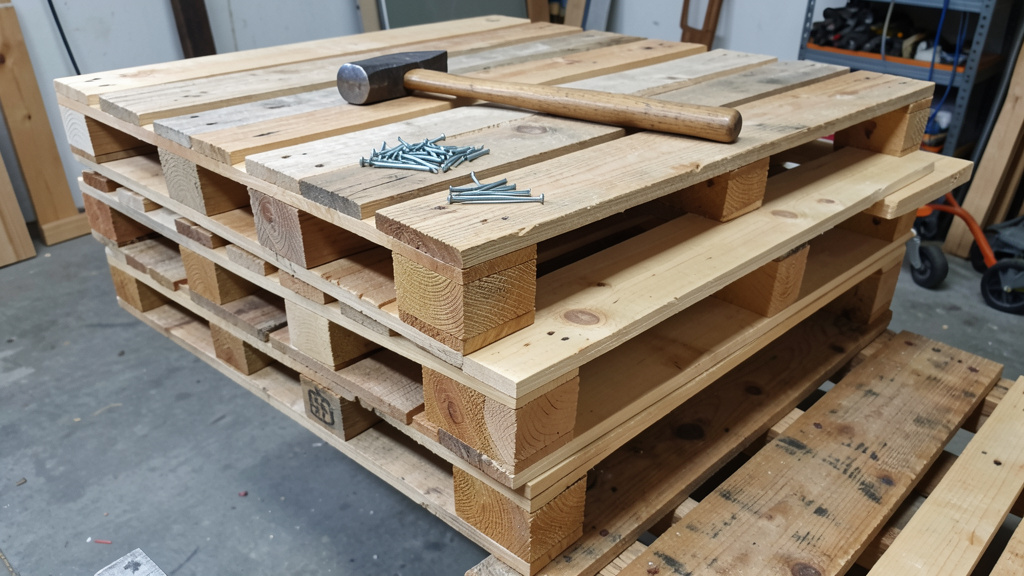
A methodical approach to sourcing, preparing, and crafting with reclaimed wood—prioritizing safety, adaptability, and mindful creation
Reclaimed pallet wood offers a compelling blend of texture, history, and sustainability for DIY enthusiasts. Yet its journey from industrial carrier to cherished home piece demands thoughtful handling. This guide provides a structured, safety-aware pathway through sourcing, preparation, and creation—grounded in observable woodworking practices and material science principles. Whether you’re envisioning a small shelf or a garden planter, this resource emphasizes informed decisions over rushed execution, helping you honor both the material and your craft.
Introduction
That weathered pallet stacked behind a local business holds latent possibility—a floating shelf, a garden planter, a piece of wall art. This instinct to reimagine discarded materials reflects a growing appreciation for resourcefulness and intentional making. Yet pallet wood carries a hidden biography: prior cargo, environmental exposure, fastener history, and structural stress. Ignoring this context risks compromised results or unnecessary hazards.
This guide synthesizes widely documented safety protocols from international wood handling standards (including IPPC guidelines), material preparation best practices observed across woodworking communities, and adaptive techniques for varying skill levels and tool access. It does not promise perfection on the first attempt, nor does it guarantee universal outcomes—wood is a living material that responds uniquely to environment and handling. Instead, it offers a repeatable framework: observe, assess, adapt. By anchoring each step in awareness rather than assumption, you build not only objects but confidence. This journey begins not with a saw, but with discernment.
The Pallet-to-Project Protocol: A Foundation of Awareness
Success with pallet wood hinges on three interdependent phases: verification, preparation, and intentional design. Skipping verification invites risk; rushing preparation invites frustration; overlooking design context invites mismatched results. This protocol—refined through documented patterns in sustainable making communities—creates space for thoughtful progress. Consider it your anchor amid creative enthusiasm.
Step 1: Verification Before Handling
Treat every pallet as unknown until verified. This mindset prevents complacency.
Decoding Stamps: Your First Filter
Legitimate shipping pallets typically bear an IPPC-compliant stamp. Interpret it cautiously:
| Stamp Element | Meaning | Guidance |
|---|---|---|
| HT | Heat Treated | Generally suitable. Proceed to visual inspection. |
| KD | Kiln Dried | Often paired with HT. Indicates lower moisture content. |
| DB | Debarked | Neutral indicator. Always confirm primary treatment (HT/KD = proceed; MB = avoid). |
| MB | Methyl Bromide | Avoid. Associated with significant health and environmental concerns. |
| EPAL | European Pallet Association | Typically HT-treated. Common and reliable in European contexts. |
| No Stamp / Illegible | Unknown history | Avoid. Uncertainty outweighs potential benefit. |
| Chemical markings | Non-standard treatment | Avoid. Indicates possible hazardous residues. |
Important nuance: Stamp reliability varies by region and business practice. A pallet stamped HT may have carried substances that left residues (oils, adhesives, agricultural products). Always:
– Inspect for unusual stains, odors, or discoloration.
– When possible, politely inquire about typical cargo (“Do these usually ship dry goods or liquids?”).
– Photograph the stamp before moving the pallet—details fade quickly.
– Note: Red-tinted wood often signals chemical treatment; blue/black stamps are usually branding. When uncertain, choose another pallet. Your caution today supports safe enjoyment tomorrow.
Sensory Assessment Checklist
Before loading any pallet:
– Smell: Strong chemical, sour, or oily odors warrant avoidance.
– Sight: Check for mold (fuzzy patches), deep cracks, soft/rotten spots, or insect boreholes (fine dust + tiny holes).
– Touch: Wood should feel dry, not damp or cool. Avoid boards that flex under gentle pressure.
– Sound: Tap boards lightly. A hollow thud suggests internal decay; a solid thunk indicates integrity.
The Fundamental Principle: Verification is not distrust—it is respect. Respecting the material’s history protects your well-being and elevates your craft.
Step 2: Ethical and Practical Sourcing
Where you source shapes your project’s foundation and community relationship.
Recommended Sources:
– Local distributors (beverage, tile, garden centers): Call ahead. Ask: “Do you have discarded, heat-treated pallets available for craft reuse?” Visit mid-week after deliveries for fresher stock.
– Pallet recyclers/reclaimers: These businesses understand wood history. Many sell “seconds” affordably and offer expert selection advice. Supporting them reinforces circular economies.
– Verified online listings: If using marketplaces, request clear photos of stamps and cargo history. Meet at the business location in daylight.
Sources to Approach Cautiously:
– Construction sites (potential chemical residue exposure)
– Unmonitored industrial zones (unknown cargo history)
– Dumpsters in high-traffic areas (mixed pallet types, contamination risk)
Ethical Practice Reminder:
Always ask permission. Thank staff. Leave the area tidy. If taking multiple pallets, offer to neatly restack leftovers. These small acts sustain access for all makers and honor the businesses enabling reuse.
Step 3: Preparation Workflow: Patience as Process
Preparation transforms raw material into workshop-ready stock. Rushing invites tool damage, poor finishes, or structural weakness. Allocate dedicated time—this phase is creation.
Disassembly (Outdoors Only)
- Gear: Heavy-duty gloves, safety glasses, N95 respirator (for dust/mold), cat’s paw pry bar, hammer.
- Method:
- Lay pallet flat on grass/gravel. Insert scrap wood under one edge for leverage.
- Start with outer slats. Use cat’s paw to grip nail heads; lever slowly. For stubborn nails, carefully cut flush on the underside using a reciprocating saw with metal-cutting blade (preserves top surface).
- Save stringers (thick side rails)—they’re ideal for frames or legs.
- Collect all metal fragments immediately in a labeled metal container.
- Adaptive Tip: No cat’s paw? Use a hammer claw with extreme caution and eye protection. Work slowly to avoid splitting wood or injury. Patience prevents rework.
Cleaning & Drying
- Brushing: Outdoors, use a stiff wire brush (handheld or drill-mounted) to remove surface debris. Wear respirator and eye protection.
- Cleaning Solutions (Choose Based on Need):
- Light cleaning: Warm water + mild soap. Scrub, rinse thoroughly.
- Mold/mildew: Diluted white vinegar (1:1 with water) or oxygen bleach solution (follow product instructions). Rinse very thoroughly.
- Grease stains: Baking soda paste. Avoid harsh solvents (mineral spirits, acetone) on wood intended for indoor use.
- Drying Protocol (Critical):
- Stack boards horizontally on sawhorses with “stickers” (small wood spacers) between layers for airflow.
- Place in dry, shaded, ventilated area (garage with door open, covered porch).
- Never dry in direct sun—uneven drying causes warping.
- Flip boards every 12–24 hours. Drying time varies: softwoods may take several days; hardwoods or humid conditions require longer. Wood should feel uniformly dry and room-temperature before indoor use.
Milling & Sanding (Adapt to Your Tools)
- Goal: Create consistent, splinter-free stock. Perfection isn’t required—character is welcome.
- If you have power tools:
- Before planing: Sweep every board with a rare-earth magnet to catch hidden metal fragments.
- Joint one face, plane to uniform thickness, rip to width, crosscut to length.
- Hand-tool alternative:
- Identify the flattest face. Use a hand plane to smooth high spots (mark with pencil; plane until marks disappear).
- Sand progressively: 80-grit (remove major flaws), 120-grit (smooth), 180-grit (final prep). Always sand with the grain.
- Round sharp edges slightly with folded sandpaper—prevents splinters and feels refined.
- Final Step: Wipe thoroughly with a tack cloth to remove dust before finishing.
This preparation phase cultivates mindfulness. You’re not just processing wood—you’re learning its language: grain direction, density variations, hidden strengths. This awareness informs every cut and join that follows.
Project Pathways: Match Effort to Intent
Projects are grouped by foundational skills required, not arbitrary “difficulty” labels. Choose based on your current tools, time, and curiosity. Each includes adaptive options and explicit safety reminders tied to the Protocol.
Pathway 1: Small-Scale Starters (Focus: Technique Practice)
Ideal for testing your preparation workflow, practicing sanding/finishing, and building confidence with minimal material.
Rustic Coasters (Set of 4)
- Core Skill: Precision cutting, edge refinement, food-safe finishing.
- Materials: 4 prepared slats (~4″ x 3.5″), food-safe mineral oil or beeswax, self-adhesive felt pads.
- Process:
- Cut pieces. Re-check for hidden metal with magnet.
- Sand progressively to 180-grit. Round all edges gently.
- Apply mineral oil: saturate, wait 15 minutes, wipe excess. Repeat once. Why? Non-toxic, enhances grain, easily refreshed. Avoid film finishes (polyurethane) on items contacting moisture—they may peel.
- Attach felt pads to bottoms. Prevents surface scratches and sliding.
- Adaptive Options:
- No saw? Use naturally broken pieces with interesting shapes; sand edges smooth.
- Personalize: Lightly wood-burn designs after sanding, before oiling.
- Gift-ready: Bundle in linen scrap tied with twine.
Compact Herb Planter
- Core Skill: Box assembly, drainage integration, outdoor finishing awareness.
- Materials: Prepared wood for sides/bottom, exterior-grade screws, landscape fabric, gravel, potting mix.
- Process:
- Cut and sand pieces. Round top edges for comfort and water runoff.
- Assemble box. Pre-drill all screw holes to prevent splitting.
- Drainage is essential: Drill 3–4 small holes in the bottom. Line interior with landscape fabric (staple to sides) to retain soil while allowing flow. Add 1″ gravel layer before soil.
- Apply 2+ coats of water-based spar urethane to all surfaces, especially seams and end grains. Cure fully before planting. Why spar urethane? Contains UV inhibitors and flexibility for outdoor movement; standard indoor polyurethane cracks quickly outdoors.
- Adaptive Options:
- No power tools? Use pre-cut craft wood for the bottom; attach pallet wood sides with strong wood glue and clamps (allow extended cure time).
- Space-limited? Build a single-pocket wall-mounted version (securely anchored to a stud).
- Seasonal note: Best assembled in dry weather to ensure sealant cures properly. Avoid rainy seasons for initial construction.
- Planting Tip: Elevate planter on bricks or feet to prevent bottom moisture wicking. Choose herbs matching your light: basil (full sun), mint (partial shade—contain roots!).
Pathway 2: Functional Integrations (Focus: Spatial Problem-Solving)
Projects addressing common household needs—storage, organization, display—with emphasis on secure installation.
Floating Shelf with Integrated Bookends
- Core Skill: Precise bracket placement, wall anchoring awareness, functional detailing.
- Materials: Prepared shelf board, bookend pieces, heavy-duty floating brackets, wall anchors.
- Process:
- Finish all wood pieces before assembly.
- Attach bookends vertically to the back edge of the shelf (angled top optional for visual interest). Ensure square alignment.
- Wall mounting is critical:
- Locate studs with a reliable stud finder.
- Brackets must anchor into studs for safety with books/decor. If studs don’t align, use toggle bolts rated for the expected load.
- Use a level continuously during installation. An unlevel shelf compromises function and safety.
- Slide shelf onto brackets. Test stability with light items before full loading.
- Adaptive Options:
- Rental-friendly: Use heavy-duty adhesive mounting strips only for very light loads (small plants, photos); verify wall surface compatibility first. Not recommended for books.
- No stud access? Install a continuous ledger board screwed into studs, then mount shelf brackets to the ledger.
- Visual variation: Paint bookends a contrasting color; use mixed-width slats for shelf surface.
- Safety Reminder: Periodically check bracket tightness. Wood expands/contracts with humidity; a loose bracket is a hazard.
Entryway Organizer
- Core Skill: Component integration (hooks, tray), secure wall mounting strategy.
- Materials: Back panel wood, shelf/tray pieces, decorative hooks, D-rings or French cleat.
- Process:
- Build a solid back panel (glued slats) for stable hardware mounting.
- Construct a small tray below the shelf to catch keys/coins. Line with cork or felt to reduce noise.
- Mount hooks through the back panel with screws long enough for secure grip (test pull strength gently before use).
- Mounting: Attach D-rings or French cleat to the panel back. Secure the wall component into studs. This hidden system distributes weight safely—far superior to picture hangers.
- Adaptive Options:
- Minimal tools: Skip the tray; attach a small fabric pouch behind the panel for mail.
- Small space: Scale down dimensions; focus on key hooks + tiny shelf.
- Personalize: Add a chalkboard-painted section for notes (use chalkboard paint on a separate wood piece, attach after curing).
Pathway 3: Outdoor Applications (Focus: Environmental Resilience)
Outdoor projects demand moisture management and UV awareness. Prioritize drainage, airflow, and appropriate sealants.
Freestanding Compost Bin
- Core Skill: Structural stability, airflow optimization, utilitarian design.
- Materials: 4 intact HT pallets, heavy-duty hinges, latch, exterior screws.
- Process:
- Stand three pallets on edge to form a U-shape. Secure corners with metal braces and long exterior screws. Verify squareness (measure diagonals).
- Attach the fourth pallet as a hinged front door.
- Airflow enhancement (recommended): Staple chicken wire or landscape fabric to the inside of pallet slats. Contains smaller materials while maintaining critical airflow.
- Place directly on soil in partial shade (full sun dries compost too quickly).
- Adaptive Options:
- Rodent concern: Line bottom 12″ with ¼” hardware cloth, buried slightly into soil.
- Three-bin system: Build side-by-side units for active composting stages (fresh scraps → curing → finished).
- Weather note: Ideal to build in dry conditions. Avoid assembling during prolonged rain—wet wood swells, affecting fit.
- Usage Tip: Keep a small lidded container indoors for kitchen scraps. Empty daily; add a handful of soil to introduce microbes. Label it “Soil Builder” for household clarity.
Vertical Garden Planter
- Core Skill: Multi-layer assembly, plant selection awareness, safe mounting.
- Materials: One sturdy pallet, exterior plywood (for backing), landscape fabric, staple gun, spar urethane.
- Process:
- Seal thoroughly first: Apply 2–3 coats of spar urethane to all wood surfaces, especially end grains. Cure fully (follow product guidelines; humidity affects time).
- Attach plywood sheet to the pallet back for soil retention and rigidity.
- Staple landscape fabric tightly across the front opening (drum-tight tension). Overlap seams generously.
- Critical acclimation step: Fill bottom row with soil mix (potting soil + perlite), insert plants. Continue upward. Then lay the planted pallet flat on the ground for 1–2 weeks. This allows roots to anchor horizontally before vertical mounting—skipping this risks soil/plant loss.
- Mount only after acclimation using hardware rated for wet weight (soil + plants + water is heavy). Secure brackets into multiple wall studs. Test stability vigorously before considering complete.
- Adaptive Options:
- Indoor version: Use air plants (tillandsia) or low-water succulents. Omit soil; attach moss pads to fabric. Mist occasionally. Eliminates drainage concerns.
- Small scale: Build individual 12″x12″ planters; mount in a grid for flexibility.
- Plant selection: Full sun: sedum, thyme. Partial shade: mint (contained), ferns. Research “pocket planting” suitability. Start with hardy varieties.
- Seasonal Note: In freezing climates, bring planted units indoors or disassemble before first frost to preserve wood integrity.
Pathway 4: Advanced Integration (Focus: Structural Awareness & Patience)
For makers with established preparation skills and tool access. Emphasizes planning, wood movement, and incremental progress.
Reclaimed Wood Accent Wall
- Core Skill: Spatial planning, consistent installation, utility integration.
- Materials: Prepared slats (pre-finished), construction adhesive, finish nails, outlet extenders.
- Process:
- Wall prep is non-negotiable: Turn off power. Remove cover plates. Install plastic outlet extender boxes so outlets sit flush with the new surface depth. Patch wall imperfections. Clean thoroughly.
- Plan layout: Horizontal (elongates space), vertical (adds height), or staggered widths for texture. Use a laser level or long straightedge to mark a reference line.
- Pre-finish all slats in a workshop area. Finishing after installation leaves gaps untreated and risks damage.
- Install row by row: Apply adhesive to back, press onto wall, secure with nails into studs. Use tile spacers for consistent gaps. Stagger end joints like brickwork.
- For outlets: Precisely measure and cut openings before adhering the slat.
- Final pass: Fill nail holes, light sanding, reinstall covers (use longer screws if needed). Run hand over surface to catch snags.
- Adaptive Options:
- Rental constraint: Build a freestanding screen using pallet wood on a lightweight frame. No wall modification needed.
- Tool limitation: Rent a finish nailer for the day—it dramatically improves speed and precision. Many hardware stores offer this.
- Pattern variation: Intentionally mix slat widths (2″, 3″, 4″) for organic rhythm. Lay out the pattern on the floor first.
- Partner Tip: Two people significantly improve alignment and reduce fatigue—one holds level, the other secures. Cover floors meticulously; construction adhesive is permanent on finishes.
Dining Table Top (Conceptual Framework)
Note: Full bed/frame construction involves significant structural engineering. This section focuses on the tabletop process to illustrate advanced principles without encouraging unsafe structural builds.
– Core Principles:
– Material selection: Choose straight, stable boards. Hardwoods (oak, maple) offer durability; softwoods (pine) are lighter. Accept minor character; reject deep cracks or rot.
– Acclimation: After milling to uniform thickness, let boards rest in your workshop for 5–7 days. Wood adjusts to ambient humidity—this minimizes post-assembly movement.
– Glue-up strategy: Arrange boards face-up on a verified flat surface. Alternate grain direction (cup up/down) to balance natural movement. Dry-clamp first to check alignment. Number boards on the back.
– Gluing: Work efficiently. Apply even glue beads. Clamp face-down with cauls (straight scrap boards) to distribute pressure. Wipe excess immediately. Cure per glue instructions (often 24 hours).
– Flattening: After cure, assess flatness. Options: professional wide-belt sanding, meticulous hand planing, or light sanding embracing slight texture (honest to reclaimed nature).
– Finishing for use: Apply finish to the underside first to balance moisture absorption and reduce warping risk. Use a durable, food-safe topcoat (e.g., water-based polyurethane). Multiple thin coats > one thick coat. Lightly sand between coats with fine grit.
– Wood movement awareness: When attaching to a base, use oversized screw holes or figure-8 fasteners to allow the top to expand/contract across the grain with seasonal humidity changes. Fixed screws can crack the wood.
– Ethical Note: This project demands significant material. Source pallets intentionally—only take what you’ll use. Consider donating unused prepared wood to community workshops or schools.
– When to seek guidance: For structural frames (beds, tables), consult established woodworking resources on joinery and load-bearing design. Safety is paramount; complex structural projects benefit from mentorship or professional plans.
Navigating Common Challenges: Adaptive Solutions
Even meticulous preparation meets unexpected moments. These are not failures—they are learning points.
Warping or Cupping After Assembly
- Why it happens: Wood moisture content wasn’t stabilized; uneven drying; grain orientation.
- Adaptive response:
- Prevention: Allow ample drying time post-preparation. Acclimate milled wood in your workspace before assembly. Alternate board grain direction during glue-ups.
- Minor warp: For non-structural decor, embrace it as character. For functional items, gently clamp with damp cloth on the concave side (let dry slowly under tension). Success varies—patience is key.
- Significant warp: Repurpose the piece. A warped board may become a charming wall hook backing or garden marker.
Hidden Nails Damaging Tools
- Why it happens: Magnet sweep missed fragments; nail was deeply embedded.
- Adaptive response:
- Prevention: Sweep every board twice with a strong magnet before milling. Tap boards lightly—listen for metallic “ping.”
- If damage occurs: Stop immediately. Inspect tool. Replace planer blades or saw blades as needed. Keep spare blades on hand for reclaimed wood work.
- Budget constraint: Use hand tools (hand saw, chisel) for high-risk pieces. Slower, but protects power tools.
Finish Appears Cloudy or Sticky
- Why it happens: Applied in high humidity; thick coat; insufficient drying between coats; dust contamination.
- Adaptive response:
- Cloudiness: Lightly sand with 400-grit sandpaper once fully dry. Wipe clean. Apply a fresh, thin coat in better conditions (moderate temp, low humidity).
- Tackiness: Often indicates incomplete curing due to thick application or poor ventilation. Allow extended drying time. If persistent, lightly sand and reapply thin coats.
- Prevention: Work in a clean, dust-minimized space. Apply thin coats. Sand lightly with fine grit (320+) between coats. Follow product environmental guidelines.
Project Feels Overwhelming Mid-Build
- Adaptive response:
- Pause. Step away for a few hours or a day.
- Break the next step into micro-actions: “Sand just this edge,” “Measure this one piece.”
- Revisit your “why”: Is this for a gift? To reduce waste? To learn? Reconnecting to purpose restores perspective.
- Remember: Unfinished projects aren’t failures. Store prepared wood properly (stacked with stickers, covered); return to it when energy aligns.
Your Questions, Answered
Q: Can I use pallet wood for cutting boards or children’s toys?
A: Exercise caution. Even HT pallets may have carried substances leaving residues in wood pores. For items contacting food or young children’s mouths, new, food-grade wood is strongly recommended. Pallet wood is better suited for decorative or non-contact surfaces.
Q: How do I know if wood is dry enough to use indoors?
A: Without a meter, rely on touch and time. Wood should feel uniformly dry (not cool/damp) and room-temperature. After outdoor drying, let it acclimate indoors for 3–5 days before final sanding/finishing. Significant warping after assembly often indicates residual moisture.
Q: What if I can’t find HT-stamped pallets locally?
A: Expand your search ethically: contact pallet recyclers in neighboring towns, join local “buy nothing” groups with clear safety criteria (“HT stamp required”), or explore other reclaimed wood sources (demolition sites with permission, discarded furniture). Never compromise on verification.
Q: Is sanding enough to remove all contaminants?
A: Sanding removes surface material but won’t eliminate deep-set chemical residues or mold roots. Verification (stamp + sensory check) and thorough cleaning before sanding are essential. When in doubt about contamination, repurpose the wood for outdoor-only projects (like the compost bin) or respectfully discard it.
Q: Can I skip the sealant on outdoor projects to keep a “weathered” look?
A: You can, with awareness. Unsealed wood will gray naturally but may deteriorate faster, especially in wet climates. For longevity with character, apply one coat of clear, water-based spar urethane—it slows degradation while allowing gradual patina. Reassess yearly; refresh if wood feels rough or shows deep cracks.
Q: How do I handle strong odors in otherwise safe (HT) pallets?
A: Sunlight and airflow are gentle allies. After disassembly, lay boards in indirect sun with good ventilation for several days. For persistent odors, a diluted vinegar-water wipe followed by thorough drying may help. Avoid masking odors with strong chemicals—this often creates new residues. If odor persists, consider the wood unsuitable for indoor use.
Q: Are pallets from grocery stores safe?
A: Grocery pallets are often HT and carry food-grade goods, but residual oils or sugars can attract mold. Inspect carefully for stains or stickiness. Clean thoroughly with vinegar solution and dry completely before use. When possible, ask store staff about typical contents.
Q: What’s the most common mistake beginners make?
A: Rushing verification or preparation. Taking 30 minutes to properly assess, clean, and dry wood prevents hours of frustration later. Another frequent oversight: not planning for wood movement in larger assemblies. Small gaps or flexible fastening methods accommodate natural expansion.
Q: Can I use pallet wood in high-humidity areas like bathrooms?
A: Not recommended for structural elements. Humidity accelerates warping and mold growth in reclaimed wood. For decorative accents (e.g., a small shelf outside the shower zone), use maximum sealant (3+ coats of spar urethane) and monitor closely for changes. Prioritize moisture-resistant materials (teak, bamboo) for wet areas.
Q: How do I dispose of unusable pallets responsibly?
A: Contact local pallet recyclers—they often accept damaged pallets for grinding into mulch or biomass fuel. Never burn pallet wood; unknown treatments can release toxic fumes. If recycling isn’t available, check municipal guidelines for bulky waste disposal.
Conclusion: From Pallet to Purpose
This journey with pallet wood is less about perfect outcomes and more about mindful engagement. You’ve learned to pause before proceeding, to observe before acting, and to adapt rather than force. These practices extend beyond the workshop—they cultivate patience, resourcefulness, and respect for materials and community.
Three Anchoring Principles:
1. Verify before you value: Safety and awareness form the foundation of satisfying creation.
2. Preparation is part of the craft: The time spent cleaning, drying, and assessing is not delay—it’s investment.
3. Adapt to your context: Your tools, space, climate, and goals are valid. Choose pathways that honor your reality.
Your 24-Hour Action:
Within the next day, spend five minutes identifying one ethical source near you. Call a local garden center or beverage distributor. Ask: “Do you ever have discarded, heat-treated pallets available for craft reuse?” Note their response. No commitment needed—just connection. This small step builds local awareness and honors the protocol’s spirit.
The Larger Perspective:
Every pallet transformed represents a conscious choice: to see potential in the overlooked, to reduce demand for new resources, and to create with intention. Your project joins a quiet global movement of makers redefining value. Whether your piece lasts decades or seasons, its true legacy lies in the awareness you carried through its creation—and the curiosity it sparks in others. Honor the wood’s history. Celebrate your progress. Share your knowledge gently.
Continue Your Journey:
Mindful Material Sourcing | Wood Finishing Fundamentals | Small-Space Workshop Solutions | Sustainable Garden Structures | Adaptive Joinery Techniques | Community Crafting Ethics | Seasonal Project Planning