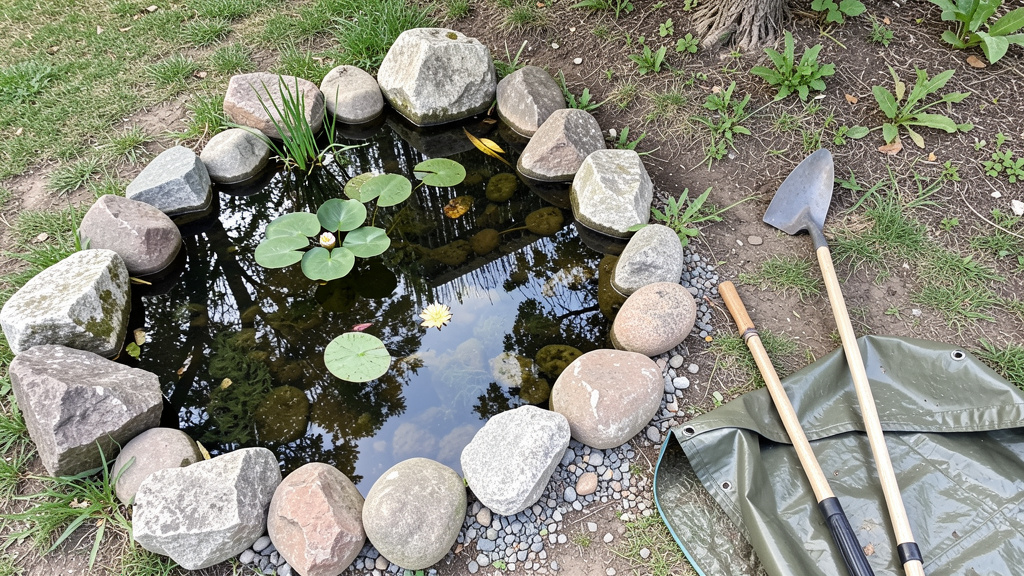
Transform your backyard into a serene aquatic sanctuary with this meticulously detailed blueprint—covering site selection, excavation, liner installation, filtration, planting, and long-term maintenance—designed to prevent common pitfalls and support a resilient, evolving water feature.
Creating a garden pond is far more than digging a hole and filling it with water; it is the intentional crafting of a living system where geology, hydrology, biology, and artistry intersect. This guide walks you through every critical phase of pond construction—from initial site assessment to seasonal stewardship—with practical strategies to avoid frequent challenges, encourage biodiversity, and cultivate a water feature that matures gracefully over time. Whether you envision a wildlife haven, a reflective retreat, or a habitat for hardy fish, this framework provides the ecological and structural foundation for a rewarding journey.
Introduction: Beyond the Hole in the Ground
A garden pond represents one of landscape design’s most meaningful intersections of human intention and natural process. Unlike static hardscapes or seasonal plantings, a pond is a dynamic system where water chemistry, plant growth, microbial activity, and wildlife interactions unfold continuously. When approached with care and observation, it becomes a focal point of tranquility, a living classroom, and a sanctuary for local biodiversity. When rushed or misaligned with the site, it may require excessive intervention. The difference lies not in budget or scale, but in foundational understanding and alignment with natural patterns.
Landscape principles consistently emphasize that water features thrive when integrated with the land—not imposed upon it. This means honoring natural drainage, soil composition, sun exposure, and existing vegetation. A pond placed where runoff concentrates may face persistent siltation and nutrient challenges. One positioned beneath heavy-debris trees will require frequent skimming. Conversely, a pond aligned with the land’s inherent rhythms typically requires less maintenance, supports healthier biological activity, and feels inherently harmonious. This guide synthesizes widely observed patterns from enduring pond installations, translating ecological relationships into sequential, adaptable steps. We begin not with tools, but with observation—a practice that shapes lasting outcomes.
The Four Pillars Framework: Cultivating Balance Between Earth and Water
Sustainable pond creation rests on four interdependent pillars. Neglecting one may destabilize the whole system. Mastering all four fosters resilience. This framework transforms complexity into a logical progression: assess the land, shape the vessel, activate biological processes, and steward seasonal rhythms. Each pillar contains widely validated principles adaptable across climates and contexts.
The Fundamental Principle: A pond is not merely a container for water; it is a living interface where earth, sky, and life interact—and every choice influences its long-term vitality.
Pillar 1: Site Selection and Ecological Design Planning
Why This Phase Shapes Long-Term Experience
Site selection is irreversible. Investing time in observation prevents disproportionate effort later. This phase invites patience—spending days noting patterns across your landscape. The goal is to identify where water naturally harmonizes with your space, not where convenience dictates placement.
A Practical Site Assessment Approach:
1. Sunlight Patterns: Track sun exposure over two to three clear days. Note areas receiving:
* Full sun (6+ hours): Supports water lilies, lotus, and sun-loving marginals. Consideration: May increase evaporation and algae pressure in hot regions; balance with plant coverage.
* Partial shade (3–6 hours): Often ideal. Accommodates diverse plants (pickerelweed, marsh marigold) while moderating algae growth. Morning sun with afternoon shade is frequently beneficial.
* Full shade (<3 hours): Challenging for most aquatics. Limits plant options (focus on shade-tolerant edge species like hostas or ferns), may slow biological activity. Choose only if unavoidable, and prioritize surface coverage strategies.
2. Water Movement Observation: After rainfall, note where water flows or pools. Avoid placing a pond in natural drainage paths. Even gentle slopes can channel debris and nutrients that challenge water clarity. Ideal sites sit slightly above runoff paths. If unavoidable, consider diverting water before it reaches the pond area.
3. Utility Awareness: Contact your local “Call Before You Dig” service (811 in the US) before marking any outline. Underground utilities are non-negotiable exclusion zones. Also note overhead lines for future lighting or netting considerations.
4. Tree and Root Consideration: Stand at potential center points. Are mature trees within 15 feet? Deciduous trees contribute seasonal leaf litter; evergreens shed needles; aggressive root systems (willow, poplar) may eventually compromise liner integrity. A general guideline: distance ≥ mature tree height. If trees are unavoidable, plan for proactive skimming and consider root barriers.
5. Soil Character Insight: Dig a small test hole (12″x12″x18″). Fill with water. Rapid drainage (under 4 hours) suggests sandy soil—excellent drainage but requires careful liner protection. Water remaining after 24 hours indicates clay-heavy soil—holds moisture well but may complicate excavation and plant root aeration. Loam offers balanced properties. Practical insight: Soil type informs underlayment needs and planting strategies.
6. View and Access Reflection: Sit in your favorite garden spot. Where does your eye rest naturally? Position the pond within that sightline. Also consider maintenance access: Can you comfortably reach all edges? Is there nearby space for tools? Avoid locations where neglect becomes likely due to inaccessibility.
7. Safety and Context Check: For households with young children or mobility considerations, avoid steep slopes near edges. Ensure clear pathways. Position away from high-traffic play zones to reduce accidental disturbance. Conversely, place near a seating area to deepen enjoyment of visiting wildlife.
Designing Shape and Profile: Learning from Nature
Geometric shapes (perfect circles, squares) often feel imposed. Organic, irregular forms—kidney-bean, free-flowing curves—typically:
* Create varied micro-habitats (sunny coves, sheltered edges)
* Support better water movement (reducing debris accumulation zones)
* Visually integrate with the landscape
* Provide natural planting shelves
Depth Zones: Supporting Life Through Seasons
A resilient pond benefits from intentional depth variation:
* Shallow Shelf (6–12 inches deep): Purpose: Anchors marginal plants (irises, rushes) whose roots filter nutrients and offer habitat. Width: Minimum 12–18 inches around much of the perimeter. Detail: Slope gently (approx. 1:3 ratio) to prevent liner stress and create safe exit points for wildlife.
* Planting Zone (12–18 inches deep): Purpose: Houses deep-water aquatics like water lilies. Roots stay cool; leaves access sunlight. Placement: Often in a dedicated bay away from the deepest point.
* Deep Zone (Minimum 18–24 inches; deeper for cold climates/fish): Purpose: Offers thermal refuge in summer heat and winter cold. Critical context: In regions with hard freezes, the deep zone should extend below the typical frost line to maintain an unfrozen pocket. Consult local agricultural extension resources for region-specific depth guidance. Shape this zone irregularly to encourage gentle water movement.
Estimating Volume and Liner Dimensions: Planning Prevents Waste
* Volume (Gallons): For irregular shapes: Average Length (ft) × Average Width (ft) × Average Depth (ft) × 7.48. Why it matters: Volume informs pump sizing, filtration capacity, and responsible stocking considerations. Underestimating may lead to undersized equipment.
* Liner Size Estimate: Max Length (ft) + (2 × Max Depth (ft)) + 2 ft overlap. Max Width (ft) + (2 × Max Depth (ft)) + 2 ft overlap. Example: A 10′ L × 8′ W pond with 2′ max depth suggests: (10 + 4 + 2) = 16′ length; (8 + 4 + 2) = 14′ width. Practical note: Adding 1–2 extra feet per dimension is often easier to manage than a liner that falls short. Measure the excavated space before ordering.
Common Site Considerations and Adaptive Responses:
* Scenario: Placing pond under a large deciduous tree for shade.
Potential challenge: Seasonal leaf fall may overwhelm filtration; decomposing matter affects water chemistry; roots may eventually stress liner. Adaptive response: Select a site with dappled shade from smaller trees, use temporary shade cloth during peak summer heat, or commit to seasonal netting and skimming.
* Scenario: Excavating on a slope to create a waterfall effect.
Potential challenge: Uneven water pressure on liner edges; soil erosion into basin. Adaptive response: Excavate the pond basin on level ground. Build elevation behind the pond (using compacted soil or retaining elements) for the waterfall feature—keeping the basin itself stable and level.
* Scenario: Maximizing size to fill available space.
Potential challenge: Overwhelming maintenance; difficulty achieving biological balance. Adaptive response: Begin modestly. A thoughtfully designed 6′ × 8′ pond often supports richer life and is more manageable than a large, shallow basin. Expansion is possible later.
Pillar 2: Excavation, Structure, and Waterproofing Integrity
Precision Over Pace: Shaping the Basin
Excavation demands methodical care. Rushing risks uneven shelves, unstable edges, or liner damage. This phase rewards patience and attention to contour.
Helpful Tools:
* Core: Sharp spade, flat-edge shovel, pickaxe (for compacted soil), measuring tape, string, stakes, level (4-ft carpenter’s or laser), hose, wheelbarrow.
* Recommended: Spray nozzle (for settling soil), rubber mallet, utility knife, heavy-duty gloves.
* Optional: Small excavator rental (for larger ponds), tamper tool.
Excavation Sequence:
1. Outline Transfer: Trace your design with garden hose or spray paint. Step back. Does the shape feel harmonious? Adjust before digging. Mark key points (deep zone center, shelf transitions) with stakes.
2. Topsoil Removal: Carefully remove the top 4–6 inches of turf and topsoil within the outline. Pile separately—it’s valuable for planting marginal zones later. This creates a clean base and prevents grass regrowth under the liner.
3. Deep Zone Formation: Begin digging at the intended deepest point. Remove soil in horizontal layers. Frequently check depth against your plan. Technique: Maintain gentle side slopes (approx. 3:1) during initial digging to prevent collapse, especially in clay or damp soil.
4. Shelf Creation: Once the deep zone reaches target depth, shape the planting shelf (12–18″ depth) and marginal shelf (6–12″ depth). Use your level constantly across shelf surfaces. Adjust until level—uneven shelves cause liner wrinkles and unstable plant pots. Blend transitions between zones with smooth slopes; avoid sharp angles where liner may stress.
5. Contour Refinement: View the basin from within (if safe). Do curves flow naturally? Smooth abrupt angles with a flat-edge shovel. Remove all rocks, roots, sticks, or sharp debris larger than a pea from the entire surface. Practical check: Run a gloved hand slowly over the excavated surface. If it snags your glove, it may challenge the liner. Remove the obstruction.
6. Final Smoothing: Lightly dampen the base (avoid mud). Gently compact soil with the back of a shovel or tamper, especially on shelves and slopes, to minimize future settling. Finish by smoothing the entire surface with a soft broom or hands. Goal: a seamless, debris-free foundation.
Underlayment: Essential Protection
Installing liner directly on soil is not recommended. Underlayment provides critical cushioning.
* Purpose: Absorbs minor ground shifts, buffers against unseen sharp particles, reduces stress from root pressure, and minimizes UV exposure on edges.
* Material Options:
* Geotextile Fabric (Recommended): Non-woven polypropylene (4–6 oz weight). Durable, allows minimal moisture vapor transmission, blocks roots effectively. Avoid standard landscape fabric—it degrades faster.
* Sand Layer (Supplemental): A 1–2 inch layer of washed masonry sand over geotextile offers exceptional smoothness for delicate liners. Adds weight/cost; avoid in high-water-table areas.
* Note on alternatives: Repurposed carpet is sometimes mentioned but carries risks (chemical leaching, compaction, moisture retention) and is generally not advised for permanent installations.
* Installation: Unroll geotextile smoothly over the entire basin, extending over edges. Overlap seams by 12–18 inches. Temporarily secure edges with soil clumps or smooth stones—avoid staples in the basin floor. Ensure no wrinkles exist beneath the intended liner path. Trim excess after liner placement.
Liner Selection and Installation: Creating the Waterproof Layer
Flexible liners are standard for custom ponds. Preformed rigid options are addressed later as alternatives.
| Feature | EPDM Rubber Liner | PVC Liner |
|---|---|---|
| Material | Synthetic rubber | Polyvinyl Chloride |
| Durability | Long-lasting (typically decades); highly resistant to punctures and weathering | Generally durable for many years; more susceptible to punctures and UV degradation over time |
| Flexibility | Remains pliable in cold temperatures | Stiffens noticeably below 50°F (10°C); harder to install in cool conditions |
| Eco-Consideration | Non-toxic, fish-safe formulations available | Verify “fish-safe” certification; avoid formulations with harmful plasticizers |
| Seaming | Requires specialized adhesive/tape; purchasing a single piece is ideal | Easier to seam with heat-welding (requires skill/tool) |
| Cost | Higher initial investment | Lower initial cost |
| Best Suited For | Permanent installations, variable climates, rocky soil, ponds with fish | Smaller features, warmer climates, temporary setups, tighter budgets |
| Practical Tip | Select 45–60 mil thickness. Avoid “reinforced” versions which may delaminate. | Ensure it’s flexible PVC rated for aquatic use. Avoid rigid sheets. |
Liner Installation Sequence:
1. Timing: Install on a cool, overcast morning if possible. Extreme heat makes liner slippery and expansive; cold makes it stiff.
2. Preparation: Lay the liner flat beside the hole. Unfold completely. Identify the center. Have 2–3 helpers ready—managing larger liners solo is difficult.
3. Placement: With helpers holding edges, drape the liner gently over the hole, centering it. Do not drop it in. Lower it carefully into the basin, allowing it to settle naturally into contours. Avoid dragging across edges.
4. Initial Smoothing: Starting at the deep zone center, gently smooth the liner outward. Work with the liner’s natural drape—avoid stretching tightly. Minor floor wrinkles are often acceptable (they settle when filled); wall/shelf wrinkles need attention.
5. Temporary Anchoring: Place smooth, rounded stones every 3–4 feet around the very top edge to prevent wind shift. Do not anchor stones on shelves yet.
6. Fill-and-Adjust Method (Key Step): Begin filling slowly with a garden hose. As water accumulates (6–12 inches deep):
* Continuously smooth wrinkles upward and outward.
* Gently ease the liner to eliminate large folds on shelves or walls—water weight aids settling.
* Pay close attention to shelf edges for stability.
* Important: Avoid standing on the liner during filling. Use a small step ladder outside the edge if needed.
7. Securing the Edge: Once filled to 2–3 inches below the intended water level, adjust the liner edge. Pull excess smoothly over the top edge. Secure using one method:
* Rock Edging (Natural Look): Place large, flat fieldstones or flagstones directly on the liner edge, burying 1–2 inches of liner beneath soil behind the rocks. Interlock stones. Hide the seam completely with soil and plants.
* Liner Lock System: Aluminum or plastic channels attached to a timber/concrete edge. Liner slides into the channel. Provides a clean edge but is more visible.
* Soil Tuck: Bury excess liner under 4–6 inches of soil around the perimeter. Only suitable if surrounding grade is stable and well-compacted. Less secure than rock edging.
8. Trimming Excess: Wait 24–48 hours after filling. Temperature changes cause expansion/contraction. Once stabilized, trim excess liner 6–8 inches beyond the secured edge. Fold this flap neatly under edging rocks or soil. Never trim flush—this invites edge failure.
Common Challenges and Preventive Insights:
* Challenge: Slow leak developing months later.
Often linked to: An overlooked sharp object or root puncturing the liner under pressure. Prevention: Meticulous basin smoothing + mandatory geotextile underlayment. Perform a “glove test” before underlayment installation.
* Challenge: Liner shifting on one side after heavy rain.
Often linked to: Inadequate edge securing; saturated soil losing grip. Prevention: Use substantial rocks (not small gravel) for edging; bury liner flap deeply; ensure surrounding soil is well-compacted.
* Challenge: Persistent wrinkles on planting shelves causing instability.
Often linked to: Uneven shelf excavation; forcing the liner flat during install. Prevention: Laser-level shelves meticulously; use the fill-and-adjust method patiently—work with the liner’s drape.
Pillar 3: Ecosystem Engineering—Filtration, Circulation, and Biological Balance
Cultivating a Living System, Not Just Clear Water
A pond thrives through biological balance, not chemical sterilization. Chlorine disrupts the very processes that sustain health. True clarity and vitality emerge when plants, microbes, and physical processes work together. This pillar integrates equipment with biology—not as a replacement.
Understanding the Nitrogen Cycle: The Core Process
This natural process is central to pond health. Grasping it builds intuitive troubleshooting skills.
1. Ammonia (NH3): Produced by fish waste, decaying matter, uneaten food. Toxic to aquatic life even at low levels.
2. Nitrite (NO2): Beneficial bacteria (Nitrosomonas) convert ammonia to nitrite. Also toxic.
3. Nitrate (NO3): A second bacterial group (Nitrobacter) converts nitrite to nitrate. Less toxic at moderate levels.
4. Consumption: Aquatic plants absorb nitrate as nutrients. Water changes dilute excess.
Without sufficient surface area for bacteria (biofiltration) and plants to consume nitrate, ammonia and nitrite can accumulate. This is commonly called “New Pond Syndrome.” Allowing time for bacterial colonies to establish before adding fish is a widely recommended practice.
Filtration Components: A Collaborative System
Effective support typically involves three complementary elements. Omitting one may reduce overall effectiveness.
-
Mechanical Filtration: Managing Visible Debris
- Purpose: Removes suspended particles (leaves, algae clumps) before they decompose and fuel nutrient cycles. Maintains visual clarity.
- Components: Pond skimmer (surface debris), filter pads/matting (varying densities).
- Placement: Skimmer positioned at the pond’s downwind edge. In-pond filter baskets near pump intake.
- Maintenance Insight: Clean filter pads using pond water only (tap water chlorine harms beneficial bacteria). Rinse as needed—weekly during heavy debris seasons. Avoid replacing all media at once to preserve bacterial colonies.
-
Biological Filtration: Supporting Microbial Life
- Purpose: Provides surface area for beneficial bacteria to colonize and process ammonia/nitrite.
- Components: Bio-balls, lava rock, ceramic rings, filter brushes. Key consideration: Surface area matters—aim for substantial media volume relative to pond size.
- Placement: Positioned after mechanical filtration (to prevent clogging), with consistent water flow and oxygen exposure. Can be in a separate filter box, waterfall filter, or submerged chamber.
- Critical Insight: Bacteria require time and oxygen to establish. A new bio-filter may take several weeks to mature. Liquid bacteria starters (used after dechlorinating water) may help initiate the process. Never clean bio-media with tap water or replace it entirely at once.
-
UV Clarification: Addressing Specific Algae Types (Optional)
- Purpose: A UV unit uses ultraviolet light to disrupt free-floating single-celled algae (causing “pea soup” water). Dead algae clumps are then captured by mechanical filtration.
- Limitations: Does not affect string algae (blanket weed) on surfaces or plants. Does not harm beneficial surface-attached bacteria. Requires correct wattage relative to flow rate and pond volume.
- Placement: Installed after mechanical filtration (for clearer water passage), before water returns to the pond.
- Maintenance: Replace UV bulb annually (effectiveness diminishes even if glowing). Clean the quartz sleeve periodically.
Pump Selection: The Circulation Heart
The pump moves water through filters and creates flow. Undersized pumps lead to poor circulation; oversized pumps waste energy and may stress inhabitants.
* General Guideline: Pump should circulate the entire pond volume at least once every 1–2 hours.
Example: A 1,000-gallon pond typically needs a pump rated for 500–1,000 GPH (Gallons Per Hour) at the actual operating height (e.g., top of waterfall).
* Critical Factor: Head Height. Pump performance decreases with vertical lift. Consult the pump’s performance curve chart. Size based on actual operating height, not zero-lift ratings.
* Efficiency Note: Magnetic drive (mag-drive) pumps often use less electricity than direct-drive models and run cooler—worth considering for continuous operation.
* Placement: Submersible pump positioned on the pond floor (protected by a pre-filter cage) in the deepest zone. Ensures cooling and priming. Route cord carefully under the liner edge or through conduit.
Planting for Balance: Nature’s Partners
Plants are functional components, not just decoration. Aim for 50–60% surface coverage at peak growth to support balance.
| Plant Type | Depth Zone | Key Roles | Accessible Examples |
|---|---|---|---|
| Oxygenators (Submerged) | Deep Zone (18″+) | Absorb nutrients; release oxygen; provide cover | Hornwort, Anacharis, Vallisneria |
| Deep-Water Aquatics | Planting Zone (12–18″) | Shade water (discourages algae); absorb nutrients; visual interest | Hardy Water Lilies, Lotus (needs depth) |
| Marginal Plants | Shallow Shelf (6–12″) | Filter edge runoff; stabilize banks; habitat | Louisiana Iris, Pickerelweed, Marsh Marigold |
| Floaters | Surface | Rapid nutrient uptake; surface shade; fish shelter | Water Hyacinth (annual in cold zones), Water Lettuce |
| Bog Plants | Very Edge (damp soil) | Filter perimeter runoff; soften transition | Japanese Iris, Ligularia, Cardinal Flower |
Planting Considerations:
1. Containers: Use mesh planting baskets. Line with burlap if soil leaks.
2. Growing Medium: Avoid standard garden soil (floats, contains weeds/fertilizers). Use heavy clay-based aquatic media or a mix of clay soil and sand. Top with pea gravel to prevent disturbance.
3. Placement: Position baskets on shelves. Use bricks or inverted pots under baskets to achieve correct planting depth for deep-water species. Leaves should reach the surface.
4. Initial Feeding: Use slow-release aquatic fertilizer tablets inserted deep into the soil (away from roots). Avoid liquid fertilizers initially—they can encourage algae.
5. Seasonal Timing: Plant hardy species in spring after frost risk passes. Tropicals after water temperatures consistently exceed 70°F (21°C). Fall planting carries higher risks in colder zones.
Introducing Aquatic Life: Patience Supports Success
* Establish First: Wait several weeks after filling and planting before considering fish. Test water for ammonia and nitrite (target: undetectable). This allows bacterial colonies to develop.
* Start Modestly: Begin with one or two small, hardy fish (e.g., comet goldfish). Wait weeks, retest water, and observe before gradually increasing numbers. Common stocking guidelines (e.g., “1 inch of fish per 10 gallons”) are often too aggressive for new ponds; starting very low is widely advised.
* Acclimation: Float the unopened bag in the pond for 15–20 minutes to equalize temperature. Then, slowly add small amounts of pond water to the bag over 10–15 minutes before releasing fish. Reduces shock risk.
* Species Notes:
* Goldfish (Comets, Shubunkins): Hardy, adaptable to cooler water. Tolerate a range of conditions.
* Koi: Require deeper water, robust filtration, and significant space. Best suited for experienced keepers with appropriately sized ponds.
* Mosquito Fish (Gambusia): Effective for mosquito control. Check local regulations—considered invasive in some regions.
* Note: Avoid common carp (disruptive), tropical fish (unless heated), and feeder goldfish (potential disease vectors).
The First Season: Observing and Adjusting
* Weeks 1–4: Focus on plant establishment. Add liquid bacteria starter if desired. Water may cloud temporarily (normal bacterial activity). Avoid adding fish.
* Weeks 5–8: Test water parameters weekly. Introduce initial hardy fish only if tests remain stable. Begin very light feeding (only what is consumed quickly). Add more plants if coverage is low.
* Weeks 9–12: Gradually adjust stocking if water quality remains stable. Consider adding beneficial snails (e.g., Japanese trapdoor) for algae grazing on surfaces. Observe insect activity—dragonfly nymphs are natural predators.
Pillar 4: Long-Term Stewardship—Seasonal Rhythms and Proactive Care
Shifting from Builder to Steward
A pond evolves over years. Stewardship means aligning care with seasonal cycles, reducing effort while deepening connection.
Daily & Weekly Awareness:
* Daily (moments): Glance at the water. Note clarity, surface activity, obvious debris. Listen for pump operation. Builds intuitive awareness.
* Weekly (brief): Skim surface debris. Check pump flow. Inspect plant health. Remove yellowing leaves. Avoid removing more than 10–15% of plant mass at once.
Monthly Checks:
* Test key water parameters (ammonia, nitrite, nitrate, pH). Track trends in a simple log.
* Rinse mechanical filter pads in pond water.
* Trim overgrown marginals; divide congested clumps (best in spring/fall).
* Inspect liner edges for shifting rocks or exposed liner.
* Check pump cord and connections for wear.
Seasonal Alignment: Working With Nature’s Cycle
-
Spring (Renewal):
- When: Water temperature consistently above 50°F (10°C); ice fully melted.
- Actions: Remove winter debris net. Gently remove accumulated sludge (avoid deep disturbance where beneficial microbes reside). Prune dead plant material. Begin very light feeding with cold-water formula if fish are present. Restart pump/filter if paused. Add bacteria starter. Divide and replant congested perennials. Note: Delay major cleaning until water warms to avoid stressing recovering biology.
-
Summer (Abundance & Attention):
- Considerations: Potential for algae (heat + sun + nutrients), lower oxygen in warm water, evaporation, insect activity.
- Actions: Top off water regularly with dechlorinated water. Increase aeration if fish show surface gasping (add air stone). Provide extra shade via floating plants or temporary cloth. Feed sparingly (only what is eaten quickly). Manually remove string algae. Monitor for predators (herons—consider decoys or netting). Note: Barley straw bales (in mesh bags) may offer mild, natural algae inhibition as they decompose.
-
Autumn (Preparation):
- When: Leaves begin falling; water cools below 60°F (15°C).
- Actions: Install fine-mesh debris net before peak leaf fall. Stop feeding fish as water drops below 50°F (10°C)—metabolism slows. Trim dying foliage above water line (leave submerged stems for habitat). Remove tropical plants before frost. Clean filters thoroughly. Important: Avoid deep cleaning or draining—the organic layer on the bottom provides insulation and microbial support for winter.
-
Winter (Rest):
- Cold Climates (Freezing):
Goal: Maintain an opening in the ice for gas exchange.
Actions: In shallow ponds (<24″), consider pausing the waterfall/pump to reduce ice formation risk. Use a floating de-icer or aerator with an air stone placed near the surface. Never break ice forcefully—shockwaves can harm aquatic life. Place insulating materials (straw bales) around edges if desired. Do not feed fish. Observe fish resting quietly in the deep zone. - Mild Climates (No Freeze):
Actions: Reduce feeding frequency. Continue light debris management. Monitor water levels. Some plant growth may continue; trim as needed. Keep pump running for circulation.
- Cold Climates (Freezing):
Addressing Common Observations: A Practical Guide
* Observation: Green “Pea Soup” Water
Typical Cause: Free-floating algae bloom due to excess nutrients (overfeeding, debris), sunlight, and insufficient plant competition/filtration.
Responsive Actions: 1) Increase surface plant coverage to 60%. 2) Ensure UV clarifier is functional (bulb replaced yearly). 3) Reduce feeding. 4) Perform a small (10–15%) water change with dechlorinated water. 5) Consider barley straw bales. Note: Algaecides are generally discouraged as a first response—they kill algae but release nutrients, potentially causing rebound blooms.
* Observation: String Algae on Rocks/Plants
Typical Cause: Nutrient imbalance, low competition from other plants, or stagnant zones.
Responsive Actions: 1) Manually remove visible strands. 2) Add fast-growing floaters to compete for nutrients. 3) Introduce algae-grazing snails (check compatibility). 4) Ensure adequate water movement to eliminate dead zones. 5) Test phosphate levels if persistent; use phosphate-removing media if elevated.
* Observation: Cloudy Water (Not Green)
Typical Cause: Bacterial bloom (common in new ponds) or suspended fine particles.
Responsive Actions: For new ponds: Patience is key; the cycle typically stabilizes in weeks. Add bacteria starter. For established ponds: Clean mechanical filter; check if pump disturbs bottom sediment; ensure plants are established. Flocculants may be used sparingly if needed.
* Observation: Fish at Surface Gasping
Typical Cause: Low dissolved oxygen or elevated ammonia/nitrite.
Immediate Actions: 1) Add emergency aeration (air pump + stone). 2) Perform a partial (15–20%) water change with dechlorinated water. 3) Test water for ammonia/nitrite. If elevated: stop feeding, consider ammonia detoxifier, verify filtration. Long-term: Review fish load, plant coverage, and circulation.
* Observation: Foam at Waterfall
Typical Cause: Organic proteins from waste or decaying matter accumulating at surface tension points.
Responsive Actions: Perform a partial water change. Clean mechanical filter. Reduce feeding. Add activated carbon to filter media to absorb organics. Usually resolves with improved maintenance.
Navigating Constraints and Thoughtful Alternatives
Adapting Principles to Your Reality
Not every space, budget, or situation accommodates an ideal pond. Success lies in adapting core principles—not abandoning them.
Constraint: Limited Space (Urban Yards, Patios)
* Adaptive Solution: Container Water Gardens
Transform a half-barrel, large glazed pot, or stock tank into a miniature ecosystem.
Approach: Use a container minimum 18″ deep × 24″ wide. Line if interior is rough. Add oxygenators (Hornwort), a dwarf water lily, and marginal plants (Dwarf Papyrus) in baskets. Mosquito dunks (Bti) safely control larvae. Place in partial sun. Top off water regularly. Provides serenity and habitat in under 10 sq ft. Note: Container gardens planted with native species like Blue Flag Iris can support local pollinators in urban settings.
Constraint: Budget Considerations
* Phased Implementation Approach:
Phase 1 (Year 1): Excavate, install liner/underlayment, add plants (focus on oxygenators and marginals), introduce snails. Run a modest, efficient pump with basic mechanical filtration. No fish initially. Let biology establish. Cost: roughly 40–50% of full build.
Phase 2 (Year 2): Enhance biofiltration. Introduce hardy goldfish if stable. Add UV clarifier if needed.
Phase 3 (Year 3+): Upgrade pump, add waterfall feature, expand plantings.
Why it works: Spreads cost, reduces initial complexity, allows learning stewardship with lower stakes. A thriving planted pond without fish remains a valuable wildlife habitat.
Constraint: Safety Awareness (Young Children, Elderly)
* Adaptive Solutions:
Shallow Wildlife Pond: Max depth 12–18 inches with very gradual slopes (1:4 ratio). Fill with native plants. Attracts frogs, dragonflies, birds. Minimal drowning risk; easy exit. Frame edge with low, wide boulders.
Raised Pond: Build a contained basin above ground using stacked stone, timber, or a preformed liner within a framed structure. Controls depth (e.g., 18″ basin raised 24″ off ground). Creates a visible barrier. Important: For larger raised structures, consult a professional to ensure structural integrity for water weight.
Safety Netting: Install nearly invisible pond netting just below the water surface, anchored securely. Allows light/plants but provides a barrier. Remove for maintenance. Critical: Combine physical measures with supervision and education—no barrier replaces vigilance.
Constraint: Time Availability
* Low-Effort Design Strategies:
Maximize Plant Coverage: Aim for 60%+ surface coverage from the start. Vigorous, self-thinning plants (Pickerelweed, Water Celery) reduce algae pressure.
Strategic Equipment: Invest in a reliable, appropriately sized pump and bio-filter upfront. Quality equipment often requires less troubleshooting. Consider an auto-fill valve for evaporation.
Natural Edges: Allow native grasses and sedges to grow at the margin. They filter runoff, require no mowing, and enhance wildlife value. Define a single viewing path with stepping stones.
Simple Tracking: Use a maintenance log (digital or notebook) for reminders. Partner with local nature groups for seasonal assistance if desired.
Preformed Rigid Ponds: Context for Use
* Potential Advantages: Faster installation, consistent depth profiles, built-in shelves, lower initial cost for very small features (<100 gal).
* Considerations: Limited shapes/sizes, challenging to level on uneven ground, potential for cracking in freeze-thaw cycles (fiberglass) or UV degradation (thin plastic), difficult to repair, less natural appearance.
* Best Suited For: Very small container-style ponds, temporary installations, educational projects with children. Practical Tip: If using, excavate a hole larger than the shell. Backfill with sand (not soil) for even support. Verify it sits perfectly level before filling—shifting causes stress cracks.
Your Questions, Answered
Q: How deep should my pond be for fish to survive winter?
A: Depth requirements depend heavily on your climate. In regions with light freezes, a deep zone of 24–30 inches may suffice for hardy goldfish if the pond doesn’t freeze solid. In areas with hard freezes, the deep zone should extend below the local frost line—often 36 inches or more—to maintain an unfrozen pocket. Crucially, use a de-icer or aerator to keep an opening in the ice for gas exchange. Consult your local agricultural extension office for region-specific frost depth guidance. A deep pond that freezes completely solid is unsafe for overwintering fish.
Q: Can I build a pond without a liner using natural clay?
A: Natural clay lining is feasible only under specific conditions: soil must have high clay content (verified by soil test), the site must be nearly level, and the water table relatively high. Even then, success isn’t guaranteed—clay can crack during droughts. For nearly all residential applications, a flexible EPDM liner with geotextile underlayment offers far greater reliability, predictability, and long-term value than attempting a clay-lined pond. Relying on unverified soil conditions risks persistent leaks.
Q: How do I prevent mosquitoes from breeding?
A: Mosquitoes require stagnant, shallow water. A well-designed pond prevents this: 1) Maintain water movement via pump/waterfall—mosquitoes avoid flowing water. 2) Introduce natural predators: native dragonfly nymphs (attracted by plants), Japanese trapdoor snails, or mosquito fish (Gambusia—check local invasiveness regulations). 3) Ensure fish are present (goldfish eat larvae). 4) For container ponds or still areas, use Mosquito Dunks® containing Bacillus thuringiensis israelensis (Bti)—a natural bacterium targeting only mosquito/blackfly larvae, safe for fish, plants, pets, and wildlife. Replace monthly during warm months.
Q: What are reliable beginner-friendly pond plants?
A: Focus on hardy, adaptable species that provide immediate ecological function: 1) Water Hyacinth (floats; consumes nutrients rapidly; remove before frost in cold zones), 2) Hornwort (submerged oxygenator; grows quickly, offers cover), 3) Pickerelweed (Pontederia cordata; marginal; blue flowers, robust filter), 4) Hardy Water Lily (e.g., ‘Comanche’; provides essential shade), 5) Japanese Sweet Flag (Acorus gramineus; marginal; grass-like, tolerates variable depths). Start with these to establish core functions before expanding.
Q: How long does pond cycling take?
A: Establishing the nitrogen cycle typically takes 4 to 8 weeks under favorable conditions (water temperature above 65°F/18°C, bacteria starter used, plants present). However, full ecological maturity—where the system buffers minor fluctuations—develops over 12 to 24 months. During the first year, consistent monitoring is key: test water weekly, avoid overstocking, and resist major changes. Patience during establishment prevents common setbacks. Signs of stability include consistent clarity, minimal algae, healthy plant growth, and thriving inhabitants with routine care.
Q: Is tap water safe for filling or topping off?
A: Municipal tap water contains chlorine or chloramine, which are harmful to fish and beneficial bacteria. Always treat tap water with a pond-specific dechlorinator before it enters the pond. These neutralize chlorine/chloramine and often detoxify heavy metals. Dose according to total volume for initial fills. For routine top-offs (evaporation leaves minerals behind), dechlorination remains essential. Well water users should test for iron, sulfur, or pH extremes before filling.
Q: How do I calculate liner size accurately?
A: Use this formula:
Liner Length = Max Pond Length (ft) + (2 × Max Depth (ft)) + 2 ft (overlap)
Liner Width = Max Pond Width (ft) + (2 × Max Depth (ft)) + 2 ft (overlap)
Example: 10′ L × 8′ W pond, 2′ max depth → Length: 10 + 4 + 2 = 16 ft; Width: 8 + 4 + 2 = 14 ft. Order 16′ × 14′. Important: Measure your excavated hole after digging but before underlayment. Add 1–2 extra feet per dimension for highly irregular shapes. It’s easier to manage excess liner than to patch a shortage.
Q: How can I deter herons or raccoons?
A: Use layered deterrents: 1) Physical Barrier: Install nearly invisible pond netting just below the surface during high-risk seasons. Anchor securely. 2) Decoys: Place a realistic plastic heron near (not in) the pond. Move it every few days. Motion-activated sprinklers can startle predators. 3) Habitat Design: Provide fish hiding spots—submerged clay pots, dense Hornwort planting. Ensure deep zones (>24″) for retreat. 4) Feeding Practice: Feed fish consistently at the same time; they learn to surface quickly. Avoid feeding near edges. Note: Relocating wildlife is often illegal; focus on humane deterrents and habitat design.
Q: Can I build a pond on a slope?
A: Excavating the pond basin itself on a slope is not advisable—it creates uneven pressure on the liner, risks slippage, and complicates leveling. However, you can create a slope behind a level pond basin to build a waterfall or stream. Excavate the pond area to be perfectly level. Then, build up soil behind the pond (using compacted soil or retaining elements) to create elevation for the waterfall source. This keeps the pond structure stable while achieving flowing water. For significant earthmoving on slopes, consult a landscape professional.
Q: What is a realistic budget for a modest DIY pond (approx. 8′ x 10′)?
A: Budgets vary by region and choices. For a DIY build of this size:
Materials (Liner, Underlayment, Pump, Filter, Plants): $800 – $1,500
Hardscape (Rocks, Edging): $300 – $1,000+ (highly variable)
Fish (Optional): $50 – $200
Tools (if not owned): $100 – $300
Total DIY Estimate: $1,250 – $3,000
Professional installation typically ranges higher. Phasing the project (as described earlier) can make costs more manageable. Investing in quality liner, pump, and biofiltration upfront often reduces long-term replacement costs and maintenance effort.
Q: How do I test pond water, and what matters most?
A: Use a liquid test kit (e.g., API Freshwater Master Test Kit)—test strips are less reliable. Test weekly for the first year, monthly thereafter. Key parameters:
Ammonia: Target 0 ppm. Any detection requires attention (water change, reduce feeding).
Nitrite: Target 0 ppm. Indicates biofilter is immature or overwhelmed.
Nitrate: Keep moderate (<40 ppm). Managed by plants and partial water changes.
pH: Ideal range 6.5 – 8.5 for most pond life. Stability is more critical than exact value. Avoid rapid swings.
KH (Carbonate Hardness):* Measures buffering capacity. Low KH may lead to pH instability; crushed coral in the filter can help.
Tracking trends in a simple log reveals issues before they escalate.
Q: What if I find a small leak after filling?
A: Stay calm. Many small leaks are fixable without full drainage: 1) Locate: Let water settle to the leak level. Check edges first—most leaks occur at the rim due to shifted rocks or exposed liner. 2) Dry Patch: For leaks above waterline, clean thoroughly, dry completely, apply EPDM patch kit. 3) Underwater Patch: For submerged leaks, use a pond-safe underwater sealant or self-adhesive butyl tape designed for wet application. Press firmly. 4) Persistent Leak: Partially drain below the leak site, clean and dry meticulously, then patch. For major failures, professional liner repair services exist. Prevention (meticulous excavation, underlayment) remains the most reliable strategy.
Conclusion and Your Next Step
Building a garden pond is a meaningful act of partnership with nature. It invites respect for ecological patterns, patience through seasonal shifts, and humility within living systems. The rewards unfold quietly: the evening chorus of frogs, the flash of life beneath lily pads, the reflective quality of moving water, the unfolding classroom of life at your doorstep. This guide has offered a structural framework—the Four Pillars—but the true character emerges through your attentive choices: the native plants that welcome local pollinators, the stone placed with care, the moment you witness transformation.
Recap: Three Foundational Principles
1. Site Harmony: Choose location through patient observation. Align with sun, slope, soil, and sightlines.
2. Biological Priority: Design filtration and planting to support natural cycles first; aesthetics follow function.
3. Seasonal Partnership: Adapt care to nature’s rhythms—prepare in autumn, protect in winter, nurture in spring, enjoy in summer.
The 24-Hour Rule: Your First Action
Before sketching a line or purchasing a tool, commit to this: Spend the next 24 hours observing your intended pond site at three different times—dawn, midday, and dusk. Note the light’s journey, wind direction, shadow paths, bird activity, and how rainwater moves after a shower. Sit quietly for ten minutes each session. This practice cultivates the awareness essential for success: seeing your garden not as a blank canvas to be shaped, but as a living context to be understood. This grounded observation will inform every decision, transforming your pond from a project into a purposeful extension of your landscape.
The Broader Perspective: A Ripple of Impact
A thoughtfully created pond offers more than visual appeal. It becomes a micro-sanctuary for amphibians and insects, a subtle cooling influence on your local microclimate, a source of wonder for all ages, and a touchstone of peace. It embodies resilience—demonstrating how ecosystems adapt and recover. In a world of haste, it invites slowness. In a landscape of uniformity, it celebrates wildness. You are not merely installing a water feature; you are nurturing a living element of biodiversity and tranquility that will enrich your corner of the earth for years to come.
Explore Our Complete Pond Ecosystem System:
Choosing Native Pond Plants for Your Region | Natural Algae Management Strategies | Creating Safe and Beautiful Pond Edges | Winter Pond Care for Fish and Plants | Attracting Beneficial Wildlife to Your Water Garden | Building a Simple Bog Filter | Container Water Gardens for Small Spaces