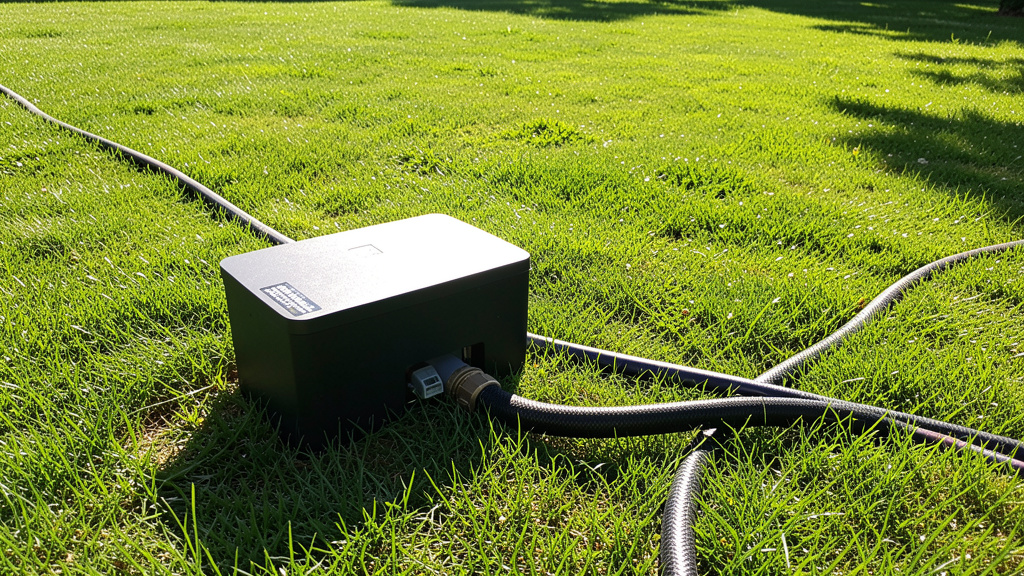
Transform Outdoor Watering from Seasonal Guesswork into Precision Science—Unlock Potential Water Savings of 30–50%, Nurture Healthier Plants, and Support Community Water Resilience with Intelligent Automation
Imagine stepping outside on a warm afternoon. Your neighbor’s sprinklers pulse rhythmically across dry soil, water pooling at the curb while roots below remain thirsty. Meanwhile, your garden glistens with balanced moisture—not from recent rain, but from a system that sensed yesterday’s humidity, assessed soil conditions, and intelligently adjusted watering. This isn’t speculative fiction. It’s the practical reality unfolding in landscapes nationwide through smart irrigation controllers: technology that thoughtfully aligns plant needs with environmental conditions. Informed by EPA WaterSense certification standards and field observations across diverse climates—from arid Southwest xeriscapes to humid Southeast lawns—this guide delivers a universally applicable framework for selecting, installing, programming, and optimizing these systems to support water conservation while nurturing vibrant outdoor spaces.
Introduction: Why “Set-and-Forget” Watering Often Falls Short
For decades, irrigation relied on fixed routines: Water every Tuesday at 5 AM. Traditional timers overlook soil composition, recent rainfall, plant maturity, or microclimate variations between a shaded fern bed and a sun-exposed terrace. The consequences accumulate quietly. Overwatering can suffocate roots, encourage fungal issues, and wash away nutrients. Underwatering stresses plants, invites dormancy, and creates openings for weeds. Nationally, residential outdoor water use accounts for a significant portion of household consumption, and the EPA estimates that up to 50% of this water may be lost to evaporation, runoff, or inefficient scheduling.
This extends beyond conservation ethics. Water availability influences property resilience, municipal infrastructure demands, and local ecosystems. Drought restrictions increasingly limit watering windows or require smart technology compliance. Yet practical pathways exist beyond uncertainty. Smart irrigation controllers—devices replacing conventional timers with responsive intelligence—represent a meaningful step toward landscape stewardship. Unlike gadgets adding complexity without clarity, modern controllers integrate hyperlocal weather insights, soil science, and plant biology to deliver water only when and where conditions indicate a need.
This guide draws from EPA WaterSense technical documentation, Irrigation Association protocols, hydrological principles of evapotranspiration (ET), and observed deployment patterns across varied climate zones. It avoids brand promotion or oversimplified claims. Instead, it offers a flexible, step-by-step methodology adaptable to compact urban gardens or expansive rural properties. Water functions as the lifeblood of your outdoor environment. Learning to respond to its rhythms fosters resilience.
The Precision Watering Framework: Three Interlocking Layers for Thoughtful Conservation
Meaningful water stewardship emerges not from a single device, but from a cohesive system where assessment informs installation, and installation enables ongoing refinement. We call this the Precision Watering Framework—a cyclical approach documented to support reduced outdoor water use while enhancing plant vitality. This framework weaves landscape ecology, hardware functionality, and seasonal awareness into one actionable flow.
The Fundamental Principle: Effective watering responds to plant need—not arbitrary schedules—delivering moisture to replenish what was lost to environmental factors, precisely when required, without excess.
This principle shifts focus from time-based routines (watering 20 minutes every other day) to need-based responsiveness (replacing moisture lost since the last cycle). The framework’s strength lies in its layers reinforcing one another. Skipping assessment risks misaligned installation. Rushing installation undermines optimization. Neglecting optimization allows seasonal shifts to diminish effectiveness. Let’s build each layer intentionally.
Layer 1: Landscape Assessment and Controller Selection—Mapping Your Microclimates
Why This Layer Matters
Choosing a controller without understanding your landscape resembles selecting eyewear without an exam. Adjacent zones may have vastly different needs: a south-facing slope with sandy soil dries faster than a shaded clay bed beneath mature trees. Recognizing these microclimates transforms abstract conservation goals into targeted action. Assessment turns observation into insight.
Step 1: Zone-by-Zone Inventory (Use a Notebook or Mobile Notes)
Walk your property deliberately. For each irrigation zone (a group of sprinklers controlled by one valve), note:
- Plant Types: Group by water needs (hydrozoning).
- Higher need: Turfgrass (Kentucky bluegrass, ryegrass), vegetables, annual flowers
- Moderate need: Ornamental shrubs (hydrangeas, azaleas), fruit trees, perennial beds
- Lower need: Drought-adapted natives (lavender, salvia), succulents, established trees
- Soil Composition: Perform the “ribbon test.” Moisten soil, squeeze gently.
- Sandy: Crumbles quickly (drains rapidly; benefits from frequent, light watering)
- Loamy: Holds shape briefly then breaks (balanced drainage)
- Clay: Forms a cohesive ribbon (slow drainage; prone to runoff; benefits from cycle-and-soak)
- Sun Exposure: Full sun (6+ hrs), partial shade (3–6 hrs), full shade (<3 hrs)
- Slope: Flat, gentle (<5%), moderate (5–15%), steep (>15%)
- Existing Infrastructure: Valve locations, backflow preventer type, wire paths, mounting area
Illustrative Example: A homeowner in Phoenix documented three distinct zones: Zone 1 (Bermuda grass on south slope, sandy soil, full sun), Zone 2 (agave and cacti in rock mulch), Zone 3 (citrus trees in partial shade, loamy soil). Their previous timer watered uniformly—leading to stress in Zone 1 and moisture-related issues in Zone 2. Assessment revealed why.
Step 2: Understanding Controller Technologies—Weather-Based vs. Soil Sensor vs. Hybrid
Not all “smart” controllers operate identically. Clarity prevents mismatched expectations.
| Technology Type | How It Works | Best Suited For | Considerations | Typical Savings Range* |
|---|---|---|---|---|
| Weather-Based (ET) | Uses hyperlocal weather data (temp, humidity, wind, solar radiation) to calculate daily evapotranspiration (ET). Adjusts runtimes automatically. | Most residential landscapes; areas with reliable weather data; users preferring automated operation | Less precise where microclimates vary sharply (e.g., dense shade next to full sun) | 20–40% |
| Soil Moisture Sensor | Probes measure actual moisture at root depth. Watering triggers only when moisture falls below a threshold. | High-value plantings (roses, vegetables); complex microclimates; clay soils | Requires correct probe placement; occasional maintenance; higher initial investment | 30–50% |
| Hybrid Systems | Combines weather data and soil sensors. Uses ET for baseline, soil data for final decision. | Large or mixed landscapes (turf + natives); users seeking refined control | Highest investment; slightly more setup complexity | 40–60% |
| Smart Add-On Modules | Retrofit device attaches to existing timer, adding weather intelligence. | Budget-conscious users; renters; functional valves with outdated timer | Limited by add-on capabilities; verify valve compatibility | 15–30% |
*Actual savings vary based on prior practices, climate, soil, plant types, and system condition. Documented ranges reflect aggregated field observations.
Key Insight: Weather-based controllers depend on accurate location settings. If the app defaults to a weather station miles away (common in valleys or coastal zones), adjustments may lack precision. Premium models allow manual ET coefficient tuning—a valuable feature to verify. Soil sensors excel where canopy cover or terrain distorts weather-based predictions.
Step 3: Compatibility Checklist—Preventing Installation Surprises
Before purchasing:
– Valve Compatibility: Confirm your valves use standard 24V AC solenoids (check labels or existing controller wiring).
– Wire Count: Count wires at terminals. You typically need one per zone plus a common wire (often white). Missing common wire? Seek controllers with adapter solutions (e.g., Flex Genie technology) or plan for wiring updates.
– Power Source: Hardwired (requires nearby GFCI outlet) vs. battery-powered (ideal for sheds; annual battery replacement).
– Smart Home Integration: Desire voice control? Verify compatibility. Note: Core water savings depend on programming—not connectivity.
– Water Utility Rebates: Before purchasing, visit your municipal water provider’s website. Over 800 U.S. utilities offer rebates ($50–$200) for WaterSense-labeled controllers. This frequently offsets a significant portion of cost.
Common Assessment Considerations
- Plant Specificity: Not all grasses share needs. Bermuda typically requires less water than fescue. Research your specific varieties.
- Hidden Zones: Trace all valve boxes. Include drip lines for foundation plantings or potted collections.
- Local Requirements: Verify municipal codes for backflow prevention or mandated rain sensors.
- Budget Pathway: Limited funds? Prioritize hydrozoning during assessment. Group plants with similar needs into shared zones during future updates.
Layer 2: Thoughtful Installation—Safety, Precision, and Longevity
Why Installation Quality Shapes Outcomes
A carefully installed mid-tier controller often outperforms a premium unit installed hastily. Poor wiring causes erratic operation. Incorrect sensor placement yields misleading data. Mounting in direct sun risks overheating. This layer transforms hardware into a dependable system. Safety remains paramount—irrigation involves electricity, water pressure, and backflow considerations.
Step 1: Pre-Installation Safety Protocol
- Power Off: Shut off the circuit breaker for the existing controller. Confirm with a non-contact voltage tester.
- Water Off: Close the main irrigation shutoff valve (typically near the backflow preventer).
- Pressure Relief: Manually activate each zone at the valve to drain residual water.
- Backflow Prevention Check: Locate your backflow preventer (required by code where irrigation connects to potable water). Ensure it’s installed upstream of valves and certified per local requirements. Never bypass this device—it safeguards drinking water from contamination. If missing or uncertified, consult a licensed plumber before proceeding.
Step 2: Removing the Old Controller—Document Thoroughly
- Photograph wiring before disconnecting. Note wire colors and terminal labels (MV, COM, SOL 1, etc.).
- Label each wire with tape matching its zone number.
- Unscrew terminals carefully. Preserve the common wire (often white)—critical for most new controllers.
Step 3: Mounting the New Controller
- Location Criteria:
- Protected: Under eaves, inside garage, or weatherproof enclosure. Avoid direct sun (heat stress) or damp crawl spaces (corrosion risk).
- Accessible: Within reach for manual overrides or maintenance.
- Signal Strength: For Wi-Fi models, test phone signal at the spot. Weak signal? Consider a Wi-Fi extender or powerline adapter.
- Mounting: Use the included bracket. Ensure level. For outdoor mounts, apply silicone sealant around screw holes.
Step 4: Wiring with Care
- Strip ¼ inch of insulation from wire ends.
- Insert wires into corresponding terminals per manufacturer diagram (match labeled zones).
- Critical: Secure the common wire (COM) tightly. Loose connections may cause multiple zones to activate unexpectedly.
- Tip: Wrap wire clockwise around terminal screws for secure contact.
- For soil moisture sensors:
- Place probe midway between emitters in the zone’s most representative area (avoid edges, shade lines, or low spots where water collects).
- Insert vertically to root depth (typically 4–6 inches for turf, 8–12 inches for shrubs).
- Keep clear of drip lines or downspouts that could artificially saturate the sensor.
- For rain sensors: Mount on a north-facing eave (minimizes sun-heated false readings) with unobstructed sky view.
Step 5: Power-Up and Initial Validation
- Restore power. Controller should initialize.
- In the app, run a “manual test cycle” for each zone:
- Observe sprinklers activate/deactivate cleanly.
- Listen for distinct valve clicks (indicates solenoid engagement).
- Check for leaks at valves or heads.
- Confirm app reflects zone status accurately.
- Troubleshooting Tip: If a zone fails, recheck wire seating at controller and valve. Swap the zone wire with a working zone at the controller—if it functions, the issue lies downstream (valve/wire).
Safety and Code Considerations
- Electrical Codes: Hardwired controllers require GFCI-protected outlets. If none exists nearby, consult a licensed electrician.
- Backflow Prevention: Non-negotiable for public health. Contact your water utility to confirm required type (e.g., Pressure Vacuum Breaker).
- Trenching Safety: Running new wire? Call 811 (“Call Before You Dig”) at least 72 hours prior. Underground utilities vary in depth.
- Climate Note: In freeze-prone regions (USDA Zones 1–7), mount controllers indoors. Outdoor units risk condensation damage during thaw cycles.
Installation Considerations and Solutions
| Symptom | Possible Cause | Practical Solution |
|---|---|---|
| Multiple zones activate | Loose common wire; crossed wires | Re-terminate COM wire securely; verify no bare wires contact |
| Weak spray in zone | Clogged nozzle; low pressure | Clean valve filter; confirm main shutoff is fully open |
| Wi-Fi connection fails | Weak signal; incorrect network | Use 2.4GHz network (most controllers require this); add extender |
| Soil sensor reads “wet” after dry period | Probe in low spot; shallow placement | Relocate to representative area; insert deeper |
| Frequent “offline” status | Power fluctuation; signal dropout | Ensure stable power; check for firmware updates; verify router stability |
Budget-Conscious Pathways
- No common wire? Select controllers with built-in adapter technology that utilizes existing zone wires.
- Weak Wi-Fi? Repurpose an older router as a dedicated access point near the controller location.
- Manual moisture awareness: Use an affordable analog moisture meter weekly to inform manual schedule adjustments.
Layer 3: Intelligent Programming and Seasonal Optimization—Where Precision Deepens
Why Programming Activates Potential
An unprogrammed smart controller remains dormant potential. This layer translates landscape insights into responsive intelligence. Many users complete basic setup but miss opportunities for refinement. Continuous optimization allows the system to evolve with seasons, plant growth, and weather patterns.
Step 1: Foundational App Setup
- Location Accuracy: Enable GPS or enter your exact address. Critical: If you reside in a microclimate (valley, lakeshore), verify the app’s weather station is within 5 miles. Adjust location offset if available.
- Watering Restrictions: Input municipal rules (e.g., “No watering 10 AM–6 PM,” “Odd addresses water Wed/Sat”). The controller will auto-comply.
- Account Setup: Use a dedicated email. Save login details securely.
Step 2: Zone-by-Zone Programming—The Core of Customization
For each zone, input details thoughtfully. Generic settings dilute effectiveness.
- Plant Type: Select precisely (e.g., “Warm-Season Grass,” “Shrubs,” “Vegetables”). This sets baseline crop coefficients.
- Soil Type: Sandy, loam, or clay. Affects infiltration rate and runoff risk.
- Sun Exposure: Full, partial, or shade. Adjusts ET calculation.
- Slope: Flat, slight, moderate, steep. Steep slopes trigger “cycle and soak” automatically.
- Emitter Type:
- Spray Heads: Higher precipitation rate (0.4–0.6 in/hr). Runoff risk on slopes/clay.
- Rotors: Moderate rate (0.2–0.4 in/hr). Better suited for slopes.
- Drip/Micro: Low rate (0.05–0.1 in/hr). Ideal for beds and containers.
- Why it matters: Runtime calculations depend on accurate precipitation rate. Misidentification leads to under- or over-watering.
- Advanced Calibration: Some apps allow inputting exact GPM (gallons per minute). Measure: Place a straight-sided container under spray for 10 minutes; measure depth in inches; multiply by 6 = inches per hour.
Programming Illustration:
– Zone: Vegetable Garden
– Plant Type: Vegetables
– Soil: Loam
– Sun: Full
– Slope: Flat
– Emitter: Drip irrigation (0.1 in/hr)
– Restrictions: None (edibles often exempt)
– Outcome: Controller schedules frequent, short sessions (e.g., 15 minutes daily at dawn) to maintain consistent moisture for shallow roots.
Step 3: Activating Adaptive Features
- Weather Intelligence: Enable “Skip watering if rain forecasted” and “Adjust for temperature/humidity.” Set sensitivity (e.g., “Skip if >0.1″ rain expected”).
- Seasonal Adjust: Most apps include a slider (0–150%). Begin at 100% in spring. Increase during peak summer heat; reduce in fall. The controller auto-adjusts daily runtimes based on this baseline.
- Cycle and Soak: Essential for clay soils or slopes. Splits one long run into shorter cycles with soak periods (e.g., three 7-minute cycles with 30-minute breaks), allowing water to absorb and reducing runoff. Enable per zone.
- Flow Monitoring (if equipped): A flow sensor at the main line detects abnormal flow (indicating leaks or stuck valves) and can trigger automatic shutoff—preventing significant water loss.
- Water Budgeting: Set a monthly usage target. The controller prioritizes zones during dry periods to stay within limits.
Step 4: The Optimization Cycle—Seasonal Tune-Ups
Landscapes change; systems should adapt. Schedule these checks:
– Spring Startup:
– Inspect heads for damage/debris.
– Reset seasonal adjust to 100%.
– Clear rain sensor of debris.
– Run manual test cycle; observe coverage uniformity.
– Mid-Summer Review:
– Review app water usage reports. Compare to prior months. Unexpected spikes warrant investigation.
– Check soil moisture manually (dig 2–3 inches down 1–2 hours post-watering). Should feel moist, not soggy or dry. Adjust zone settings if needed.
– Trim foliage obstructing spray patterns.
– Fall Transition:
– Gradually reduce seasonal adjust as temperatures decline.
– Account for leaf cover reducing evaporation in deciduous zones.
– Prepare for winterization in freeze-prone areas (blow out lines).
– Winter (Mild Climates):
– Reduce frequency; slightly increase duration for deeper root hydration.
– Monitor app for unnecessary skips after light rain events.
Advanced Refinement Techniques
- Microclimate Overrides: If Zone A (shaded ferns) consistently retains moisture longer than Zone B (sunny lawn), reduce Zone A’s seasonal adjust to 80% while maintaining Zone B at 100%.
- Event Planning: Hosting an outdoor event? Use “suspend watering” temporarily to avoid muddy conditions. Resume with a targeted deep-soak cycle afterward.
- Data Utilization: Export monthly reports. Share with HOA to demonstrate conservation efforts. Track year-over-year usage against historical bills.
- Enhanced Integration: Pair with a personal weather station for hyperlocal data if municipal forecasts lack precision. Connect to smart home systems for status notifications (“Watering paused due to rainfall”).
Programming Considerations
- Incomplete Setup: Skipping zone details forces the system to guess. Invest 10 minutes per zone during initial setup.
- Ignoring Seasonal Adjust: Fixed baselines ignore climate shifts. Set calendar reminders for quarterly reviews.
- Disabling Weather Skips After One Error: Algorithms improve with data. Occasional forecast variance is normal; consistent skipping indicates a setup issue.
- Power Outage Protocol: Most controllers retain schedules in memory. After restoration, verify correct time/date—critical for accurate scheduling.
Beyond the Meter: Compounding Benefits of Precision Watering
Water and Resource Stewardship
EPA WaterSense certification requires controllers to demonstrate meaningful irrigation reductions. Field observations support this:
– A University of Florida study monitoring residential sites noted seasonal water use reductions ranging from 3,700 to 15,000 gallons per household annually, with averages near 9,000 gallons.
– For a landscape using approximately 40,000 gallons yearly:
– 30% reduction = ~12,000 gallons conserved
– At $0.005/gallon (national average): ~$60 annual savings
– With a $150 controller and $75 rebate: potential return within 1–2 years
– In regions with active drought management (CA, AZ, TX), precision systems help maintain landscape health during restrictions while avoiding non-compliance penalties.
Personalized Estimate:
1. Locate last year’s outdoor water use (utility bill).
2. Multiply by 0.35 (conservative reduction estimate).
3. Multiply by your water cost per 1,000 gallons.
Example: 60,000 gal × 0.35 = 21,000 gal conserved × $5/1,000 gal = ~$105 annual value.
Enhanced Plant and Soil Health
Precision watering encourages deeper root development. When plants aren’t saturated daily, roots grow downward seeking moisture, increasing drought resilience. Observed benefits include:
– Turfgrass: Reduced thatch, fewer fungal occurrences (e.g., brown patch), denser growth that suppresses weeds.
– Flowers/Shrubs: More vibrant blooms (excess water can dilute pigments), stronger stems, reduced susceptibility to pests that target succulent growth.
– Trees: Healthier root zones; mature trees show improved canopy density.
– Soil Biology: Maintains oxygen levels crucial for beneficial microbes and earthworm activity. Waterlogged soil disrupts this ecosystem.
Field Observation: A gardener in the Pacific Northwest integrated soil sensors for a rose garden. Within one growing season:
– Fungal leaf issues decreased noticeably
– Bloom quality and duration improved
– Water use declined compared to neighboring timer-managed gardens
Environmental and Community Impact
Individual choices create collective ripples:
– Reduced Runoff: Less excess water means fewer fertilizers or pesticides entering storm drains, protecting local waterways.
– Energy Conservation: Treating and pumping water requires energy. Conserving 10,000 gallons reduces associated energy use and emissions.
– Watershed Support: In groundwater-dependent regions, conservation extends resource availability for communities and agriculture.
– Habitat Enhancement: Healthier native plantings provide better support for pollinators and local wildlife.
Property and Community Value
- Curb Appeal: Well-maintained landscapes contribute positively to property presentation. Studies (e.g., National Association of Realtors) note landscaping quality influences buyer perception.
- Regulatory Alignment: Automated compliance with local watering rules reduces friction with HOAs or municipal authorities.
- Resilience During Restrictions: Precision systems often qualify for essential-use allowances for food gardens or newly established plantings due to targeted application.
Navigating Practical Considerations: Addressing Common Questions
“The Initial Investment Feels Significant”
- Cost Context: Entry-level WaterSense controllers begin near $100. After rebates (check epa.gov/watersense/rebate-finder), many fall between $50–$100.
- Long-Term View: At $60/year in potential savings, payback often occurs within 1–2 years. Controllers typically function reliably for 8–10 years.
- Phased Approach: Begin with your highest-impact zone (e.g., main lawn). Add sensors later. Retrofit modules ($40–$80) offer an affordable entry point.
- Cost of Inaction: Inefficient watering compounds yearly. A minor leak or mis-scheduled zone can waste thousands of gallons monthly.
“I’m Not Comfortable with Technology”
- User-Centered Design: Modern apps prioritize clarity. Icons, guided setup flows, and plain-language prompts reduce friction.
- Support Resources:
- Brand video libraries (zone-specific setup demonstrations)
- In-app help centers and chat support
- Active user communities (e.g., Reddit’s r/smartirrigation)
- Start Simple: Enable only weather skip and seasonal adjust initially. Expand features as confidence grows. Most users navigate core setup within 30 minutes.
- Manual Fallback: All controllers include physical override buttons. Power outage? Water manually at the valve.
“What Happens During Internet or Power Outages?”
- Offline Capability: Quality controllers store multiple days of weather forecasts locally. Smart adjustments continue briefly without connectivity.
- Fallback Schedule: If offline beyond a set period, most revert to a user-defined base schedule (e.g., water every third day). Configure this during setup.
- Perspective: Brief outages rarely coincide with critical watering needs. Test offline behavior during initial setup for peace of mind.
“Will It Work With My Older Irrigation System?”
- Compatibility Insight: Most systems (even decades old) use standard 24V valves. Age matters less than current valve function.
- Verification Path:
- Test each valve manually at the solenoid (turn the bleed screw). If it activates, the controller can manage it.
- If solenoids are corroded, replacement ($8–$15 each) is often simpler than new valves.
- Missing common wire? Adapter solutions exist for many scenarios.
- Professional Support: For severed wires, valves under hardscape, or backflow device replacement, consult an Irrigation Association-certified technician. Verify credentials and insurance.
Safety and Regulatory Awareness
- Electrical Safety: Battery-powered models eliminate wiring concerns. For hardwired units, GFCI protection is essential. If uncertain, hire an electrician for outlet installation—controller wiring itself uses low-voltage.
- Backflow Prevention: A legal and health safeguard, not optional. Contact your water utility to confirm requirements. Never remove or bypass.
- Local Ordinances: Some municipalities require redundant rain sensors even with smart controllers. Verify with your building department to ensure compliance and avoid penalties.
Your Questions, Answered
Q: How much water can I realistically conserve? Is “up to 50%” reliable?
A: Results depend heavily on prior practices. Households using fixed schedules regardless of weather commonly observe 30–50% reductions in irrigation use, per EPA and university field studies. Those already adjusting manually may see 15–25% gains. Greatest improvements occur in landscapes with mixed plant types previously watered uniformly. Track your first year’s usage against prior bills for personalized insight.
Q: Do I need professional installation, or is DIY feasible?
A: Homeowners comfortable with basic tools (screwdriver, wire stripper) often succeed with DIY installation. Wiring is low-voltage (similar to a doorbell), minimizing electrical risk. Complexity increases with missing common wires, buried valve boxes, or local code requirements for the power source. For straightforward setups (controller in garage, accessible valves), DIY is viable. For complex layouts, degraded wiring, or if codes require licensed work, engage a certified irrigation technician. Always verify credentials.
Q: What’s the practical difference between weather-based and soil sensor controllers?
A: Weather-based controllers predict need using atmospheric data. Soil sensors measure actual moisture at root level. Neither is universally superior:
– Choose weather-based for simplicity, whole-property coverage, and hands-off operation. Ideal for uniform lawns.
– Choose soil sensors for high-value zones (vegetable gardens, specialty plants), properties with sharp microclimate shifts, or soils prone to runoff.
– Hybrid systems offer refined control at higher investment. For most starting out, a quality weather-based controller delivers strong value. Sensors can be added later to specific problem zones.
Q: How does the system handle power outages?
A: Battery-powered models operate normally. Hardwired units lose power but retain programming. Upon restoration, they resume schedules. Most store weather forecasts locally for several days, allowing smart adjustments to continue briefly offline. For extended outages, use the manual override button on the controller or activate valves directly at the solenoid.
Q: Are there privacy considerations with app data collection?
A: Reputable brands (Rachio, RainMachine, Orbit) maintain transparent privacy policies. Location data enables hyperlocal weather; usage data refines algorithms. Data is typically anonymized in aggregates. Review the app’s privacy settings—most allow opting out of non-essential sharing. WaterSense certification includes data security considerations. Prefer established brands with clear policies.
Q: How should I prepare the system for winter in cold climates?
A: Smart controllers don’t replace winterization in freeze zones (USDA Zones 1–7):
1. Before first frost, use the app’s “winterize” or “suspend” feature.
2. Physically shut off the main irrigation valve.
3. Hire a professional or use an air compressor to “blow out” lines (critical to prevent pipe damage from freezing water).
4. Remove and store soil/rain sensors indoors.
5. In spring, reactivate in the app and resume the optimization cycle.
Q: Can smart controllers manage drip irrigation or soaker hoses?
A: Yes—and precision timing is especially beneficial for drip systems to avoid soil saturation. During setup, select “drip” or “micro-irrigation” for the zone. The controller will schedule longer, less frequent runtimes suited to slow emitter rates. Ensure the drip zone includes a pressure regulator (max 25 PSI) and filter to prevent clogging.
Q: What if my Wi-Fi signal is weak where the controller mounts?
A: Practical solutions exist:
– Reposition your router or add a Wi-Fi extender ($25–$50).
– Use a powerline adapter (transmits signal through electrical wiring).
– Select a controller with cellular backup option (ideal for remote locations).
– Test phone signal strength at the intended mount point before final installation.
Q: What ongoing maintenance is required?
A: Minimal routine care:
– Batteries: Backup batteries (if applicable) last 1–2 years; sensor batteries 1–3 years. Apps typically alert for low power.
– Annual Tasks: Clean rain sensor cups, inspect soil probes for corrosion/debris, verify valve operation during spring startup.
– No routine part replacements are typically needed beyond occasional battery changes.
Q: Are utility rebates worth pursuing?
A: Generally, yes. Rebates often cover 30–100% of controller cost. Process is usually streamlined:
1. Check your water utility’s website for “irrigation controller rebate.”
2. Purchase a WaterSense-labeled model from their approved list (if specified).
3. Submit receipt and product photo via their portal.
4. Receive reimbursement or bill credit in 4–8 weeks.
Tip: Some utilities require pre-approval—verify before purchasing.
Q: Is this suitable for a small balcony or container garden?
A: For very small setups (under 10 pots), dedicated smart hose timers (e.g., Melnor AquaTimer) may be more practical. However, if containers are grouped and irrigated via a drip zone from a main valve, a standard smart controller works well. Program the zone for “potted plants” with shorter, more frequent cycles. Soil sensors are highly recommended due to rapid drying in containers.
Q: How does the system respond to unexpected heavy rain?
A: This is a core strength. When rainfall exceeds your threshold (e.g., 0.1″):
1. Scheduled waterings are automatically canceled for 24–72 hours (configurable).
2. Soil sensors (if installed) monitor moisture to determine optimal resume time.
3. The app typically sends a notification: “Watering skipped due to 0.8″ rainfall.”
This happens without user intervention—preventing waterlogged soil and runoff, unlike manual systems where timers might be forgotten.
Conclusion and Your 24-Hour Action Step
You now hold a comprehensive, adaptable framework—not merely for installing technology, but for cultivating a responsive relationship with your landscape. The Precision Watering Framework transforms complexity into clear steps: assess your unique conditions, install with care, and refine continuously. The outcome extends beyond utility statements. You support deeper-rooted plants, contribute to local watershed health, and gain confidence that your outdoor space thrives with intentionality.
Knowledge gains momentum through action.
Your 24-Hour Rule: One Simple Step Forward
Within the next 24 hours, complete this manageable task:
📸 Take one clear photo of your current irrigation controller.
Note the number of wires connected (this indicates your zone count). Save the photo to your phone.
Why this matters:
– Shifts from passive reading to active engagement.
– Creates a visual reference for compatibility checks while shopping.
– Clarifies your system’s scope—eliminating guesswork.
– This single action has initiated countless successful upgrades. Momentum builds from here.
The Broader Perspective: Stewardship in Action
Every mindful drop conserved supports community resilience. As climate patterns evolve and water resources face increasing demand, individual choices collectively reshape outcomes. Your controller is more than hardware—it reflects a commitment where care and conservation coexist. Share your experience. When neighbors admire your garden’s vitality during dry periods, explain your approach. Normalize thoughtful water use. Advocate for rebate programs in your community.
Water sustains life. By honoring its value with precision and care, you cultivate resilience—one thoughtful drop at a time.
Explore Our Complete Water-Wise Landscape System:
[The Hydrozoning Handbook: Group Plants by Thirst, Not Just Color] | [Soil Decoded: Simple Tests to Unlock Your Garden’s Potential] | [Drip Irrigation Deep Dive: From Blueprint to Bloom] | [Rainwater Harvesting for Beginners: Turn Gutters into Gardens] | [Native Plant Pairings by Region: Thrive With Less Water] | [Winterizing Your Irrigation: A Zone-by-Zone Survival Guide] | [Reading Your Water Bill: Decode Usage Patterns and Spot Waste]