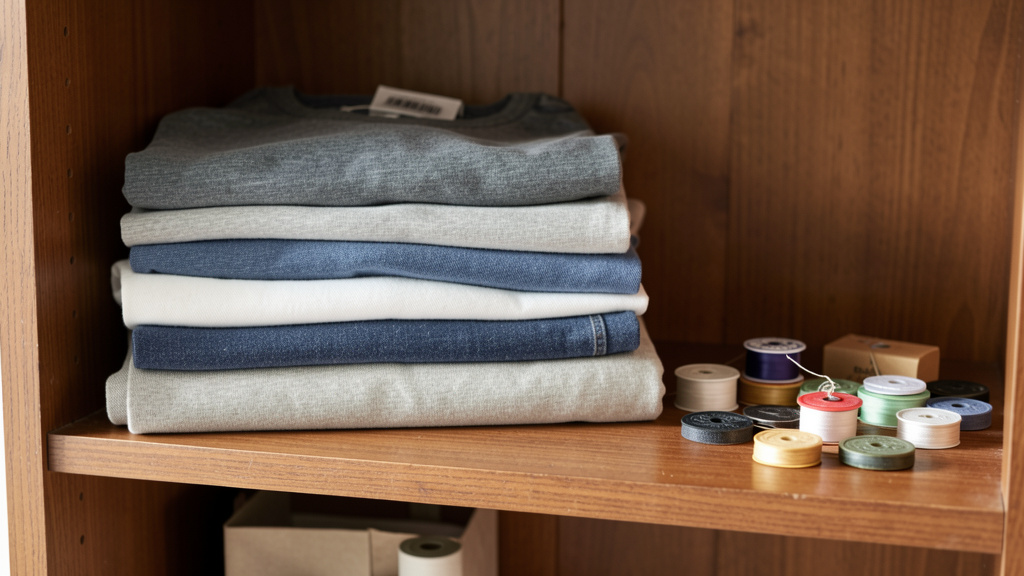
Stop the cycle of closet chaos. Build a wardrobe system that works with your life—not against it.
Closet organization isn’t about buying more bins or achieving Instagram-perfect symmetry. True wardrobe management is a dynamic system designed around your actual habits, cognitive patterns, and evolving life. This comprehensive guide moves beyond superficial tips to deliver a psychologically grounded, adaptable framework that reduces decision fatigue, eases daily stress, and creates lasting order—without requiring a single purchase. Whether you’re working with a cramped apartment closet, managing a family’s seasonal rotations, or seeking clarity amid fashion overwhelm, this method transforms your closet from a source of anxiety into a quiet sanctuary of intention.
Introduction
Walk into any home improvement store, and you’ll find aisles overflowing with closet organizers—slim hangers, velvet-lined bins, modular shelving systems promising transformation. Yet for most people, these purchases lead not to liberation but to deeper frustration. Why? Because organization isn’t a product problem; it’s a system problem. When we focus solely on containers without addressing the underlying patterns of acquisition, decision-making, and maintenance, we’re merely rearranging chaos. Effective wardrobe management involves understanding the interplay of personal habits, spatial constraints, and emotional relationships with clothing. Drawing from established principles in environmental psychology and observed patterns across diverse home organization systems, this framework prioritizes human behavior over hardware. It recognizes that a closet organized for the person you are—not the person you aspire to be—is the only system likely to endure. This approach moves beyond minimalism as an aesthetic ideal, focusing instead on intentionality as a sustainable practice. By the end of this guide, you’ll possess not just a tidier closet, but a repeatable methodology for making thoughtful choices about every garment that enters your space, reducing waste, saving time, and reclaiming mental energy for what truly matters.
The Three-Layer Conscious Closet Framework
Most closet guides offer linear checklists: Empty. Sort. Donate. Organize. But real life isn’t linear. Seasons shift. Bodies change. Priorities evolve. A rigid system fractures under these pressures. The Conscious Closet Framework operates on three interdependent layers that work together like gears in a well-oiled machine. Layer 1 (Foundation) establishes your personal criteria and clarifies emotional attachments. Layer 2 (Flow) designs physical and cognitive pathways for effortless daily use. Layer 3 (Future-Proofing) builds in adaptability so your system grows with you, not against you. Skipping any layer creates vulnerability—a beautifully arranged closet that collapses after three weeks because maintenance felt unsustainable, or a thorough sort that leaves you unprepared for shifting weather. This framework’s strength lies in its cyclical nature: each layer informs and reinforces the others. You’ll revisit Layer 1 quarterly not as a failure, but as intentional calibration. You’ll adjust Layer 2 as routines shift. You’ll leverage Layer 3 to navigate life transitions without starting from scratch. This isn’t a one-time project; it’s cultivating ongoing wardrobe literacy.
Layer 1: Foundation — The Mindset and Assessment Phase
Before moving a single hanger, we establish your unique organizational DNA. This phase prevents the most common pitfall: adopting someone else’s system that feels alien to your life. Imagine navigating a city using a map drawn for another continent—you’d be perpetually lost. Your closet system must reflect your geography: your schedule, your body, your values, your friction points.
Step 1: Define Your “Why” Beyond “It’s Messy”
Grab a notebook. Set a timer for ten minutes. Complete this sentence without stopping: “When my closet works well, I feel __ because ____.” Dig deeper than “less stressed.” Do you feel confident walking out the door? Do you save twenty minutes each morning for coffee with your child? Do you avoid the guilt of unworn clothes? Do you experience calm when opening the door? This emotional anchor becomes your compass during tough decisions. Sarah, a nurse working long shifts, wrote: “When my closet works well, I feel prepared and respected because I can grab a clean, professional outfit quickly after a draining shift.” Her “why” eliminated debates about “should I keep this?”—if an item didn’t support speed and professionalism, it didn’t belong. Contrast this with David, a freelance writer: “When my closet works well, I feel creatively unburdened because I’m not wasting mental energy on trivial choices.” His system prioritized visual calm and ease of access over speed. Your “why” is personal and non-negotiable. Write it on a sticky note. Place it where you’ll see it during sorting. Every decision flows from here.
Step 2: Conduct a Pain Point Audit
For three days, carry a small notepad (or use your phone’s notes app). Each time you interact with your closet—pulling an outfit, searching for socks, returning laundry—jot down one friction point. Be specific:
– “Spent several minutes hunting for black ankle socks. Drawer is tangled.”
– “Tried on three blouses; all had wrinkles from being crowded.”
– “Couldn’t find the matching belt for my navy dress. Checked multiple spots.”
– “Laundry basket overflowed onto the floor again.”
This audit reveals your actual problems, not perceived ones. You might discover your real issue isn’t “too many clothes” but “inaccessible storage for frequently worn items” or “no designated spot for items needing repair.” Patterns will emerge. Group similar pains: “access issues,” “maintenance gaps,” “decision hesitation.” These become your Layer 2 design priorities. One person’s audit revealed most frustrations occurred during the morning rush. Their solution wasn’t buying organizers; it was creating a “Ready Rack” zone for next-day outfits, eliminating morning searches entirely.
Step 3: Establish Your Personal Criteria Matrix
Forget arbitrary rules like “if you haven’t worn it in a year, donate it.” Such rules ignore context. That bridesmaid dress shouldn’t be worn yearly. That heavy parka won’t be worn in July. Instead, create a custom decision filter with four columns:
| Criteria | Yes (Keep) | Maybe (Re-evaluate) | No (Release) |
|---|---|---|---|
| Function | Fits current body and lifestyle needs | Needs minor alteration; seasonal item currently out of season | Doesn’t fit; damaged beyond repair; wrong occasion |
| Feeling | Sparks genuine confidence or comfort | Neutral feeling; “meh” but practical | Anxiety, guilt, or dread when worn |
| Frequency | Worn recently (adjust for season/lifestyle) | Worn seasonally; special occasion item | Never worn since acquisition |
| Condition | Clean, repaired, ready to wear | Needs mending, cleaning, or button replacement | Stained, torn, pilled beyond restoration |
This matrix transforms emotional decisions into structured assessments. Hold each item and ask: Does it meet multiple “Yes” criteria? If it lands in “Maybe,” place it in a designated “Re-evaluate” box (not back in the closet!). Schedule a brief review of this box in 30 days. Often, distance brings clarity. The “Maybe” pile typically shrinks. Crucially, this isn’t about judgment. Releasing an item isn’t failure; it’s honoring its purpose. That college sweatshirt served its role. Letting it go makes space for what serves you now.
Why This Step Is Crucial: Without personalized criteria, decluttering becomes emotionally draining. You oscillate between guilt (“I spent money on this!”) and anxiety (“What if I need it?”). The matrix creates psychological safety. It’s not you deciding in the moment; it’s your predefined system guiding choices. This approach significantly reduces decision fatigue during the process.
Common Mistake to Avoid: Rushing this phase. Spending dedicated time here saves hours of indecision later. Don’t skip the Pain Point Audit—solving the wrong problem wastes effort.
Budget Alternative: No notebook? Use your phone’s voice memo app while standing in front of your closet. Speaking pains aloud deepens awareness.
Layer 2: Flow — Designing for Daily Ease
With your Foundation solid, we design the physical and cognitive pathways that make using your closet effortless. This layer applies principles of motion economy (minimizing steps), visual hierarchy (prioritizing what matters), and habit integration (linking actions to existing routines). The goal: reduce the mental effort of getting dressed.
Step 1: Zone Your Space by Frequency and Function
Not all clothing deserves equal real estate. Apply the observation that a minority of items typically receives the majority of wear. Give those items prime territory. Divide your closet into three zones:
- Prime Zone (Eye-to-Waist Level): Daily essentials. Core items worn regularly: foundational tops, go-to jeans, frequently used dresses, everyday shoes. This zone should require minimal bending or stretching.
- Secondary Zone (Above/Below Prime): Seasonal or occasional items. Off-season clothing, formal wear, guest bedding if stored here. Use clear bins labeled with contents and season (e.g., “Winter Sweaters”).
- Tertiary Zone (High/Low Hard-to-Reach): Archive items. Sentimental pieces (wedding dress), off-season bulk (heavy coats in summer), or items for specific future events. Store in breathable bags if space is critical; compression can damage fibers over time.
Real-Life Example: Maria, a teacher with back sensitivity, moved all daily-wear shoes to a low, pull-out rack at waist height. No more bending. She placed seasonal boots on the top shelf in labeled bins. Her morning routine shifted from “painful search” to “grab-and-go,” reducing physical strain significantly.
Step 2: Implement the “One-Touch” Hanging System
How you hang items impacts visibility, fabric care, and decision speed. Adopt this sequence:
1. Uniform Hangers: Use identical slim, non-slip hangers (velvet or flocked). Mismatched hangers create visual noise and waste space. Budget option: Gradually replace wire hangers over time.
2. Facing Forward: Hang all garments facing the same direction (left to right). When you wear an item, return it facing backward. After several months, items still facing forward reveal rarely worn pieces.
3. Category Grouping: Within Prime Zone, group by category: pants → skirts → dresses → blouses → sweaters. Then, within categories, arrange by color (light to dark). This creates a visual gradient that makes finding items intuitive.
4. The “Decision Stack”: For folded items (sweaters, jeans), use vertical folding if it serves your space and habits. Place folded items upright in drawers like files. You see every item at once. If vertical folding feels impractical, try the “decision stack”: fold items consistently and stack modestly. Place the most-worn item on top.
The Fundamental Principle: A closet organized for who you are today, with flexibility for who you’ll be tomorrow, supports daily calm and reduces unnecessary decision points.
Step 3: Engineer Micro-Habits for Maintenance
Organization decays without embedded maintenance. Design tiny habits that require minimal willpower:
– The 60-Second Reset: Every night, spend a minute returning tomorrow’s outfit to the Prime Zone, hanging yesterday’s worn-but-clean items properly, and placing truly dirty clothes into the hamper. This prevents “closet creep.”
– The “One In, One Out” Trigger: When bringing a new garment home, identify one item to release before removing price tags. Keep a small donation container inside the closet. When full, it goes directly to your car for drop-off.
– The Sunday Scan: Every Sunday evening, spend five minutes scanning your Prime Zone. Are socks paired? Are shoes aligned? Is the “Ready Rack” (if used) prepped for Monday? This micro-maintenance prevents weekly buildup.
Why This Step Is Crucial: Flow design turns intention into automatic behavior. When the path of least resistance aligns with your goals (e.g., shoes are easy to access and return), consistency follows more naturally. Research in habit formation indicates that reducing friction supports greater consistency in maintaining systems.
Common Mistake to Avoid: Over-organizing tertiary zones. Don’t spend hours perfectly folding archive items. Label bins clearly and focus energy where it matters most: your daily-use zones.
Accessibility Adaptation: For mobility considerations, install pull-down rods for upper zones, use lazy Susans for deep shelves, or designate a “daily essentials” cart on wheels. Function consistently trumps aesthetics.
Layer 3: Future-Proofing — The Maintenance and Evolution System
A static system rarely endures. Life brings seasons, body changes, career shifts, family growth. Layer 3 builds resilience through scheduled check-ins, adaptable protocols, and compassionate transitions. This is where many systems falter—and where the Conscious Closet Framework sustains momentum.
Step 1: The Quarterly Calibration Ritual
Mark your calendar for the start of each season. This brief ritual prevents annual overwhelm:
1. Review Your “Why” Statement: Has it shifted? A new job? A baby? Adjust criteria if needed.
2. Scan the “Re-evaluate” Box: Revisit items set aside. Be honest. If still uncertain, extend the deadline or release it.
3. Rotate Seasons: Move current-season items to Prime Zone. Pack off-season into labeled bins for Secondary/Tertiary zones. Pro Tip: Store off-season bins with natural moth deterrents like lavender sachets; avoid direct contact with fabrics.
4. Check Condition: As you handle items, note needed repairs (loose button, missing hook). Keep a small “Mending Station” kit nearby: needle, thread, spare buttons. Tackle one repair during a quiet moment.
This ritual transforms seasonal transitions from dreaded chores into mindful pauses. It’s not about purging; it’s about curating. You honor what served you last season and prepare space for what’s ahead.
Step 2: The Life Transition Protocol
Major changes (pregnancy, retirement, relocation) disrupt closet equilibrium. Instead of panic-purging, follow this protocol:
– Acknowledge the Shift: Name the transition. “My body is changing,” or “My work wardrobe needs redefining.” Validate the emotional weight.
– Create a “Transition Zone”: Designate one shelf or bin outside your main closet (under bed, spare closet) for items temporarily out of rotation. Label clearly: “Maternity – Fall 2024” or “Business Attire – On Hold.” This removes visual clutter without forcing permanent decisions.
– Define a Review Date: Set a calendar reminder for 3–6 months later. “Reassess maternity clothes on January 15.” Distance often brings clarity. Many find they release items more easily after the transition stabilizes.
– Focus on Current Needs: Build a minimal “core capsule” for your present reality. For postpartum recovery: soft leggings, nursing-friendly tops, supportive shoes. Let this capsule live in your Prime Zone. Everything else waits peacefully in the Transition Zone.
Real-Life Example: After retiring, Robert felt adrift without his suits. Instead of donating them immediately, he placed them in a labeled bin with a note: “Review after 6 months of retirement routine.” Six months later, he kept two suits for special occasions and donated the rest with gratitude, having discovered his true need was comfortable layers for gardening and travel.
Step 3: Sustainable Release Pathways
Releasing items responsibly closes the loop ethically and reduces hesitation. Match the item’s condition to the right pathway:
| Item Condition | Thoughtful Release Pathway | Why It Matters |
|---|---|---|
| Like New / Gently Used | Consignment (local or online), clothing swaps | Recoups value; extends garment life; supports circular economy |
| Good Condition, Minor Flaws | Donation to shelters, Dress for Success, community groups | Directly serves community needs; flaws often unnoticeable to recipients |
| Worn, Stained, or Damaged | Textile recycling (retailer programs, municipal options) | Prevents landfill waste; fibers repurposed for insulation, rags |
| Sentimental (Unwearable) | Memory preservation (photograph, small swatch), then release | Honors emotional value without physical burden |
Critical Note: Avoid donating heavily soiled, torn, or mildewed items. Shelters lack resources to process them. When in doubt, seek textile recycling options. Call ahead to donation centers—they often have specific current needs.
Why This Step Is Crucial: Future-Proofing transforms organization from a chore into a sustainable practice. It builds self-trust: you know your system can handle change. This reduces anxiety about “doing it wrong” and fosters long-term adherence.
Common Mistake to Avoid: Waiting for “perfect” conditions to maintain the system. Missed a Quarterly Calibration? Do a 5-minute “Emergency Scan” instead. Progress over perfection.
Budget Alternative: No consignment access? Host a clothing swap with friends. Set clear guidelines: “Bring clean items, take what fits.” Refresh wardrobes sustainably.
Adapting the Framework to Your Unique Context
The Conscious Closet Framework is intentionally flexible. Its strength lies in thoughtful customization. Below, we address specific scenarios where generic advice falls short—and how to apply the layers effectively.
Small Closets and Studio Apartments: Maximizing Every Inch
When space is measured in inches, strategy trumps storage products.
– Layer 1 Focus: Your criteria matrix must be precise. “Does this serve my current life in this small space?” Prioritize versatility: a navy blazer for video calls and dinners, dark jeans that transition day to night.
– Layer 2 Flow Hacks:
– Double Hanging Space: Install a second rod below the main rod for shorter items (blouses, pants folded over hangers). Use the space between rods for shelves.
– Door Real Estate: Over-door organizers work for accessories (belts, scarves), socks, or folded tees. Ensure the door closes fully.
– Vertical Folding: If you have even one drawer, fold items vertically. You’ll fit more while seeing everything.
– Under-Bed Storage: Use flat, rolling bins for off-season items. Label lids clearly. Measure bed height first!
– Layer 3 Adaptation: Quarterly rotations are essential. With limited space, off-season items must leave the main closet. Store bins under the bed or in a hall closet.
Real-Life Example: Chloe lives in a compact urban studio. Her closet is 24 inches deep. She installed a tension rod halfway down for pants, hung all tops on slim hangers facing forward, and used the closet floor for a single rolling bin labeled “Winter.” Her Prime Zone holds exactly 10 tops, 5 bottoms, and 3 dresses—all visible, all accessible. “I used to feel overwhelmed opening my closet,” she shares. “Now it feels like a curated space just for me.”
Family Closets: Systems That Scale with Daily Life
Managing multiple wardrobes requires simplicity and shared understanding.
– Layer 1 for Families: Hold a brief family meeting. Co-create simple criteria: “Clothes must be clean,” “Shoes go in the bin,” “If it doesn’t fit, it goes in the donation box.” For kids, use visual aids: photos of “how the closet should look” taped inside the door.
– Layer 2 Flow for All Ages:
– Low Zones for Kids: Install rods at child height. Use picture labels (a shoe icon, a sock icon) on bins. Teach the “one-touch rule”: put it away now.
– Color-Coded by Person: Assign each family member a colored hanger (blue for dad, pink for mom, green for child). Instant visual sorting.
– Laundry Landing Zone: Place a divided hamper outside the closet: lights, darks, delicates. Reduces sorting time later.
– Shoe Management: A slanted shoe rack holds more pairs visibly. For tiny shoes, use clear stackable bins labeled by child and type.
– Layer 3 Maintenance:
– Monthly “Closet Check-In”: 15 minutes as a family. Sort donations, check for outgrown items, acknowledge what’s working.
– Seasonal Swap Ritual: Make rotations collaborative. Play music, involve kids in labeling bins. Take photos of kids in last season’s clothes before packing—creates keepsake memories without keeping physical items.
Critical Insight: For young children, avoid organizing clothes by type (all pants together). Organize by complete outfit. Clip matching tops and bottoms with a clothespin. Reduces morning friction and teaches coordination. For toddlers, use low hooks with outfit photos: “School Day,” “Playdate.”
Accessibility and Adaptive Needs: Dignity Through Design
Closet organization must serve all bodies and abilities.
– Layer 1 Criteria Adjustment: Add “Ease of Use” to your matrix: Can I put this on independently? Does it cause discomfort? Are closures manageable? Prioritize adaptive clothing features: magnetic buttons, side-zip pants, elastic waists.
– Layer 2 Flow Modifications:
– Pull-Down Rods: Install manual or motorized pull-down rods to bring high items to accessible height.
– Roll-Out Trays: For deep shelves, install full-extension trays. Items glide toward you without reaching.
– Lighting: Motion-sensor LED strips inside the closet eliminate shadows. Critical for identifying colors or checking details.
– Seated Dressing Zone: If standing is difficult, ensure clear space inside the closet with a sturdy stool. Verify pathways accommodate mobility aids.
– Labeling Systems: For low vision, use large-print labels, tactile markers, or color-coded ribbons tied to hangers (red = work, blue = casual).
– Layer 3 Sustainability: Consult occupational therapists for personalized solutions. Many adaptive clothing brands offer free consultations. Remember: releasing non-adaptive clothing isn’t loss—it’s making space for garments that honor your body and independence.
Sustainable Wardrobe Stewardship: Beyond the Closet
True management considers the garment’s entire lifecycle.
– Pre-Acquisition Filter (Layer 1 Extension): Before buying, ask:
– Will I wear this regularly?
– Does it coordinate with existing items?
– Is the fabric durable and responsibly sourced? (Consider linen, organic cotton, Tencel)
– Can it be repaired? (Avoid glued seams, ultra-thin fabrics)
– Care Rituals (Layer 2 Integration):
– Air, Don’t Wash: Hang worn-but-clean items to air overnight. Reduces water use and fabric wear.
– Gentle Washing: Use cold water, turn clothes inside out.
– Air Dry When Possible: Sunlight naturally freshens. Use a drying rack indoors if needed.
– Mend Promptly: A loose button takes moments to fix. Waiting leads to items being set aside. Keep your Mending Station visible.
– End-of-Life Planning (Layer 3 Deepening): Research local textile recyclers before you need them. Save their address. When releasing items, choose the highest-value pathway (consignment > donation > recycling). Support brands with take-back programs.
Perspective: Extending the usable life of garments, even by several months, contributes meaningfully to reducing their overall environmental footprint. Your closet choices ripple outward.
Navigating Common Frictions and Alternative Approaches
No framework is universally perfect. Acknowledging friction builds trust and provides tools for course-correction. Let’s address real-world hurdles and contextualize popular methods.
“I Sorted Everything, But It’s Messy Again Quickly!”
This isn’t failure—it’s feedback. The system likely lacked Layer 3 integration. Ask:
– Was maintenance designed into daily routines? (e.g., No “60-Second Reset” habit)
– Were “Maybe” items returned to the closet prematurely?
– Did the system ignore actual pain points? (e.g., Organized by color but you choose outfits by occasion)
Solution: Revisit your Pain Point Audit. Adjust one micro-habit. Maybe move the hamper closer. Maybe dedicate Sunday mornings to the 5-minute Scan. Small, sustainable tweaks outperform dramatic overhauls.
“I Feel Hesitant Releasing Items I Spent Money On”
This reflects the “sunk cost fallacy”—letting past investment dictate present choices. That unworn dress isn’t serving you while stored in guilt. Reframe:
– The purchase is complete. Keeping it won’t recover cost; it only occupies physical and mental space.
– Releasing it creates value: Consignment recoups funds; donation provides community support; recycling prevents waste.
– Honor the lesson: “This taught me I prefer relaxed fits.” Growth has value.
Place unworn items in the “Re-evaluate” box with a note: “Worn by [date] or release.” Often, the deadline brings clarity.
Comparing Popular Methods: Where They Shine and Where They Stall
Understanding alternatives helps you adapt wisely.
| Method | Core Strength | Common Friction | Conscious Closet Integration Tip |
|---|---|---|---|
| KonMari (Marie Kondo) | Emotional connection to items; gratitude practice | “Spark joy” is subjective; overwhelming for large wardrobes; folding everything isn’t practical for all fabrics | Adopt category-based sorting (all tops together) and gratitude when releasing. Skip mandatory vertical folding if it doesn’t serve your space. |
| Minimalism (Capsule Wardrobe) | Reduces decision points; clarifies style | Rigid numbers ignore life complexity; feels restrictive for some | Use the concept of a capsule (core versatile pieces) but define your number. Include “flex slots” for hobbies or seasons. |
| The Uniform Approach | Ultimate efficiency; eliminates morning decisions | Can feel monotonous; impractical for varied demands | Adopt elements: a signature color palette, consistent denim style. Not full uniformity. |
| Professional Organizer Systems | Highly customized; leverages spatial expertise | Cost-prohibitive for many; solutions may rely on purchased products | Extract principles: zone by frequency, uniform hangers, visual labeling. Implement DIY versions of layouts. |
Critical Perspective: No single method owns “truth.” The most sustainable system is the one you design and maintain. Borrow what resonates; discard what doesn’t. Your closet, your rules.
When to Seek Professional Support
While this framework empowers self-management, certain situations warrant expert help:
– Hoarding Tendencies: If clutter causes significant distress, interferes with daily function, or involves safety concerns (blocked exits), consult a mental health professional specializing in hoarding disorder. Compassionate, clinical support is essential.
– Significant Mobility Limitations: An occupational therapist can prescribe adaptive equipment and layout modifications.
– Overwhelming Volume: If facing estate clear-out, major life transition, or massive accumulation, a certified professional organizer (find via NAPO.net) provides non-judgmental, efficient support. Their value is in process, not just products.
Seeking help is strategic resourcefulness. The goal is a peaceful closet, however you achieve it.
Your Questions, Answered
Q: How do I organize a closet shared by two people with very different styles and needs?
A: Start with Layer 1 together. Define shared criteria (“clean,” “in good repair”) and individual zones. Physically divide the closet: left/right sides, top/bottom rods, or separate sections labeled with names. Use color-coded hangers for quick visual sorting. Schedule a joint Quarterly Calibration to maintain harmony. Respect that his “Prime Zone” (work uniforms) differs from hers (client-meeting dresses)—and that’s okay.
Q: What’s the best way to store delicate items like silk blouses or cashmere sweaters?
A: Never hang silk or cashmere long-term—they can stretch. Fold them using acid-free tissue paper to prevent creasing, and store horizontally in a breathable cotton drawer liner or cedar-lined drawer. Place lavender sachets nearby to deter moths (avoid direct fabric contact). For off-season storage, use archival-quality boxes. Always clean items thoroughly before storing; moths are attracted to residues.
Q: I live in a humid climate. How do I prevent mildew and musty smells?
A: Control moisture proactively. Place silica gel packs (rechargeable) or activated charcoal bags on shelves. Ensure air circulation: leave space between hanging items; avoid overcrowding shelves. Never store damp items. For existing mildew, wipe shelves with a diluted vinegar solution (test first), then air out thoroughly before returning clothes. Cedar blocks help but lose potency; sand lightly to refresh scent.
Q: How often should I actually reorganize my entire closet?
A: You shouldn’t need full reorganization if Layer 3 is active. The Quarterly Calibration (20 minutes) handles seasonal shifts. A full “reset” is only necessary during major life transitions or if friction points resurface consistently. Observation of sustainable home organization practices indicates that quarterly micro-adjustments help prevent the need for annual overhauls and support long-term system integrity with minimal effort. Listen to your experience—if opening the closet feels stressful again, revisit Layer 1.
Q: What if I don’t have a closet? (Studio apartment, dorm room)
A: The framework adapts beautifully. Your “closet” becomes a designated zone: a clothing rack in the corner, under-bed storage, or a wardrobe armoire. Apply the same layers:
– Layer 1: Define criteria thoughtfully (space is premium).
– Layer 2: Zone the rack—Prime Zone at eye level, seasonal below. Use matching hangers. Add a small shelf above for folded items.
– Layer 3: Quarterly rotations are even more critical. Store off-season in under-bed bins.
A clothing rack with a fabric cover creates visual calm. Place it strategically to define space without blocking pathways.
Q: How do I involve my young child in closet organization without it becoming a battle?
A: Make it playful and age-appropriate. For toddlers: “Let’s find all the red shirts!” Use picture labels on low bins. For preschoolers: Offer choices (“Should socks go in the blue bin or green bin?”). Celebrate participation: “You hung up your jacket!” Avoid perfectionism—focus on building habits of respect. A “dress-up bin” for costumes keeps play clothes contained. The goal is gradual habit formation, not Pinterest perfection.
Q: Are vacuum storage bags worth it for seasonal clothing?
A: Use cautiously. They save space but pose risks: compression can damage delicate fibers (wool, down), create permanent creases, and trap moisture if items aren’t completely dry. Best for: sturdy items like denim, synthetic activewear, or spare bedding. Avoid for: cashmere, silk, leather, down coats. If using, leave a small air pocket, store in a cool, dry place, and air items thoroughly before wearing. For most households, labeled breathable bins are gentler on clothing.
Q: I keep clothes “just in case” for body changes. How do I handle this without shame?
A: This is common and valid. Create a dedicated “Transition Zone” bin (Layer 3 Protocol). Label it neutrally: “Future Fit – Store with Care.” Pack items clean and folded. Set a compassionate review date: “Reassess in 6 months.” This removes daily visual triggers while honoring your body’s journey. Many find that after stabilizing habits, they release the bin with gratitude—or welcome items back without guilt. Your worth isn’t tied to a clothing size; your system should reflect self-compassion.
Q: What’s the most overlooked closet organization tool?
A: Lighting. Poor lighting hides details, distorts colors, and creates shadows. Install battery-operated LED puck lights under shelves or a motion-sensor strip inside the door frame. Warm white (2700K–3000K) mimics natural light best for color accuracy. This small upgrade transforms functionality and safety—no more searching in the dark. It’s affordable and quick to install.
Q: How do I maintain motivation when progress feels slow?
A: Shift focus from “perfect closet” to “daily ease.” Celebrate micro-wins: “I found my belt quickly today!” Track time saved: “Morning routine feels smoother.” Place your “Why” statement where you’ll see it daily. Remember: organization is a practice, not a destination. Some days you’ll complete the 60-Second Reset; other days, you’ll just hang one shirt. Both count. Progress compounds quietly.
Conclusion: Your Path to a Peaceful Closet
You now hold more than closet tips—you possess a sustainable methodology for intentional living. The Conscious Closet Framework reframes organization not as a chore to endure, but as a compassionate practice of aligning your physical space with your inner values. We’ve moved far beyond hanger choices and bin colors to address the root dynamics of closet management: undefined criteria, misaligned workflows, and rigid systems that fracture under life’s changes. By anchoring your efforts in your unique “Why,” designing flow that honors your actual routines, and building in graceful adaptability, you’ve created a system resilient enough for real life.
Recap the three guiding pillars:
1. Foundation First: Your personalized criteria matrix and pain point audit prevent wasted effort and emotional drain. Never skip this reflective step.
2. Flow Over Fixtures: Prioritize cognitive ease and motion efficiency over purchased organizers. A well-zoned closet with consistent hangers supports daily function better than a cluttered “system” of bins.
3. Future-Proof with Compassion: Quarterly calibrations and life transition protocols transform maintenance from burden to ritual. Release items without judgment; honor their service.
The 24-Hour Rule: Within the next 24 hours, complete one tiny action that builds momentum:
– Write your “Why” statement on a sticky note.
– Spend five minutes noting one friction point during your next closet interaction.
– Place a small donation container inside your closet door.
This isn’t about finishing—it’s about beginning. Momentum compounds. That single sticky note will anchor your next decision. That one noted friction point will guide your first adjustment. Action, however small, breaks the cycle of overwhelm.
The Big Picture: Your closet is a microcosm of your relationship with your possessions—and ultimately, with yourself. When you curate with intention, you practice discernment that extends to other areas: your schedule, your digital space, your commitments. You learn to release what no longer serves you with gratitude, not guilt. You design systems that honor your energy and time. This quiet practice in a small room cultivates a profound shift: the understanding that order isn’t about control, but about creating space for what matters. The calm you may feel opening your closet each morning can contribute to a more centered start to your day. The confidence of knowing what to wear redirects mental energy toward creativity, connection, and joy. You haven’t just organized a closet. You’ve cultivated a sanctuary of self-respect—one hanger, one decision, one compassionate choice at a time.
Explore Our Complete System:
The Sustainable Laundry Protocol: Gentle Care for Clothes and Planet | Small Space Storage Mastery: Beyond the Closet | Building Your Personal Style Compass: Dress with Confidence | The 10-Minute Daily Reset: Habits for a Calmer Home | Mindful Consumption: Breaking the Buy-Regret Cycle | Adaptive Home Design: Creating Spaces for Every Body | The Seasonal Home Reset: A Room-by-Room Renewal Guide