Move Beyond Guesswork: A Thoughtful, Adaptable System to Match Materials to Real-World Conditions—Without Overpromising or Oversimplifying
Selecting materials sits at the heart of nearly every home, garden, or DIY project—and yet it’s frequently approached reactively. Using pressure-treated lumber for a vegetable bed without considering soil contact, installing standard plywood beneath a bathroom vanity in a humid zone, or choosing porous stone for an outdoor kitchen in a freeze-thaw climate can lead to premature wear, functional compromise, or unnecessary maintenance. This guide offers a flexible, principle-based framework drawn from established material science concepts, building science fundamentals, and observable patterns in project outcomes. It empowers you to evaluate durability, lifecycle considerations, aesthetic harmony, functional needs, and contextual factors for any application—from structural elements to decorative accents—turning material selection into a deliberate, confident step rather than a source of uncertainty.
Introduction: Why Context Shapes Material Performance
Picture two nearly identical garden sheds erected side by side. One uses standard spruce framing with untreated pine siding in a damp, shaded corner of the yard. The other employs naturally rot-resistant cedar framing with pre-finished composite siding. Within a few years, the first shows signs of moisture retention at the base, discoloration, and minor structural softening where wood meets soil. The second remains stable and visually consistent. The designs were similar; the divergence arose from how each material responded to its specific environment.
This pattern recurs across decks, fences, countertops, patios, and furniture. Material performance isn’t random—it follows predictable relationships between environmental exposure, usage demands, and inherent material properties. Concepts like moisture absorption tendencies, thermal movement, UV sensitivity, compressive strength, and chemical compatibility form the foundation of informed selection. Standards from organizations like ASTM International and ISO reflect decades of documented behavior under controlled conditions. This guide distills those insights into an accessible, stepwise process. Whether you’re choosing lumber for a backyard bench, stone for a pathway, fabric for outdoor cushions, or metal for a trellis frame, the same evaluation logic applies. Mastery emerges not from memorizing catalogs, but from understanding how to assess suitability for your unique situation.
The Material Selection Matrix: A Five-Step Evaluation Process
Rather than chasing a mythical “best material,” this framework guides you toward the most appropriate choice for your specific constraints and conditions. It balances four interconnected dimensions: Environmental Resilience, Functional Requirements, Lifecycle Considerations, and Human Experience. Each step builds on the last. Skipping steps risks overlooking subtle but critical mismatches.
Step 1: Map the Environmental and Usage Context (The “Where and How” Assessment)
Before evaluating any material, clearly define the conditions it will face throughout its intended service life. Vague terms like “outdoors” or “in the bathroom” lack the precision needed for reliable decisions.
- Why this step matters: Materials respond predictably to stressors. Documenting these upfront filters out unsuitable options early and focuses attention on relevant properties.
-
How to assess context concretely:
- Moisture Exposure: Is contact intermittent (rain on a deck surface that drains quickly), prolonged (soil against a planter wall), submerged (pond edge), or condensation-prone (underside of a sink cabinet)? Note proximity to irrigation, drainage flow, or shaded areas that retain dampness longer. Example: A bench under a covered porch experiences brief moisture; the same bench in an open, north-facing garden endures repeated wet-dry cycles—demanding higher moisture resistance.
- Temperature and Climate Factors: Record typical seasonal ranges. Does the location experience freeze-thaw cycles (critical for masonry, concrete, some plastics)? Intense, sustained sun exposure? Rapid temperature shifts? Example: PVC pipe performs well indoors but may become brittle in sustained sub-freezing conditions. For an outdoor spigot line in colder zones, materials like PEX-A or copper (with proper insulation) are commonly specified.
- Sunlight (UV) Exposure: Full sun (6+ hours direct), partial shade, or full shade? UV radiation gradually affects many polymers, fades pigments, and can weaken surface fibers in wood. Example: Standard polypropylene furniture left in constant sun may become brittle within a few seasons. UV-stabilized HDPE or solution-dyed acrylic fabrics typically maintain integrity longer.
- Physical and Mechanical Demands: Is the material structural (supporting weight)? Subject to impact (playground surface), abrasion (high-traffic path), vibration, or frequent handling? Example: Shelf brackets require good tensile strength; a workshop benchtop benefits from impact and dent resistance.
- Chemical and Biological Factors: Contact with soil (pH, microbes), salt air (coastal settings), pool chemicals, fertilizers, food acids, or insect pressure? Example: Aluminum hardware can corrode when in direct contact with certain pressure-treated woods. Stainless steel (grade 304 or higher) or hot-dipped galvanized steel is often recommended for compatibility.
- Human Interaction: High foot traffic? Use by children or pets? Frequency of cleaning? Need for slip resistance or splinter-free surfaces? Example: A kitchen countertop in a busy household benefits from non-porous surfaces and scratch resistance to support hygiene and daily use.
-
Common pitfalls to note:
- Assuming “outdoor-rated” applies universally—always verify the specific exposure rating (e.g., “Above Ground” vs. “Ground Contact”).
- Overlooking microclimates: North-facing walls stay damp longer; shaded patio corners dry slower.
- Ignoring installation context: Will the material touch concrete (trapping moisture against wood)? Be buried? Sandwiched with limited airflow? These details influence long-term behavior.
Step 2: Clarify Performance and Functional Needs (The “What Must It Do?” Filter)
Translate project goals into clear, observable criteria. This step prevents both under-specifying (leading to premature wear) and over-specifying (unnecessary cost or complexity).
- Why this step matters: It creates objective benchmarks to evaluate materials against your documented context from Step 1.
-
How to define needs practically:
- Expected Service Life: Is this temporary (one-season garden border), medium-term (5–10 years for a fence panel), or long-term (20+ years for a patio)? Example: Untreated pine may suffice for a seasonal border; a permanent perennial bed edging warrants cedar, composite, or stone.
- Critical Performance Thresholds: What failure modes matter most? Rot? Warping? Staining? Corrosion? Splintering? Prioritize resistance to your top concern. Example: For a child’s play structure ladder, smooth, splinter-resistant edges are essential—favoring sanded cedar or smooth-composite profiles over rough-sawn lumber.
- Maintenance Realism: Honestly assess your capacity. “Zero maintenance” (composite decking, metal roofing) differs from “annual sealing” (natural wood) or “tolerates occasional neglect” (concrete pavers). Choosing high-maintenance teak for a deck you cannot regularly oil often leads to weathering you may not prefer.
- Safety and Code Considerations: Are slip resistance (wet patio surfaces), fire ratings (near property lines), non-toxicity (raised beds, cutting boards), or structural load requirements applicable? These are non-negotiable baselines where local codes apply.
-
Common pitfalls to note:
- Confusing one type of strength with overall suitability (e.g., steel is strong but requires corrosion protection in wet soil).
- Underestimating installation complexity: Materials needing precise cuts, specialized fasteners, or perfect leveling may underperform due to execution challenges, not inherent flaws. Match material demands to skill level or budget for professional support.
- Optimism bias: “I’ll seal it yearly” often becomes infrequent maintenance. Choose materials whose aging trajectory aligns with your habits.
Step 3: Evaluate Lifecycle Considerations (Beyond Upfront Cost)
Focusing solely on initial purchase price can lead to higher long-term expense through repairs, replacements, or intensive upkeep. A holistic view considers total value over time.
- Why this step matters: It reveals hidden costs and supports financially sustainable choices aligned with your priorities.
-
How to assess thoughtfully:
- Upfront Investment: Material cost per unit, plus associated items (fasteners, sealants, underlayment, delivery).
- Installation Effort: Your time (valued realistically) or professional labor. Complex materials (natural stone veneer) often carry higher installation costs than simpler options (vinyl fencing).
- Ongoing Maintenance: Estimate recurring costs: materials, time, frequency. Example: A pressure-treated pine deck may cost less initially but require staining every 1–3 years. A composite deck costs more upfront but typically needs only occasional cleaning. Over 15 years, the total investment may converge or favor the lower-maintenance option.
- Longevity and Replacement: Consider likelihood and cost of early replacement due to wear or failure. A $40 plastic chair lasting two seasons costs $20/year; a $120 aluminum chair lasting 12 years costs $10/year.
- End-of-Life Factors: Some materials (treated wood, certain composites) may have disposal considerations. Locally, check landfill policies or recycling availability.
-
Practical Budget Approaches:
- Value-Optimized Path: Select the option with the most favorable balance of upfront cost, maintenance needs, and expected lifespan that meets your critical performance needs.
- Constraint-Aware Path: If budget is tight upfront, prioritize materials that safely satisfy non-negotiable performance needs (e.g., ground-contact-rated lumber for in-soil applications) while deferring aesthetic upgrades.
- Phased Implementation: For non-critical elements, consider building a sound base now with potential for future enhancement (e.g., a durable concrete block foundation for a shed, with budget siding planned for later upgrade). Avoid phasing critical moisture barriers or structural components.
-
Common pitfalls to note:
- Overlooking tool or rental costs for one-time projects.
- Underestimating waste factors (10–25% for irregular cuts or patterns).
- Choosing discounted, damaged, or outdated stock that compromises project integrity.
Step 4: Align with Aesthetic and Sensory Experience (The Human Dimension)
Technical suitability alone doesn’t guarantee satisfaction. How a material looks, feels, and functions in daily use deeply influences long-term enjoyment.
- Why this step matters: A material that clashes visually or feels unpleasant during use can undermine project satisfaction, even if technically sound.
-
How to evaluate holistically:
- Visual Integration: Does the color, texture, pattern, or scale complement existing architecture, landscape, or interior elements? Consider how it ages: cedar weathers to silver-gray; copper develops a patina; some composites retain color. Example: Reclaimed barn wood may feel incongruent on a minimalist modern facade; smooth fiber cement panels might harmonize more naturally.
- Tactile and Sensory Qualities: Is the surface comfortable to touch (handrails), safe underfoot (slip resistance when wet), or acoustically appropriate (cork for sound absorption)? Example: A stone patio in full sun may become uncomfortably hot; incorporating shaded zones or textured concrete pavers improves usability.
- Workability and Repairability: Can minor damage be addressed? Scratches sanded from solid wood? A single cracked tile replaced? Ease of future adjustment matters.
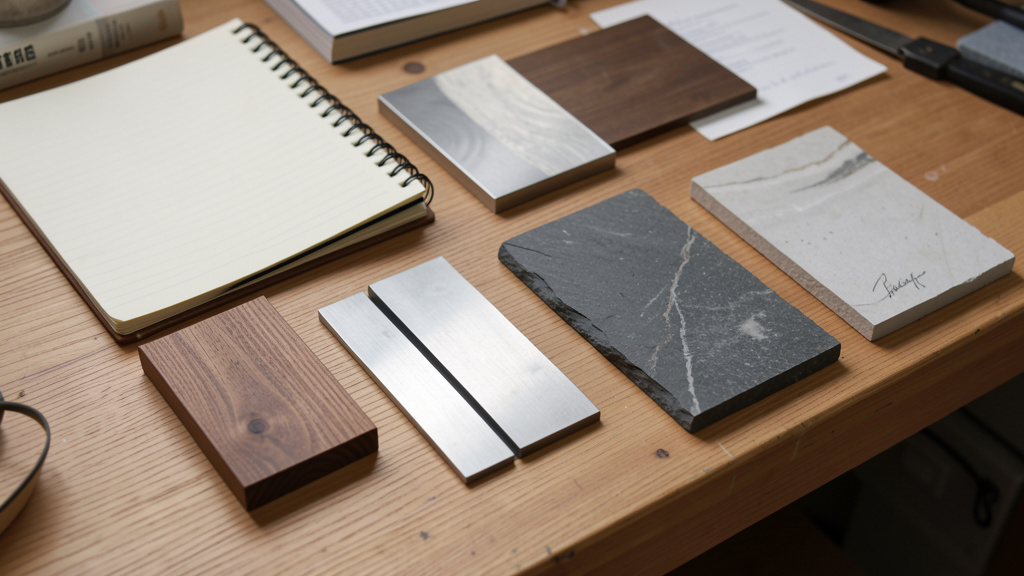
- Contextual Harmony: View full-size samples in the actual project lighting and setting. Small swatches can misrepresent scale, color shift, or texture.
-
Common pitfalls to note:
- Relying solely on showroom samples without assessing real-world aging.
- Prioritizing fleeting trends over enduring appeal—neutral, textured materials often age gracefully.
- Ignoring the full sensory experience: rough edges on a handrail, glare from a glossy surface, or noise from hollow decking.
Step 5: Consider Broader Impact (Environmental and Health Context)
Material choices carry implications beyond the project site. This step integrates awareness of sourcing, emissions, recyclability, and indoor environmental quality where relevant.
- Why this step matters: Informed choices support personal values, occupant well-being, and responsible resource use—without compromising core functionality.
-
How to assess responsibly:
- Sourcing and Certifications: For wood, look for FSC® or SFI® certification indicating responsible forestry. Reclaimed materials reduce demand for virgin resources. Verify structural integrity and check for contaminants (lead paint, asbestos) before reuse.
- Indoor Air Quality (IAQ): For interior applications, prioritize low-VOC finishes, adhesives, and substrates. Certifications like GREENGUARD Gold indicate rigorous emissions testing. For food-contact surfaces (cutting boards, raised beds), select non-toxic materials; avoid older pressure-treated lumber (pre-2004) for garden beds.
- Durability as Sustainability: Often, the most sustainable choice is the one that lasts longest with minimal upkeep, avoiding the resource use of frequent replacement. A metal roof lasting 50 years may have a lower lifetime footprint than multiple asphalt roofs.
- Local and Contextual Factors: Locally sourced stone or regionally milled lumber can reduce transportation impacts. In arid regions, permeable paving supports groundwater recharge; in humid zones, breathable wall systems manage moisture.
-
Practical Strategies:
- Prioritize verified claims over vague terms like “eco-friendly.” Look for specific certifications or manufacturer transparency.
- Balance trade-offs thoughtfully: Bamboo is rapidly renewable but often shipped globally; locally quarried stone has extraction impacts but exceptional longevity. Context determines relevance.
- Factor in maintenance chemicals: A “natural” wood deck requiring annual toxic sealants may have a heavier lifecycle impact than a low-maintenance composite.
Guiding Insight: The most suitable material emerges from balancing all five steps—not maximizing any single attribute. It reflects a conscious alignment between your project’s unique conditions, functional needs, practical constraints, sensory preferences, and broader considerations. Flexibility and awareness matter more than rigid rules.
Applying the Framework: Material Families in Context
With the Matrix as your guide, explore common material categories. For each, we note key properties, typical applications, limitations, relative cost ranges (USD, approximate and regionally variable), and how the Matrix informs selection. This transforms categories into actionable knowledge.
Wood and Timber: Warmth, Versatility, and Nuance
Wood offers natural beauty and workability but requires attention to species, treatment, and context.
-
Key Considerations:
- Natural Durability Varies: Heartwood of cedar, redwood, or black locust contains natural oils offering decay resistance. Sapwood (lighter-colored outer wood) is less durable.
- Moisture Content Matters: Kiln-dried (KD) lumber (6–12% moisture) is stable for interiors. For exterior use, properly treated or naturally durable species are preferred. Allow lumber to acclimate onsite before installation.
- Pressure Treatment Ratings: “Above Ground” vs. “Ground Contact” indicates preservative concentration. Using “Above Ground” rated wood in soil contact significantly shortens service life. Always pair treated wood with corrosion-resistant fasteners (hot-dipped galvanized or stainless steel).
-
Common Options & Matrix Guidance:
- Pressure-Treated Southern Yellow Pine (Ground Contact Rated): Typical Use: Deck framing, fence posts, landscape timbers. Matrix Notes: Suitable for moist or soil-contact applications when rated correctly. Requires compatible fasteners. May check (surface crack) as it dries—usually cosmetic. Avoid direct contact with aluminum. For garden beds, line interior with a food-safe barrier if concerned about preservatives.
- Western Red Cedar: Typical Use: Siding, fencing, outdoor furniture, raised beds (untreated). Matrix Notes: Naturally resistant to decay and insects; weathers to silver-gray. Softer than pine—more prone to dents. Lower maintenance than untreated pine. Seek FSC-certified sources. Avoid for high-abrasion surfaces.
- Redwood (Heartwood): Typical Use: Decking, siding, outdoor furniture (especially coastal). Matrix Notes: Excellent natural durability and stability. Higher cost; ensure “second-growth” or certified sources. Sapwood has minimal durability—verify heartwood content.
- Ipe (Brazilian Walnut): Typical Use: High-traffic decking, boardwalks. Matrix Notes: Extremely dense and durable. Requires pre-drilling for fastening. Critical: Verify FSC certification to support responsible forestry. Heavy weight and shipping footprint are considerations.
- Engineered Wood (Plywood, OSB, LVL): Typical Use: Sheathing, subflooring, structural beams (LVL), cabinetry (plywood). Matrix Notes: Use exterior-grade (e.g., CDX) plywood with waterproof adhesive for damp areas. OSB may swell at edges if exposed to moisture. For interiors, seek CARB Phase 2 compliant or NAF (No Added Formaldehyde) products. Avoid interior-grade plywood outdoors.
-
Quick Reference by Application:
- Structural Framing (Interior): Kiln-dried SPF (Spruce-Pine-Fir).
- Decking: Budget: Ground-contact-rated pressure-treated pine. Mid: Cedar, redwood. Premium: FSC-certified ipe, thermally modified wood.
- Raised Garden Beds: Untreated cedar, redwood, black locust, or composite. If using pressure-treated lumber, line interior with a food-safe barrier (e.g., pond liner). Avoid railroad ties (creosote) or pre-2004 treated wood.
- Outdoor Furniture: Cedar, white oak, sustainably sourced teak. Avoid untreated pine or particleboard.
Metals: Strength, Longevity, and Corrosion Awareness
Metals provide structural integrity and modern aesthetics. Managing corrosion is central to longevity.
-
Key Considerations:
- Corrosion Dynamics: Rust affects iron-based metals. Galvanic corrosion occurs when dissimilar metals contact in the presence of moisture (e.g., aluminum touching copper).
- Alloy and Finish Matter: Stainless steel grade 304 suits most outdoor uses; grade 316 (“marine grade”) adds molybdenum for coastal salt resistance. Finishes like hot-dipped galvanizing (zinc coating), powder coating, or anodizing significantly extend service life.
-
Common Options & Matrix Guidance:
- Stainless Steel (Grades 304/316): Typical Use: Hardware, railings, fasteners, coastal applications. Matrix Notes: Grade 316 recommended within one mile of oceanfront. Highly durable, low maintenance. Higher initial cost justified for critical hardware. Avoid abrasive cleaners that scratch surfaces.
- Aluminum: Typical Use: Window frames, siding, gutters, furniture frames. Matrix Notes: Naturally corrosion-resistant; lightweight. Avoid direct contact with copper or pressure-treated wood (risk of galvanic corrosion). Powder-coated finishes enhance durability and aesthetics.
- Copper: Typical Use: Roofing, flashing, gutters, accents. Matrix Notes: Develops a protective green patina over time. Soft metal—requires skilled installation. Initial runoff may stain light surfaces; plan accordingly. Avoid contact with aluminum or steel.
- Hot-Dipped Galvanized Steel: Typical Use: Roofing, fencing, agricultural structures. Matrix Notes: Zinc coating sacrifices itself to protect steel. Lifespan depends on coating thickness and environment. Scratches exposing steel may rust. Avoid highly acidic conditions.
-
Quick Reference by Application:
- Fasteners for Treated Wood/Composites: Stainless steel (grade 304 minimum; 316 for coastal). Never use standard steel or aluminum.
- Roofing: Galvanized steel (budget/utility), aluminum (lightweight, corrosion-resistant), copper (premium, long-lasting).
- Railings: Powder-coated aluminum (low maintenance), stainless steel (modern, durable), properly finished steel (requires ongoing maintenance).
Plastics, Composites, and Polymers: Engineered Solutions with Caveats
Synthetics solve specific challenges but require attention to UV stability, temperature limits, and installation details.
-
Key Considerations:
- UV Stabilization is Essential Outdoors: Unstabilized plastics degrade quickly in sunlight. Look for terms like “UV-inhibited” or “solution-dyed.”
- Thermal Movement: Plastics expand and contract with temperature. Installation must include expansion gaps or slotted fastener holes to prevent warping.
- Capstock vs. Early-Generation Composites: Modern composites often feature a protective polymer cap layer over a wood-plastic core, improving stain, fade, and moisture resistance.
-
Common Options & Matrix Guidance:
- Capstock Composite Decking: Typical Use: Decking, railing, fencing. Matrix Notes: Low maintenance (no staining); verify manufacturer warranty for your climate (e.g., coastal, high-UV). Choose lighter colors in hot climates to reduce heat retention. Requires proper gapping for expansion. Avoid cheap, non-capped composites for demanding applications.
- HDPE (High-Density Polyethylene) Lumber: Typical Use: Docks, playground surfaces, outdoor furniture. Matrix Notes: Excellent moisture resistance; often contains recycled content. Heavy; may soften slightly in extreme heat. Not ideal for long unsupported spans.
- PVC (for Siding, Fencing, Decking): Typical Use: Low-maintenance cladding, fencing. Matrix Notes: Moisture-resistant; avoid extreme heat exposure (e.g., near grills). Hollow profiles may feel less substantial. Environmental considerations vary—research manufacturer practices if this is a priority.
- Polycarbonate (Multiwall): Typical Use: Greenhouse panels, skylights. Matrix Notes: Impact-resistant; ensure UV-protected layer faces the sun. Requires framing that accommodates thermal expansion. Avoid abrasive cleaning.
-
Quick Reference by Application:
- Decking: Capstock composite (balanced performance), HDPE (marine/dock settings). Avoid non-UV-stabilized plastics.
- Outdoor Cushion Fabric: Solution-dyed acrylic (e.g., Sunbrella®). Avoid standard polyester.
- Greenhouse Glazing: Twin-wall polycarbonate (insulation + impact resistance). Avoid non-UV-protected grades.
Masonry, Stone, and Concrete: Permanence, Mass, and Moisture Management
These materials offer exceptional durability and thermal mass but demand attention to installation and porosity.
-
Key Considerations:
- Porosity Dictates Care: Dense materials (granite, porcelain tile) resist moisture; porous ones (sandstone, unglazed terra cotta) may require sealing, especially in freeze-thaw zones. Perform a water drop test: does water bead or absorb quickly?
- Freeze-Thaw Resistance: Water trapped in pores expands when frozen, causing spalling. Use materials rated for exterior/frost exposure in cold climates. Proper drainage and slope are critical.
- Thermal Mass Benefit: Stone, brick, and concrete absorb heat during the day and release it slowly, moderating temperatures in climates with significant day-night swings.
-
Common Options & Matrix Guidance:
- Concrete Pavers: Typical Use: Patios, walkways, driveways. Matrix Notes: Permeable when installed with open joints and polymeric sand. Individual pavers can be replaced if damaged. Requires proper base preparation (compacted gravel/sand) to prevent shifting.
- Natural Stone (Granite, Slate, Flagstone): Typical Use: Patios, veneer, countertops. Matrix Notes: Granite is dense and durable; sandstone/limestone are softer and more porous—verify suitability for your climate and use. Seal countertops for stain resistance. Source locally when possible to reduce transport impact.
- Brick and Clay Pavers: Typical Use: Paths, patios, veneer. Matrix Notes: Excellent durability and freeze-thaw resistance with proper installation. Repairs are straightforward. Avoid mortaring directly to unstable bases.
- Porcelain Tile (Exterior-Grade): Typical Use: Patios, pool decks, shower walls. Matrix Notes: Must be rated for exterior use (low water absorption <0.5%, frost-proof, slip-resistant surface). Requires expert installation on stable, sloped substrates. Avoid interior-grade tile outdoors.
-
Quick Reference by Application:
- Patios/Walkways: Concrete pavers (repairable), flagstone (natural aesthetic), exterior-grade porcelain tile (low maintenance). Ensure proper slope for drainage.
- Countertops (Outdoor Kitchen): Porcelain slab (heat/frost resistant), granite (seal regularly). Avoid quartz (resin binder may degrade under UV/heat) or laminate.
- Shower Floor: Porcelain tile with high slip resistance (DCOF >0.60), textured surface, or linear drain system. Avoid smooth tile or unsealed natural stone.
Sustainable and Alternative Materials: Thoughtful Integration
Innovative options exist, but verification and context are key to avoiding greenwashing.
-
Key Considerations:
- Certifications Add Credibility: FSC for wood, GREENGUARD for emissions, Cradle to Cradle for holistic impact.
- Durability Supports Sustainability: Long-lasting materials reduce replacement frequency.
- Local Often Lowers Footprint: Regionally sourced stone or lumber minimizes transport emissions.
-
Options to Explore:
- Bamboo (Strand-Woven): Typical Use: Flooring, cabinetry. Matrix Notes: Rapidly renewable. Strand-woven offers hardness; verify low-VOC adhesives and responsible sourcing certifications. Avoid standard bamboo plywood outdoors.
- Cork: Typical Use: Flooring underlayment, wall tiles, bulletin boards. Matrix Notes: Harvested without harming trees; naturally resilient and insulating. Seal for wet areas. Comfortable underfoot.
- Reclaimed Wood: Typical Use: Accent walls, furniture, beams. Matrix Notes: Inspect thoroughly for structural integrity, nails, pests, lead paint, or asbestos. Kiln-drying addresses pests. Adds character while reducing demand for new timber.
- Hempcrete: Typical Use: Non-structural wall infill, insulation. Matrix Notes: Breathable, regulates humidity, carbon-sequestering. Not load-bearing; requires skilled application and weather protection. Best for specialized projects.
-
Practical Strategy: Prioritize materials that are Locally Available, Certified where claims matter, contain Recycled Content, are Reclaimed (verified safe), and offer Long Service Life. Always request documentation for sustainability claims.
Framework in Action: Realistic Project Scenarios
Applying the Matrix clarifies nuanced decisions. Below are four detailed scenarios demonstrating how context shapes choices.
Scenario 1: Garden Shed in a Humid, Shaded Backyard (Northeast US)
- Context (Step 1): High humidity, prolonged moisture on north side, frequent rain, slow drying, moderate snow load, soil contact at base.
- Needs (Step 2): 15+ year lifespan; rot resistance at ground contact; moisture-resistant walls/roof; low maintenance; non-toxic interior.
- Lifecycle (Step 3): Budget-conscious upfront; prioritize durability at critical points (foundation, roof).
- Experience (Step 4): Complements existing cedar fence; natural aesthetic preferred.
- Impact (Step 5): Prefer sustainably sourced wood; avoid older treated lumber near garden soil.
- Matrix Path:
- Foundation: Concrete piers (elevates wood above soil contact).
- Floor Frame: Pressure-treated lumber rated “Ground Contact” with stainless steel or hot-dipped galvanized fasteners (prevents corrosion from ACQ treatment).
- Siding: Cedar shiplap (naturally decay-resistant, breathable in humidity, weathers gracefully). Install with small gap above skirting for airflow.
- Roofing: Standing seam aluminum (excellent moisture shedding, longevity, recyclable). Higher upfront cost offset by minimal maintenance vs. asphalt shingles.
- Why it Works: Targets investment at highest-risk zones (foundation interface, roof) while using appropriate materials elsewhere. Addresses humidity through material breathability and design detail (air gap). Aluminum roof and cedar siding reduce long-term upkeep.
Scenario 2: Countertop for a High-Traffic Family Kitchen
- Context (Step 1): Daily cuts, heat, acidic foods, spills, cleaning chemicals, children’s use.
- Needs (Step 2): 15+ years; scratch/stain/heat resistance; non-porous surface; wipe-clean maintenance.
- Lifecycle (Step 3): Upfront budget ~$3,000 for 30 sq ft; prioritize zero-sealing materials.
- Experience (Step 4): Warm aesthetic; complements white cabinets; not cold/industrial.
- Impact (Step 5): Non-toxic; NSF-certified options preferred.
- Matrix Path:
- Eliminated: Marble (etches with acid), butcher block (requires frequent oiling), laminate (heat/scratch vulnerability).
- Top Contender – Quartz: Non-porous (no sealing), highly scratch/stain resistant, vast color options. Select matte or leathered finish for warmer tactile feel and to minimize visible use marks. Verify NSF certification and low-VOC documentation from reputable brands. Use trivets for hot pans.
- Why it Works: Directly addresses core stressors (stains, scratches, hygiene) with minimal upkeep. Matte finish counters “cold countertop” perception. Lifecycle cost favors quartz over granite requiring periodic sealing.
Scenario 3: Low-Maintenance Pathway in a Sunny, Arid Region (Southwest US)
- Context (Step 1): Intense UV, high surface heat, minimal rain, sandy soil, rare freeze-thaw.
- Needs (Step 2): 20+ years; UV stability, heat tolerance, minimal weeds, sweep-only maintenance.
- Lifecycle (Step 3): Upfront ≤$10/sq ft; avoid chemical weed treatments.
- Experience (Step 4): Earthy tones; natural texture; non-reflective.
- Impact (Step 5): Permeable surface preferred; locally sourced materials.
- Matrix Path:
- Top Contender – Concrete Pavers: UV-stable, heat-tolerant, available in desert-toned integral colors. Install on compacted base with polymeric sand joints (minimizes weeds, allows permeability). Light tan colors reflect heat better than dark hues.
- Alternative – Decomposed Granite (DG) with Stabilizer: Highly permeable, natural look, cool underfoot. Requires precise installation (compaction, slope, edging) to prevent erosion after rare rains. Best for skilled DIYers or professionals.
- Why Pavers Work for Most: Delivers reliable low maintenance, durability in harsh sun, and achieves desired aesthetic with predictable results. Permeable installation supports groundwater recharge. DG is a strong sustainable choice where installation expertise exists.
Scenario 4: Decking for a Coastal Property with Salt Spray (Within 500 ft of Ocean)
- Context (Step 1): Constant salt-laden air, high humidity, intense UV, wind-driven rain.
- Needs (Step 2): 25+ year lifespan; extreme corrosion resistance for all components; UV stability; low maintenance; slip resistance when wet.
- Lifecycle (Step 3): Premium upfront acceptable for longevity and minimal upkeep.
- Experience (Step 4): Coastal aesthetic (light, weathered tones); minimal salt residue visibility.
- Impact (Step 5): Avoid materials needing frequent chemical treatments.
- Matrix Path:
- Eliminated: Pressure-treated lumber (accelerated fastener corrosion), standard aluminum (pitting risk), non-marine-grade composites.
- Top Contender – Marine-Grade Capstock Composite: Verify manufacturer explicitly warrants for “coastal” or “marine” environments. Requires stainless steel fasteners (grade 316 minimum). Light colors reduce heat retention.
- Alternative – Aluminum Decking: Impervious to salt corrosion; hollow profiles stay cooler than solid surfaces; 100% recyclable. Higher cost; specialized installation; powder-coated finishes resist fading. Address noise concerns with quality underlayment or solid-core profiles.
- Why Composite Often Fits: Balances corrosion resistance, aesthetics, and accessibility. Grade 316 fasteners are non-negotiable. Aluminum is ideal where budget allows and installation expertise exists.
Your Questions, Answered
Q: How do I know if “outdoor-rated” plywood is suitable for my project?
A: Check the exposure rating stamped on the sheet. “Exterior” or “CDX” uses waterproof adhesive and suits roof sheathing or siding. “Ground Contact” rating is required for landscaping timber buried in soil. “Interior” plywood will delaminate outdoors. When in doubt, consult the manufacturer’s specifications for your specific use case.
Q: Is pressure-treated lumber safe for vegetable garden beds?
A: Modern pressure-treated lumber (post-2003, using ACQ or copper azole) is generally considered safe by agencies like the EPA for garden use. However, if you prefer caution, line the interior with a food-safe barrier (heavy-duty pond liner) or choose naturally rot-resistant woods like cedar, redwood, or black locust. Avoid pre-2004 CCA-treated lumber or railroad ties (creosote).
Q: Why does my composite deck get so hot in the sun?
A: Dark-colored composites absorb significant solar radiation. Lighter colors (tans, grays) reflect more heat. Some manufacturers offer “cool deck” technologies with reflective pigments. Strategic shading (pergolas, umbrellas) or incorporating non-composite zones (stone pavers) also improves comfort. Always check product specifications for heat retention data if this is a concern.
Q: Can I use interior tile on my covered patio?
A: Only if the tile is explicitly rated for exterior use. Interior tile often has higher water absorption and lacks freeze-thaw resistance. In cold climates, moisture trapped in the tile can freeze, causing cracks or spalling. Look for porcelain tile labeled “frost-proof” with water absorption <0.5% and appropriate slip resistance for the location.
Q: How often should I reseal my natural stone patio?
A: It depends on the stone type, sealer used, climate, and traffic. Perform a water test annually: sprinkle water on the surface. If it beads up, protection remains. If it soaks in within minutes, resealing is advisable. Dense stones like granite may need sealing every 3–5 years; porous sandstone may require annual attention. Always use a sealer recommended for your specific stone.
Q: Are bamboo products truly sustainable?
A: Bamboo is rapidly renewable, but sustainability depends on sourcing and manufacturing. Look for FSC certification and low-VOC adhesives. Avoid products from regions with questionable forestry practices. Strand-woven bamboo offers superior durability for flooring. Balance its benefits with transportation footprint if imported long distances.
Q: What’s the most repairable countertop material?
A: Solid surface materials (acrylic-based) can be sanded to remove scratches and burns, with repairs often invisible. Solid wood (butcher block) can be sanded and re-oiled, though it requires more frequent maintenance and isn’t ideal for wet zones. Quartz and porcelain are highly durable but difficult to repair invisibly if chipped.
Q: How do I prevent efflorescence on my brick patio?
A: Efflorescence (white salt deposits) indicates moisture moving through the masonry. Address the source: ensure proper drainage away from the patio, verify the base allows water to escape, and confirm joints are filled with polymeric sand to reduce water infiltration. Once moisture pathways are controlled, efflorescence typically diminishes. Gentle brushing or specialized cleaners can remove existing deposits—avoid acid washes unless recommended for your specific brick.
Q: Is reclaimed wood safe for indoor use?
A: Reclaimed wood should be inspected and prepared carefully. Check for structural integrity, remove all nails/fasteners, and inspect for pests. Test for lead paint (common in pre-1978 wood) and asbestos (in old insulation debris). Kiln-drying eliminates pests and reduces moisture content. When sourced from reputable suppliers who verify safety, reclaimed wood adds character responsibly.
Q: What’s the simplest way to test if a material is suitable for my microclimate?
A: Place a small sample in the exact location for 2–4 weeks. Observe changes: warping, fading, moisture retention, or surface degradation. This low-cost test reveals real-world behavior better than showroom samples. For critical structural elements, always consult local building codes or a qualified professional.
Conclusion and Your Next Step
Material selection is less about finding a single “perfect” option and more about thoughtfully aligning choices with your project’s unique reality. The Material Selection Matrix provides a repeatable structure to navigate complexity without overwhelm:
1. Map your context honestly—environment, usage, constraints.
2. Clarify non-negotiable needs versus preferences.
3. Evaluate total value over time, not just initial price.
4. Honor the human experience—how the material looks, feels, and functions daily.
5. Integrate broader considerations where they matter to you.
This approach builds confidence, reduces costly rework, and supports outcomes you’ll appreciate for years.
Your 24-Hour Action: Within the next day, select one upcoming or pending project. Spend just 10 minutes documenting answers to Step 1 of the Matrix: Where will this be? What moisture, sun, temperature, or usage demands will it face? Write it down. This small act shifts selection from reactive to intentional.
The Bigger Perspective: Every material choice connects to larger systems—your home’s longevity, resource flows, community aesthetics, and personal well-being. By choosing deliberately, you contribute to spaces that are not only functional and beautiful but also resilient and aligned with your values. Mastery grows with each thoughtful decision.
Explore Related Guidance:
Choosing Fasteners for Outdoor Projects | Understanding Wood Grades for DIY | Sustainable Landscaping Materials Guide | Moisture Management in Home Projects | Decoding Building Material Certifications | DIY Project Planning Toolkit | Seasonal Maintenance Calendar for Outdoor Structures