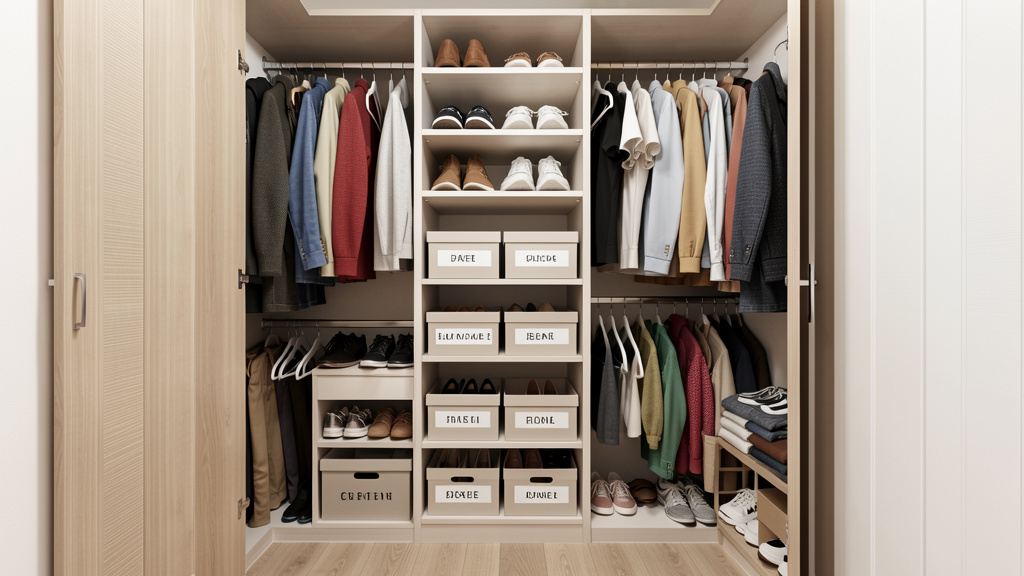
Stop Wasting Space and Start Living Smarter—A Step-by-Step System to Transform Any Closet Into a Streamlined, Stress-Free Storage Sanctuary
For decades, the closet has been the silent battleground of home organization—a space where good intentions meet chaotic reality. You’ve pinned the Pinterest-perfect images, purchased the trendy bins, and rearranged the shelves for the tenth time, only to find yourself back in the same frustrating cycle weeks later. What if the problem isn’t your effort, but the absence of a true system? This guide dismantles the myth of one-size-fits-all closet solutions and introduces a comprehensive, adaptable framework designed to conquer clutter permanently. Drawing from established spatial design principles, ergonomic research, and patterns observed across diverse residential storage environments, we provide a practical blueprint to transform any bedroom storage space—whether a cramped reach-in or a sprawling walk-in—into a functional, personalized sanctuary that evolves with your life.
Introduction: Why Most Closet Organization Efforts Fail
Many people regularly lose time searching for misplaced clothing items. Yet, the root cause of closet disarray rarely lies in laziness or lack of storage products. Instead, failure often stems from three critical oversights: designing for aesthetics over function, ignoring the unique dimensions and constraints of the existing space, and failing to align the system with personal habits and lifestyle rhythms. Analysis of closet renovation projects indicates that dissatisfaction frequently arises within a couple of years when systems don’t accommodate changing needs or prove too complex to maintain consistently.
This guide is built upon widely recognized spatial efficiency standards and behavioral psychology principles validated across diverse living environments. By shifting focus from temporary fixes to a holistic storage ecosystem, we address the full spectrum of closet challenges. Whether you’re working with a narrow apartment closet, a master suite walk-in, or a child’s rapidly evolving storage needs, the methodology presented here provides a scalable path to lasting order. The journey begins not with purchasing bins or shelves, but with a fundamental mindset shift: your closet must serve you, not dictate your routine. Understanding common failure patterns—such as over-purchasing organizers before decluttering or installing rigid systems that can’t adapt to life changes—is the first step toward creating a solution that endures.
The Adaptive Closet Framework: A Three-Layer System for Lasting Order
Forget generic checklists and rigid templates. True closet mastery emerges from a dynamic framework that adapts to your space, your belongings, and your daily rituals. The Adaptive Closet Framework operates across three interconnected layers: Assessment, Design, and Implementation. Each layer builds upon the previous one, creating a resilient system that prevents regression into chaos. This approach emphasizes flexibility over rigidity and user-centricity over trend-chasing. Unlike fragmented online tutorials addressing isolated symptoms, this framework treats your closet as an integrated ecosystem where spatial constraints, personal habits, and material choices interact dynamically.
Layer 1: The Deep Assessment—Mapping Your True Storage Landscape
Before a single shelf is measured or a bin purchased, conduct a thorough audit of your existing closet ecosystem. This phase is essential; skipping it risks creating a system misaligned with reality. The Deep Assessment has four critical components that transform vague intentions into actionable insights.
Component 1: Spatial Inventory—Measuring Beyond the Obvious
Grab a tape measure, notepad, smartphone camera, and a small level. Document every dimension carefully: total width (measure at top, middle, and bottom—walls are rarely perfectly plumb), depth (front to back at multiple points), and height (floor to ceiling). Note irregularities like sloped ceilings, protruding pipes, electrical outlets, HVAC vents, window placements, or structural beams. Measure door swing clearance both inside and out—will a full-length mirror on the inside block access? For reach-in closets, measure the critical distance from the rod position to the back wall. In walk-ins, sketch a rough footprint on graph paper, marking all obstacles. Photograph every angle in natural light and with artificial light on to assess shadow zones.
Why this matters: A system designed for a “standard” depth may fail in spaces with variations. Precise measurements prevent costly errors, wasted materials, and installation frustration. Always measure twice; verify before ordering or cutting.
Common mistake: Measuring only the opening width. Walls can vary significantly from top to bottom, especially in older homes. A small variance can prevent pre-fabricated systems from fitting flush against walls, creating gaps where dust accumulates. Use your level to check wall plumb—this informs whether shims will be needed during installation.
Component 2: Content Audit—Categorizing with Precision
Empty the entire closet. Lay everything on your bed or floor. Sort belongings into clear categories:
– Clothing: Group by type (tops, bottoms, dresses, outerwear), season (current, off-season), frequency of use (daily, weekly, monthly, special occasion), and care requirements.
– Accessories: Belts, scarves, ties, jewelry, handbags, hats, gloves.
– Footwear: Group by type, frequency of wear, and storage needs.
– Non-apparel: Bed linens, off-season blankets, luggage, or other items stored in the closet.
Count items quantitatively where helpful. How many pairs of shoes? How many dress shirts? Record measurements of bulky items: What’s the height of your tallest boots? The width of your widest handbag? This informs shelf heights and compartment sizes later.
Insight from practice: During audits, many people discover a significant portion of their wardrobe hasn’t been worn in over a year. This often reveals a curation opportunity before design begins, freeing usable space. Redirecting resources toward higher-quality organizers for a curated collection frequently yields better results than expanding storage for unused items.
Practical technique: Implement the “hanger test” for clothing decisions. Turn all hangers backward. After wearing and washing an item, return it with the hanger facing forward. After several months, items still on backward-facing hangers may be candidates for donation. This reduces emotional bias in decluttering.
Component 3: Behavioral Mapping—Aligning Storage with Daily Rituals
Observe your routine objectively for a few days. Note: When do you access the closet? What is the sequence of actions? What pain points arise? (“Can’t see sock colors,” “Belt collection tangles,” “Trip over shoes.”) Do you lay out tomorrow’s outfit the night before? Do multiple people share the space? How do routines intersect?
This step transforms storage from static architecture to dynamic workflow. Someone who dresses quickly each morning needs frequently worn items at eye level within easy reach. A fashion enthusiast may require expansive visibility and accessory display zones. A parent organizing a child’s closet must prioritize low, accessible zones to foster independence.
Powerful analogy: Designing a closet without behavioral mapping is like planning a kitchen without considering cooking habits. Would you place spices across the room from the stove? Your closet layout should mirror your natural movement patterns to reduce friction. Research in household ergonomics suggests that optimizing workflow during daily routines can contribute to reduced perceived stress over time. Small adjustments often yield meaningful psychological benefits.
Component 4: Constraint Identification—Acknowledging Real-World Limits
Honestly evaluate and document all limitations:
– Budget: Total project cap? Break into phases if needed. Willing to invest in custom vs. modular? Include contingency for unexpected issues.
– Time: How many hours can you dedicate? Is DIY installation feasible given your skill level and tool access?
– Physical ability: Can you safely lift heavy shelves? Reach high zones? Kneel for lower compartments? Consider adaptive solutions if needed.
– Rental restrictions: Are permanent modifications allowed per lease? Document permissions. Critical for renters—detailed solutions appear later.
– Future considerations: Anticipating life changes? (New family members, career shifts, aging in place, potential relocation.)
Documenting constraints upfront transforms limitations into design parameters. A renter who drills without permission risks security deposit loss. A budget-conscious organizer who selects an unaffordable system sets up disappointment. Constraints often inspire creative, elegant solutions.
The Fundamental Principle: A closet system designed without deep assessment is merely decoration—a temporary facade over underlying dysfunction. True organization emerges from the thoughtful alignment of space, belongings, and personal rhythm. Data replaces guesswork; observation replaces assumption.
Layer 2: The Strategic Design—Translating Data into a Custom Blueprint
With assessment insights in hand, Layer 2 transforms information into an actionable, personalized design. This phase balances ideal functionality with practical constraints through four interconnected design pillars.
Pillar 1: Zone Allocation—Creating Purpose-Driven Territories
Divide the closet vertically and horizontally into zones based on usage frequency, item type, and ergonomic accessibility. Human factors research suggests optimal placement ranges:
– Prime Zone (Waist to Eye Level): Reserve for daily-use items. Shirts, pants, frequently worn dresses, everyday handbags. This zone requires minimal bending or stretching—critical for reducing strain and encouraging consistent use.
– Secondary Zone (Below Waist): Ideal for shoes, folded sweaters, jeans, bins of accessories, or hampers. Requires slight bending—keep heavier items here. Install pull-out trays for deep lower zones to maximize accessibility.
– Tertiary Zone (Above Eye Level): Designated for seasonal storage, luggage, or infrequently used items. Use uniform, labeled clear bins. Avoid storing heavy items overhead for safety.
– Dead Space Activation: Door interiors (both sides), narrow side walls, corners, and spaces above doors are often underutilized. Over-door organizers, slim adhesive hooks, corner carousels, or magnetic strips can reclaim valuable inches.
Illustrative example: In a standard reach-in closet:
– Left section: Prime zone with double-hang rods (top rod for shirts/dresses, bottom rod for pants/skirts). Slim hangers maximize capacity.
– Middle section: Secondary zone with adjustable shelves. Top shelf: folded sweaters. Middle: shoe rack angled for visibility. Bottom: bins for accessories.
– Right section: Tertiary zone with high shelf for labeled seasonal bins. Door interior: organizer with clear pockets for belts, scarves. Side wall: adhesive hooks for robe.
Important consideration: For individuals with mobility considerations, arthritis, or who use wheelchairs, adjust zone logic. Place daily-use items within a comfortable reach range. Install pull-down rods that lower clothing to accessible height. Ensure adequate clear floor space for maneuverability. Consult accessibility resources for personalized adaptations—this is essential inclusivity.
Pillar 2: System Selection—Choosing the Right Structural Skeleton
Three primary system types exist, each with distinct advantages and considerations. Your content audit and constraints directly inform this choice.
| System Type | Best For | Key Advantages | Limitations & Considerations | Typical Cost Range (Materials) |
|---|---|---|---|---|
| Wire Systems | Budget-conscious DIYers, renters (with tension options), humid climates (ventilation) | Highly adjustable, excellent airflow, modular expansion, generally lower cost | May snag delicate fabrics, less furniture-like aesthetic, requires precise leveling | $75 – $400 |
| Laminate Systems | Balance of aesthetics/customization, DIY-friendly assembly, consistent modern look | Sleek appearance (multiple finishes), sturdy construction, wide accessory options | Requires meticulous measurement, assembly time-intensive, moisture caution near bathrooms | $250 – $2,200 |
| Custom Built-In | Maximized space in irregular layouts, permanent high-value installations, unique features | Tailored precisely to dimensions and needs, premium materials, seamless integration | Highest cost, professional installation typically required, less flexibility for changes | $2,000 – $15,000+ |
Material considerations for informed decisions:
– Wire Systems: Typically steel with coated finish. Gauge matters—lower numbers indicate thicker wire. In humid areas, verify corrosion resistance. Avoid placing wire shelves directly against exterior walls in cold climates to minimize condensation risk.
– Laminate Systems: Particleboard or MDF core with melamine laminate. Check edge banding quality—peeling edges are a common concern. Moisture-resistant grade is advisable for closets adjacent to bathrooms. Many systems offer online planning tools; use them before purchasing.
– Solid Wood Options: (Primarily custom) Maple, oak, birch plywood, or cherry. Timeless aesthetic, repairable. Requires proper finishing to prevent warping. Best suited for climate-controlled environments. Plywood with hardwood veneer offers durability with less cost than solid wood.
Critical nuance: “Adjustable” has practical limits. Wire systems have fixed hole patterns (typically 1-inch spacing). Laminate systems have shelf pin holes at specific increments. Verify these increments accommodate your item heights from the content audit. If boots require 14 inches of vertical space, but shelf spacing only allows 12 or 15 inches, plan accordingly.
Pillar 3: Accessory Integration—The Precision Tools of Personalization
Accessories transform generic shelves into hyper-functional solutions. Match every choice directly to your content audit data—avoid “just in case” purchases that create visual clutter.
- Hanging Solutions:
- Double-hang rods: Maximize vertical space in reach-ins. Requires sufficient ceiling height. Use non-slip hangers to prevent slippage and save width.
- Pull-down rods: Helpful for high zones or limited mobility. Mechanisms vary—spring-loaded vs. counterweighted. Verify weight capacity.
- Trouser racks: Save space vs. individual hangers. Choose models with individual clips to prevent creasing.
-
Valet rods: Pull-out rods for temporary outfit staging.
-
Shoe Storage:
- Angled shelves: Provide visibility and easy access. Calculate needed quantity based on shoe count.
- Stackable clear boxes: Protect from dust. Label lids clearly. Avoid overfilling.
- Over-door pockets: Renters’ option. Choose fabric pockets with reinforced stitching. Limit to lightweight shoes.
-
Ventilated racks: Important for athletic shoes to prevent odor buildup.
-
Accessory Organizers:
- Drawer dividers: Essential for socks, underwear, ties, and small items. Adjustable dividers adapt as collections change.
- Jewelry solutions: Tiered trays for necklaces (prevent tangling), pull-out trays with compartments. Include anti-tarnish strips in enclosed storage.
- Belt/scarf hangers: Cascading hook designs save space. Hang vertically on a rod or inside the door.
-
Handbag storage: Stuff bags with tissue paper to maintain shape. Store on shelves with dividers. For valuable bags, include silica gel packets.
-
Lighting Integration (Often overlooked):
- Battery-operated LED strips: Ideal for renters or DIYers. Motion-sensor or touch-activated options available. Warm white (2700K–3000K) renders clothing colors accurately. Adhesive-backed strips install under shelves to eliminate shadows.
- Hardwired puck lights: Professional installation recommended. Provides consistent illumination. Per electrical safety standards, fixtures in closets must have fully enclosed bulbs and maintain safe clearance from stored items. Include a switch outside the closet door.
- Placement strategy: Layer ambient, task (inside shelves), and accent lighting. In deep closets, lights mounted at the front of shelves cast shadows—install strips along the back edge facing forward for even coverage.
Insight from user patterns: Less is often more. Over-accessorizing creates visual noise and reduces system flexibility. Start with core zones. Add accessories only where your audit proves a specific need. Intentionality prevents clutter disguised as organization.
Pillar 4: Flow and Ergonomics—Designing for Human Movement and Psychology
A beautifully designed closet fails if it’s awkward or unpleasant to use. Apply these ergonomic and psychological considerations:
– Clearance Requirements: Ensure adequate clear floor space in front of all shelves and rods for comfortable access (24 inches minimum; 36 inches ideal for walk-ins or shared use).
– Reach Optimization: No critical daily-use item should require a step stool. If high storage is essential, use pull-down mechanisms or ensure a stable step stool is stored within the closet for safety.
– Workflow Sequencing: Arrange zones in the chronological order of your routine. Example: Entry zone → robe/hooks → daily clothing → accessory station → full-length mirror → exit. Minimize backtracking. For shared closets, create mirrored workflows if routines differ significantly.
– Visual Calm Principles: Use uniform hangers (velvet non-slip recommended in matching color). Choose matching bins and baskets. Limit visible color variety in stored items—use matching boxes for folded items. Environmental psychology research indicates that visual uniformity can reduce cognitive load and support a sense of calm.
– Sensory Considerations: Add a small sachet of lavender or cedar blocks to deter moths and provide subtle scent. Ensure adequate ventilation to prevent musty odors—critical in wire systems or humid climates. Soft-close drawer slides prevent slamming noises.
Illustrative observation: In one documented redesign, relocating a full-length mirror from the back wall to the side entrance wall reduced morning preparation steps significantly—eliminating unnecessary walking back and forth. Small flow optimizations compound into meaningful time savings and reduced decision fatigue over time. Track your own routine steps before and after to notice improvements.
Layer 3: Flawless Implementation—From Blueprint to Daily Reality
Design remains theoretical until executed with care. Layer 3 ensures your system is built correctly, integrated into sustainable habits, and maintained long-term. This phase separates temporary fixes from lasting transformation.
Phase 1: Preparation and Procurement Protocol
- Sourcing Strategy: Purchase a small surplus of shelf pins, screws, or bins for future adjustments. Verify return policies before buying—especially for custom-cut items. For laminate systems, order all components at once to ensure color consistency.
- Tool Inventory: Gather essentials: laser level (recommended over bubble levels for long spans), stud finder, power drill with bits, pencil, measuring tape, safety glasses, work gloves. Rent specialty tools if needed. For lighting, have appropriate tools; hire an electrician for hardwired installs if unsure.
- Space Preparation: Empty closet completely. Clean walls, floors, and ceiling thoroughly—dust interferes with adhesion and installation. Patch holes and sand smooth. Paint if desired (light, neutral colors enhance perception of space and reflect light). Allow paint to cure fully before installation. Remove door if painting interior or installing heavy systems.
Safety note: Locate studs using a quality stud finder. For wall-mounted systems supporting significant weight (rods with clothing, full shelves), anchoring into studs is strongly recommended for safety. Drywall anchors alone may fail under sustained load. For electrical work involving lighting, follow local electrical codes—when in doubt, hire a licensed electrician. Safety is foundational to all design.
Phase 2: Step-by-Step Installation Protocol (Universal Sequence)
Follow this sequence regardless of system type to ensure stability and alignment:
1. Install top components first: High shelves, ceiling-mounted rods, or upper cabinet boxes. This provides structural stability for lower elements.
2. Level meticulously at every stage: Use a long level for spans. Check level horizontally and vertically. Uneven shelves cause items to slide and look unprofessional. Laser levels project straight lines across entire walls—worthwhile for accuracy.
3. Test-fit before final securing: Assemble shelves, rods, and components loosely. Place representative items in intended zones. Verify clearances, accessibility, and workflow. Adjust heights or positions now—easier than after final tightening.
4. Secure permanently with quality hardware: Tighten all screws and connections firmly. Re-check level after tightening. For wire systems, ensure all clips are fully seated. Wiggle-test all components for stability. Address any wobble immediately.
5. Install accessories and lighting last: Hooks, bins, drawer inserts, and lighting strips. This avoids obstruction during main assembly and prevents accidental damage.
Common pitfall to avoid: Rushing installation. Even a slight tilt compounds over width—a long shelf tilted slightly will have noticeable height difference from end to end. This causes items to slide and visual frustration. Patience during installation prevents rework and ensures long-term satisfaction. Document each step with photos—helpful for future adjustments.
Phase 3: Habit Integration and Sustainable Maintenance Rituals
A system only delivers value if used consistently. Implementation isn’t complete until new habits are embedded. Integrate these sustainable rituals:
– The 5-Minute Daily Reset: Before bed, spend five minutes returning stray items to their designated zones. Set a timer. This prevents “clutter creep” and takes less time than searching later. Consistency matters more than duration.
– Seasonal Swap Protocol: Schedule bi-annual closet reviews (spring and fall). Rotate seasonal items, reassess categories against current needs, and purge unused items using audit data. Store off-season items in labeled, breathable containers on tertiary zones.
– The One-In, One-Out Rule: For every new clothing or accessory item brought home, consider removing one existing item. This simple practice helps prevent gradual accumulation. Keep a dedicated “donation bin” in the closet for items flagged for removal.
– Monthly Zone Check-in: Spend 10 minutes verifying each zone still functions optimally. Are shelves at correct heights? Are accessories still meeting needs? Adjust one element if necessary. This micro-maintenance prevents major overhauls later.
– Shared Closet Communication: For couples or families, schedule a brief weekly “closet sync” to address friction points (“Your shoes are blocking my hamper,” “Can we adjust the tie rack?”). Use neutral language focused on system function.
Reinforcement technique: After the first week of using the new system, note one specific benefit you’ve noticed (“Saved time finding my belt,” “Felt calm opening the closet door”). Positive reinforcement supports habit formation. Acknowledge completing this phase—it’s a meaningful step in creating a supportive home environment.
Beyond the Standard Closet: Special Scenarios and Advanced Adaptations
No two closets are identical. This section provides tailored solutions for high-friction scenarios often overlooked in generic guides. Each solution integrates seamlessly with the Adaptive Closet Framework.
Conquering the Narrow Reach-In Closet (Under 36 Inches Wide)
Strategy: Maximize vertical space, minimize depth waste, and leverage optical illusions.
- Double-hang rod system: Install two rods front-to-back if depth allows. Top rod for shirts, blouses, dresses. Bottom rod for pants, skirts, shorts. Use ultra-slim, non-slip hangers to maximize capacity—standard hangers waste significant rod space.
- Slim-profile accessories: Over-door organizers with shallow pockets. Avoid bulky shoe racks—use hanging organizers with clear pockets or stackable clear boxes on shelves. Install adhesive hooks on the inside of the door for robes, belts, or next-day outfits.
- Mirror illusion technique: Attach a full-length mirror to the inside of the closet door. When closed, it reflects the room, enhancing perception of depth and light. Ensure hinges can support the weight with appropriate mounting hardware.
- Strategic lighting: Battery-operated LED strip mounted along the top shelf, facing downward. Illuminates contents without wiring. Warm white (2700K) for accurate color rendering. Motion sensor activation ensures light is available when opening the door.
- Vertical labeling: Use vertical label holders on shelf fronts to identify contents without pulling bins out.
Illustrative transformation: A narrow closet was transformed using a wire system with double-hang rods, slim shelves above for labeled bins, and a full-length mirror on the door interior. Result: Noticeable increase in usable capacity without structural changes. Key success factor: thorough decluttering before installation—focusing on items actively used.
Mastering the Walk-In Closet: From Chaos to Command Center
Walk-ins tempt with space but often become dumping grounds. Solution: Treat as a functional room with defined activity zones and intentional boundaries.
- Create dedicated activity stations:
- Dressing Zone: Full-length mirror (ideally with integrated lighting), comfortable bench (with storage underneath), robe hooks at entry point.
- Laundry Zone: Two discreet hampers (lights/darks) tucked in a corner. Use lidded hampers to contain odors.
- Accessory Gallery: Glass-front drawers for jewelry, pull-out trays for ties/belts, dedicated shelves for handbags with dividers.
- Seasonal Archive: Labeled, breathable bins on high shelves. Include a lightweight, wall-mounted step stool stored nearby for safe access. Rotate bi-annually.
- Staging Area: Small valet rod or hook near the mirror for outfit planning.
- Island consideration: Only add if closet dimensions allow ample clearance on all sides. Islands provide drawer storage but consume floor space. Skip if space is tight—wall-mounted solutions are often more efficient.
- Lighting layers: Ambient (ceiling-mounted dimmable LEDs), task (under-shelf strips), accent (focused lights on displays). Install dimmer switches. Include motion sensors for convenience.
- Psychological boundary setting: Use area rugs to define zones visually. Place a small waste bin near the dressing area. These subtle cues reinforce purpose and discourage dumping.
Professional insight: In larger walk-ins, consider integrating a small charging station on an island or shelf for personal devices. Keeps bedside tables clear. Ensure all electrical work complies with local codes—hire a licensed electrician for hardwired solutions.
Renters’ Rights: Non-Permanent, High-Impact Solutions
Achieve dramatic organization without drilling. Focus on freestanding, tension-based, and adhesive solutions that comply with lease terms.
- Freestanding wardrobe units: Modular units placed against wall without anchoring. Place heavy items on bottom shelves for stability. Use furniture straps if required by landlord for safety (removable upon move-out).
- Tension rod systems: Heavy-duty tension rods for hanging zones. Reinforce with adhesive hooks at rod ends if needed for extra security. Ideal for creating double-hang zones.
- Adhesive solutions mastery: Command™ hooks, strips, and racks. Critical success factors:
- Clean surface thoroughly with isopropyl alcohol before application.
- Wait recommended time after application before hanging items.
- Remove slowly downward when moving—use hairdryer on low heat to soften adhesive if needed.
- Never exceed weight limits. Use multiple smaller hooks for distributed weight.
- Modular bin systems: Stackable fabric bins on existing shelves. Label clearly with removable labels. Choose uniform colors for visual calm.
- Door maximization: Over-door shoe organizers, hanging jewelry organizers, adhesive hooks for robes or bags. Ensure door can still close fully.
- Lease compliance protocol: Always review lease terms regarding modifications. When in doubt, get landlord permission in writing before installing anything. Document closet condition with photos before moving in and after moving out.
Real-world example: A tenant transformed a chaotic closet using only: two heavy-duty tension rods, adhesive hooks for belts/scarves, over-door organizer for shoes/accessories, and uniform fabric bins on existing shelves. Total cost was modest. Key: meticulous surface prep for adhesives and strict adherence to weight limits.
Small Space, Big Impact: Closet Organization for Apartments and Tiny Homes
When every inch counts, integrate closet functions strategically into the bedroom.
- Under-bed storage synergy: Use rolling bins with handles for off-season clothing or bulky items. Measure bed clearance precisely. Vacuum-seal bags sparingly—they can damage delicate fabrics and are difficult to access. Better: breathable canvas bins. Coordinate contents with closet zones.
- Vertical room dividers: A freestanding clothing rack with a floor-length curtain can section off a closet area in a studio apartment. Choose a rack with integrated shelves. Position to create separation without blocking light. Ensure stability.
- Multi-functional furniture integration: Ottomans with hidden storage, beds with built-in drawers, nightstands with deep drawers. Coordinate finishes and colors with closet system for visual cohesion. Prioritize pieces that serve dual purposes elegantly.
- Digital inventory management: For extensive collections, use apps to catalog items. Take photos, note details. Reduces mental load of “what do I own?” and prevents duplicate purchases. Sync with calendar for seasonal rotation reminders.
- Psychological space expansion: Use light, reflective surfaces. A full-length mirror on the bedroom wall opposite the closet enhances perceived space. Keep closet door closed when not in use to contain visual clutter. Choose light-colored storage bins.
Illustrative case: In a compact micro-apartment, the resident integrated storage into a platform bed with deep drawers and used a slim clothing rack with curtain as the primary closet area. Under-bed storage held luggage and off-season items. Result: Increased usable floor space in the main living area, with all clothing accessible and organized. The system was cost-effective and installed over a weekend.
Luxury and Custom-Built Systems: When to Invest and What to Specify
For those with budget flexibility and permanent ownership, custom systems offer refinement, efficiency, and aesthetic integration. This is an investment in daily quality of life.
- Material considerations:
- Cabinetry: Solid maple or birch plywood with hardwood veneer (more stable than solid wood in varying humidity). Avoid particleboard for structural components.
- Finishes: Catalyzed lacquer or conversion varnish for durability. Request samples to view in your home’s lighting.
- Hardware: Soft-close hinges and drawer slides. Full-extension drawer slides for complete access.
- Lighting: Integrated LED strips with dimmable drivers, motion sensors, and warm color temperature (2700K). Hardwired with switch outside closet per code.
- Specialized features:
- Pull-out valet rods: For outfit planning. Specify smooth-operation mechanism.
- Hidden compartments: Behind false panels for valuables. Discuss security features.
- Climate considerations: Small dehumidifier unit for leather/fur storage zones. UV-filtering glass for display cases.
- Full-length mirrors with integrated lighting: Eliminates shadows. Specify anti-fog coating if near bathroom.
- Laundry integration: Built-in hampers with removable liners.
- Professional design process: Seek designers certified by recognized organizations (e.g., Association of Closet and Storage Professionals, National Association of Productivity and Organizing Professionals). Expect:
- In-home consultation with precise measurements
- Digital renderings for approval
- Detailed quote with itemized costs
- Project management through installation
- Post-installation walkthrough
- Value consideration: Custom systems in primary bedrooms may contribute to daily time savings, reduced stress, and home appeal. However, value is subjective. Consult a local real estate agent about value addition in your market before significant investment. For secondary bedrooms, high-quality modular systems often provide excellent value.
Vetting question for designers: “Can you provide references from clients with closet layouts similar to mine, including one project completed over two years ago?” Long-term satisfaction is a meaningful indicator of quality.
Navigating Friction Points: Mistakes, Alternatives, and When to Call a Pro
Even well-planned projects encounter obstacles. This section addresses common challenges with practical solutions.
Top 5 Closet Organization Mistakes (And How to Avoid Them)
-
Mistake: Designing and purchasing systems before decluttering.
Solution: Complete the Content Audit rigorously. Donate, sell, or discard unused items before taking final measurements. You will often need less storage than initially estimated. This saves money and creates a system sized for your actual needs. -
Mistake: Ignoring vertical space above eye level.
Solution: Install shelves up to the ceiling. Use uniform, labeled clear bins for seasonal items. Store a lightweight, wall-mounted step stool within the closet for safe access. Every unused vertical inch represents potential storage—especially critical in small closets. -
Mistake: Over-customizing for today’s inventory without flexibility.
Solution: Build adaptability into the core design. Choose systems with adjustable shelves. Avoid fixed compartments for categories that change (e.g., children’s clothing sizes). Leave one “flex zone” with empty shelves or bins for future needs. Life evolves—your system should too. -
Mistake: Poor lighting choices leading to shadows or safety concerns.
Solution: Prioritize layered LED lighting. Avoid incandescent or halogen bulbs near fabrics due to heat. For reach-ins, battery-operated motion-sensor strips are safe and effective. In walk-ins, hardwired LED pucks with dimmers provide ample light. Position lights to eliminate shadows. Always comply with local electrical codes; hire a licensed electrician for hardwired work. -
Mistake: Forgetting the door’s potential (both sides).
Solution: Maximize door real estate intentionally. Inside: organizers for accessories, shoes, or robes. Outside: full-length mirror to enhance bedroom aesthetics and function. Ensure door swing isn’t obstructed. For sliding doors, consider surface-mounted hooks on the outside face.
When to Hire a Professional Organizer or Closet Designer
Consider professional assistance if:
– The closet has complex architectural features (slanted ceilings, columns, curved walls).
– You have physical limitations making DIY installation unsafe.
– The project scope exceeds your available time or skill level.
– You’ve attempted DIY organization multiple times without lasting success.
– You require integration with whole-home organization systems.
– You need support with sensitive decluttering (major life transitions).
How to vet professionals effectively:
– Verify credentials: Look for certifications from recognized organizations requiring continuing education and ethical standards.
– Review portfolios critically: Request photos of projects similar to your closet type and challenges.
– Get detailed proposals: Require written estimates with itemized costs. Beware of vague quotes.
– Check references: Contact past clients. Ask about unexpected costs, challenge handling, and satisfaction.
– Confirm insurance: Verify liability insurance and workers’ compensation.
– Assess communication style: Choose someone who listens without judgment, explains options clearly, and respects your budget.
Budget-Conscious Pathways: Tiered Implementation Strategy
Phase the project strategically to build momentum and allocate resources wisely.
- Phase 1: Foundation ($0–$75)
Focus: Decluttering and visual reset. - Complete content audit and donate unused items.
- Replace mismatched hangers with uniform slim hangers.
- Install one over-door organizer for accessories or shoes.
-
Add clear labels to existing shelves/bins.
Impact: Immediate visual calm and functional improvement. Highest ROI phase. -
Phase 2: Core Structure ($75–$350)
Focus: Adding adaptable storage. - Install adjustable shelf kit based on audit data.
- Add targeted accessories: shoe rack, drawer dividers, belt hanger.
- Improve lighting with battery-operated LED strips.
-
Paint closet interior light neutral color if feasible.
Impact: Significant capacity increase and workflow optimization. -
Phase 3: Refinement ($350+)
Focus: Customization and luxury touches. - Invest in modular system or custom components.
- Add specialized features: pull-down rod, valet rod, integrated lighting.
- Hire professional for installation if needed.
Impact: Tailored, seamless system supporting long-term habits.
Budget insight: Track spending. Phased implementation often leads to less total spending than impulsive full-system purchases, as needs become clearer with each phase.
Your Questions, Answered
Q: How much does a typical closet organization project cost?
A: Costs vary widely based on approach. DIY with existing furniture and decluttering: minimal cost. Modular systems (ClosetMaid, IKEA): $100–$1,800 for materials. Professional installation of modular systems: $500–$3,500 total. Custom built-ins: $2,000–$15,000+. However, the highest-impact, lowest-cost step is always rigorous decluttering before purchasing anything. Many people significantly reduce needed storage through thoughtful curation alone.
Q: What’s the most common measurement mistake people make when planning closet systems?
A: Measuring only the closet opening width and assuming walls are straight. Always measure width at top, middle, and bottom; depth at left, center, and right. Note any obstructions (outlets, vents, pipes) with precise locations. A small difference can prevent pre-cut shelves from fitting properly. Use a level to check wall plumb—this informs whether shims will be needed. Photograph measurements in place for reference.
Q: Are wire closet systems outdated or inferior to laminate options?
A: Not at all. Modern wire systems offer significant advantages: superior ventilation (helpful in humid climates), high adjustability, lower cost, and easier reconfiguration. They excel in utility closets, children’s rooms, or spaces requiring frequent changes. However, they may not suit those seeking a furniture-like aesthetic or storing very delicate fabrics. Laminate systems provide a cleaner look and better support for folded items but require precise measurement. Choose based on your specific needs, climate, and preferences—not perceived status.
Q: How do I organize a closet shared by two people with significantly different needs and routines?
A: Success requires equitable division and clear communication. First, conduct individual content audits and behavioral mappings. Then:
– Allocate physical space proportionally based on inventory counts.
– Create distinct zones for each person with clear visual boundaries (different colored bins, labeled sections).
– Establish shared rules: “Reset zone every Sunday,” “One-in-one-out applies to both.”
– Schedule a brief weekly “closet sync” to address friction points neutrally.
– For conflicting routines, position frequently used items for the early riser on the accessible side. Compromise is key—focus on system functionality in shared zones.
Q: Can I safely install shelves or rods without hitting wall studs?
A: For very light loads (folded sweaters in shallow bins under 10 lbs), heavy-duty drywall anchors may suffice. However, for any hanging rod (clothing adds significant weight), full shelves, or systems supporting over 15 lbs, anchoring directly into studs is strongly recommended for safety. Drywall anchors can pull out over time. Use a quality stud finder and plan your layout around stud locations. If studs don’t align with your design, install a horizontal backing board between studs to distribute weight, then mount your system to the backing board. When in doubt, consult a professional—safety is paramount.
Q: What’s the safest, most effective way to store off-season clothing long-term?
A: Follow this protocol:
1. Clean all items thoroughly before storage (body oils attract pests).
2. Use breathable containers: cotton canvas bins or acid-free tissue paper. Avoid vacuum-seal bags for long-term storage—they compress fibers, can trap moisture, and damage delicate fabrics over time.
3. Label bins clearly with contents and season.
4. Store on high shelves in a climate-controlled area. Avoid attics (heat), basements (humidity), or garages (temperature swings).
5. For valuable items (cashmere, leather), include cedar blocks or lavender sachets (refresh annually) and silica gel packets.
6. Check stored items biannually for pests or moisture issues.
This method preserves fabric integrity while keeping seasonal items accessible.
Q: How do I maintain closet organization long-term without constant effort?
A: Systems thrive with integrated maintenance rituals. Implement these sustainable habits:
– The 5-Minute Daily Reset: Timer-based return of stray items to zones.
– Seasonal Swap Protocol: Bi-annual scheduled reviews (spring/fall).
– One-In, One-Out Rule: Removal of one item per new acquisition.
– Monthly Zone Check: 10-minute verification of system functionality.
– Shared Space Agreements: Clear rules and communication for multi-user closets.
Additionally, design flexibility into your system (adjustable shelves) so it can adapt as needs change. Consistency, not perfection, builds lasting order. Track time saved weekly to reinforce motivation.
Q: Are custom closet systems worth the significant investment for most homeowners?
A: Value is highly contextual. For primary closets in owned homes where you plan to stay several years, custom systems often deliver value through daily time savings, reduced stress, increased functionality, and potential home appeal. However, for renters, secondary bedrooms, or tight budgets, high-quality modular systems provide excellent functionality at a fraction of the cost. Prioritize spending on elements that address your specific pain points. Always complete the Deep Assessment before deciding—many assumptions dissolve after rigorous auditing.
Q: What lighting is safest and most effective for closets?
A: LED lighting is the standard for safety and functionality. Key guidelines:
– Bulb type: Use only LED bulbs—they operate cool, minimizing fire risk near fabrics.
– Fixture placement: Per electrical safety standards, lighting fixtures in clothes closets must have completely enclosed light sources with safe clearance from stored items.
– Best solutions:
– Reach-ins: Battery-operated LED strips with motion sensors (no wiring, cool operation).
– Walk-ins: Hardwired LED puck lights or linear strips installed by a licensed electrician, with switch outside the closet door.
– Color temperature: 2700K–3000K (warm white) renders clothing colors accurately and feels inviting.
When electrical work is involved, prioritize code compliance—hire a qualified electrician. Safety is non-negotiable.
Q: How do I organize a child’s closet to encourage independence and adapt as they grow?
A: Design for current ability with growth in mind:
– Lower everything: Rods at accessible height. Shelves within easy reach.
– Visual labeling: Use picture labels for pre-readers. Transition to word labels as reading skills develop.
– Simple zones: One bin for socks/underwear, one for pajamas, low rod for daily clothes. Avoid over-compartmentalizing.
– Durable materials: Easy-to-clean bins, sturdy hooks. Avoid glass or fragile components.
– Involve the child: Let them choose bin colors or help place labels. Ownership increases compliance.
– Growth plan: Install adjustable systems from the start. Plan to raise rods and reconfigure zones periodically.
– Safety first: Secure all units to wall studs to prevent tipping. Avoid small parts that could be choking hazards for toddlers.
Reassess the system every six months—children’s needs evolve rapidly.
Q: What should I do if my closet has a sloped ceiling, awkward angles, or other architectural challenges?
A: Work with the architecture:
– Sloped ceilings: Install shelves that follow the slope. Reserve the lowest space for shoe racks, bins, or hampers. Place lighting along the highest point.
– Awkward corners: Install corner carousels or lazy Susans for accessories. Use triangular shelves designed for corners.
– Protruding elements (pipes, vents): Build shelves around them. Create custom notches in shelves (many modular systems allow this).
– Extreme cases: Consult a professional designer—they often have creative solutions for challenging spaces. Document the space thoroughly with photos and measurements before seeking help.
Conclusion and Your 24-Hour Action Plan
You now hold a complete, practical framework to address closet organization thoughtfully. Remember the core philosophy: organization is not about accumulating more products—it’s about designing a responsive system that harmonizes your physical space, your possessions, and your daily life rhythms. The Adaptive Closet Framework—Deep Assessment, Strategic Design, Flawless Implementation—provides a repeatable process for any closet type, budget constraint, or lifestyle need. This methodology supports lasting change because it addresses root causes, not just symptoms.
Recap: The Three Foundational Pillars of Lasting Closet Order
- Assess Deeply: Measure meticulously, audit contents honestly, map behaviors accurately, and acknowledge constraints openly. Data eliminates guesswork.
- Design Strategically: Allocate zones based on ergonomics and frequency of use, select systems aligned with your audit data, integrate accessories with intention, and optimize flow for human movement.
- Implement Mindfully: Prepare thoroughly, install with precision and safety, and embed sustainable maintenance rituals. A system delivers value when integrated into daily life through consistent, manageable habits.
The 24-Hour Rule: Your Tiny, Transformative First Step
Within the next 24 hours, complete exactly one of these actions—no more, no less. Momentum begins with motion:
– If feeling overwhelmed: Set a timer for 15 minutes. Remove everything from one single shelf in your closet. Sort items into two bins: “Keep Here” and “Relocate/Donate.” Reset the shelf with only the “Keep Here” items, neatly arranged.
– If ready to plan: Grab your tape measure and smartphone. Document all dimensions of your closet (width at top/middle/bottom, depth at left/center/right, height, note every obstruction). Take three photos (wide shot, close-ups of problem areas). Save measurements and photos in a dedicated folder titled “Closet Project.”
– If seeking immediate relief: Identify one recurring pain point (e.g., “I can never find matching socks”). Purchase one targeted solution (a simple drawer divider) and implement it today. Experience the power of a micro-win.
This micro-action breaks inertia. Progress, not perfection, builds irreversible momentum. You’ve already done the hardest part—deciding to create change.
The Big Picture: Your Home as a Sanctuary of Calm
A thoughtfully organized closet delivers compound benefits far beyond stored clothing. It reduces morning decision fatigue, reclaims precious time, cultivates daily calm, and reinforces your agency over your environment. It becomes a quiet testament to intentionality—a space that supports your best self rather than adding friction to your day. As you apply this framework, notice the ripple effects: less stress during transitions, renewed appreciation for your belongings, and the profound confidence that comes from a space designed for you. This is more than organization; it’s environmental psychology in action, crafting a home that actively contributes to your well-being.
Your journey to a harmonious home extends room by room, system by system. You’ve built a foundation for closet mastery—what sanctuary will you create next?
Explore Our Complete Home Organization System:
[The Ultimate Guide to Kitchen Cabinet Organization] | [Garage Storage Solutions That Actually Last] | [Small Apartment Hacks: Maximize Every Square Foot] | [Laundry Room Efficiency: From Chaos to Calm] | [Home Office Setup: Boost Productivity] | [Seasonal Storage Guide: Rotate Without the Stress] | [Decluttering Psychology: Sustainable Letting Go]